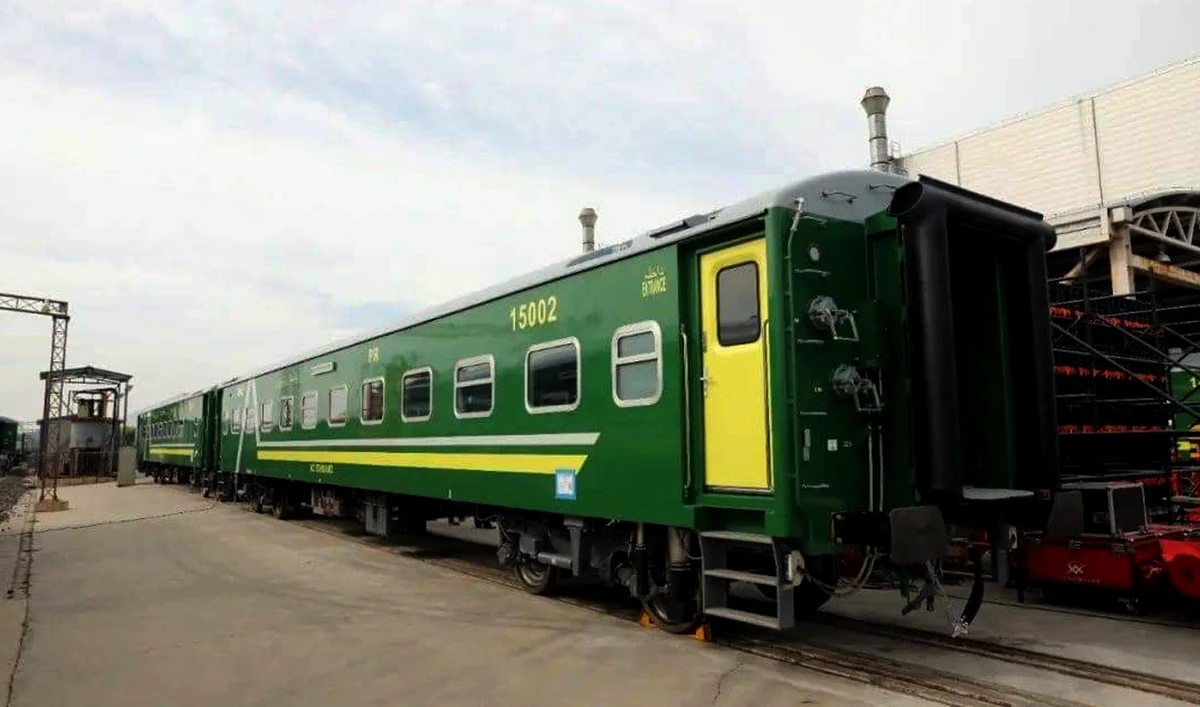
- Islamabad and China’s CRRC Tangshan signed a contract in November for the supply of 230 modern coaches to Pakistan
- Official says these coaches will serve long-term purpose after the planned upgradation and dualization of ML-1 project
KARACHI: Pakistan Railways is set to receive the first 40 of more than 200 modern, high-speed passenger coaches from China by the end of this year that will augment railway operations across the South Asian country, officials said on Sunday.
Pakistan and China’s CRRC Tangshan Locomotive & Rolling Stock Company inked an agreement in November 2021 for the supply of 230 high-speed coaches to Pakistan Railways as part of a plan to upgrade and enhance long-distance passenger services in the country.
“Out of 230 passenger coaches, the first consignment of 40 coaches will arrive in Pakistan by December, which would have the capacity to run at the speed of 160 kilometers per hour,” Babar Ali Reza, a spokesman for Pakistan Railways, told Arab News.
Though the spokesman did not share the cost of incoming passenger coaches from China, it was estimated at the time of the contract signing that each economy-class coach would cost $694,000, standard air-conditioned coach $794,000, and an air-conditioned parlor would cost $859,000 upon arrival in Pakistan.
The spokesman said the current maximum speed limit of Pakistani trains was 120 kilometers per hour and the new Chinese coaches would be suitable for higher speed limit after the upgradation of railway tracks.
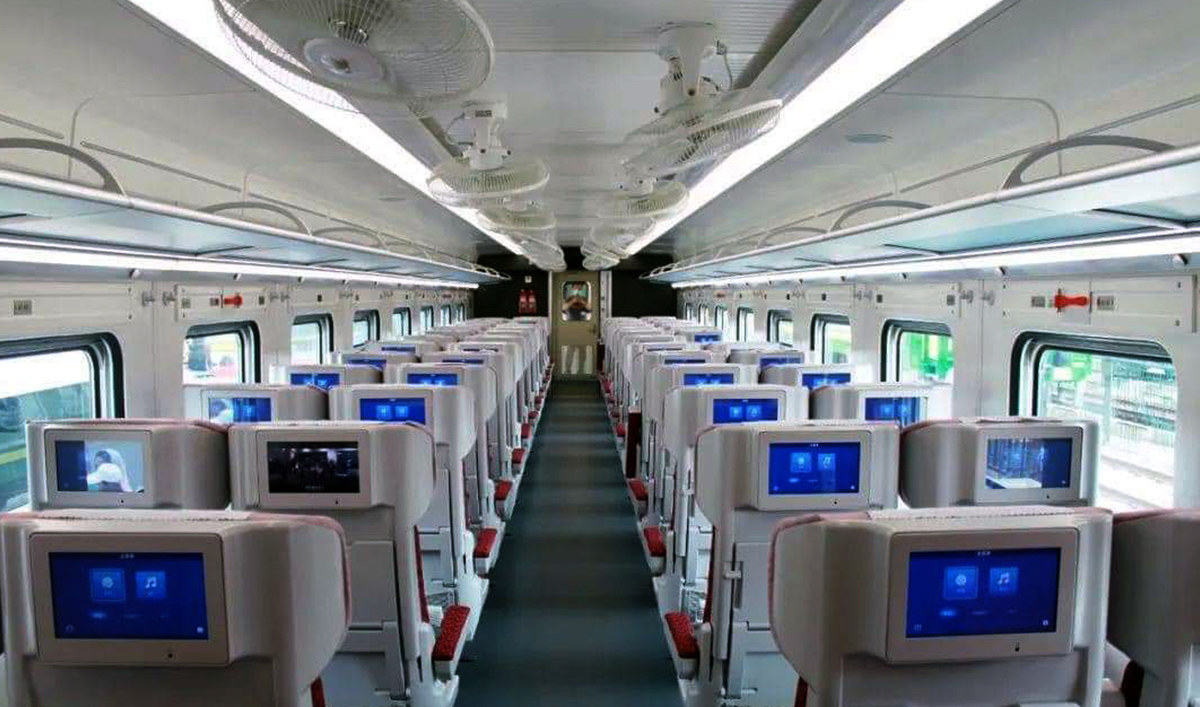
“The railway tracks at present can accommodate up to 120 kilometers per hour. As the tracks will be gradually upgraded, these coaches can serve long-term purposes and support 160 kilometer per hour,” Reza said, referring to the country’s plan of dualization of the Main Line-1 (ML-1) project.
The $6.8 billion ML-1 project, considered one of the costliest projects in Pakistan’s history, is aimed at upgrading and dualizing the 1,872-kilometer existing track from the southern port city of Karachi till Peshawar in the country’s northwest.
The project will be executed in three phases in order to avoid commitment charges, while the loan amount for each package will be separately contracted for doubling the entire track from Karachi to Peshawar via Hyderabad, Nawabshah, Rohri, Rahim Yar Khan, Bahawalpur, Khanewal, Sahiwal, Lahore, Gujranwala and Rawalpindi.
After the completion of the project, the speed of trains would increase from the current 65-120 kilometers per hour to around 160 kilometers per hour, while cargo trains would operate at a speed of 120 kilometers per hour.
The project, an integrated part of the China-Pakistan Economic Corridor (CPEC), has yet to start and for which, Islamabad is expected to receive 90 percent financing from China. Last year, Pakistan approached Exim Bank of China for the financing of the project while tenders for construction work were ready to be floated at home, but neither financing was confirmed nor the tenders were announced.
Under the contract, Reza said, Pakistan would also benefit from the transfer of technology from China to manufacture such coaches at home. “A team of railway staff is in China for training that will help enhance operational capacity and services at home,” he added.
Earlier this month, Zafar Zaman Ranjha, the chairman of Pakistan Railways, said with the transfer of technology from China, the railways department would be able to manufacture its own coaches and this was why a team of officials was being sent to China for training.
The chairman clarified the training would not have any impact on railways’ budget as all the expenses were included in the contract, saying the transfer of technology would benefit the country’s economy in the future.