



BOGURA: When Mohammed Noor Alam arrived in Saudi Arabia in the late 1990s, little did he know that his job at a tailoring shop would turn him into a pioneer producer of bisht, a symbol of Arab identity, in his native Bangladesh.
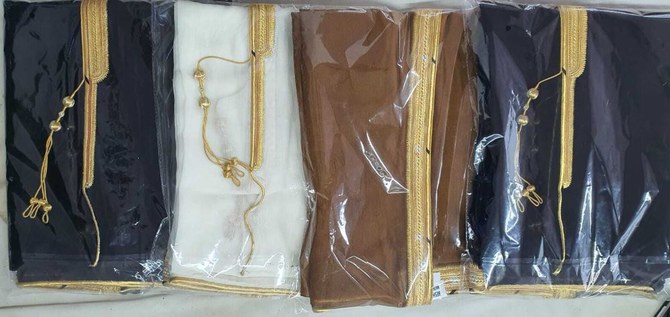
The bisht, a flowing black, white or brown cloak trimmed with golden embroidery, has been worn by Arab men for centuries. The choice of formal wear for politicians, religious scholars and high-ranking individuals, it is especially popular in the Gulf region.
Alam, 51, learnt the craft of bisht as an apprentice to an Indian tailoring master, Tulsi Kimar, in Dammam. After 10 years, he returned to Bangladesh and, in 2010, opened his factory, Bisht Al-Noor Enterprise, in Bogura, about 200 km north of the capital, Dhaka.
His company sells the cloth mainly to Saudi Arabia, the UAE and Qatar.
“I export to the same company in Saudi Arabia where I used to work earlier as a tailor of bisht. With the upcoming football World Cup in Qatar this year, our product is in huge demand,” Alam told Arab News.
In fact, demand is so great that his 32 workers are struggling to meet it.
“Currently, I can’t cope with additional orders, since here I don’t have enough trained workers,” he said.
Alam said that a high degree of skill and dedication is needed to produce bisht.
“It requires a special kind of expertise and patience. We have millions of garment factory workers in the country. But they can’t make it. The bisht I produce here is fully handmade.”
In the Middle East, it is believed that no cloth can match the distinction of a hand-tailored bisht, which is why Alam employs only highly skilled and trained workers.
“Mostly the elites, people from the upper classes and royal family, and grand imams used to wear this bisht in the Gulf and Middle Eastern countries,” Alam said. “It’s a symbol of their elegance.”
The material used depends on the season and social status of the wearer. The garment can be made from wool or cotton, or lighter mesh linen fabrics. Alam’s bishts, sold under the brand Bisht Al-Salem, come in a range of prices, depending on quality.
Al-Malaki, or “the kingly bisht,'' is one of the most popular styles, and costs between $600 and $9,000.
The price also depends on the type of embroidery and golden thread used in the trim. “The best quality golden threads are prepared with thin gold coating,” Alam said.
Like most of the other material used in the garments, Alam sources the thread mainly from Saudi Arabia.
Alam’s success in exporting to the Gulf and the three boutiques he now runs in Qatar has inspired others in Bogura to follow in his footsteps, and two more bisht manufacturers have been established in the region.
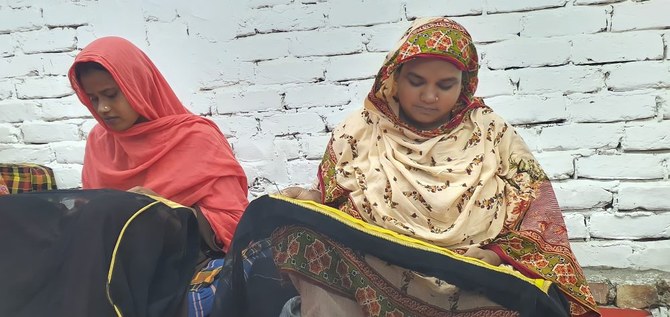
Bisht is made in a series of stages. Each of Bisht Al-Noor Enterprise’s tailors specializes in a particular part of the work, the most challenging of which is the golden embroidery. According to factory manager Mohammed Malik, if the trimming does not shine as it should, the cloak can easily be rejected by customers.
“There are six or seven steps in producing the bishts. Each of our workers was trained in particular areas of the production process. None of them knows the full process,” he said.
The factory makes about 160 bishts a month. The combined efforts of seven people are needed to make a single piece, which sometimes they can do in one day.
“It requires some special kind of expertise to make the bisht,” Malik said. “It makes me very proud to think that we are producing something which is very much connected with the pride of Arab nations.”
Pride in their profession means the workers pay attention to the tiniest details.
“It requires uninterrupted attention. You can’t leave the job in the middle. Otherwise, the stitches will mismatch and affect the quality,” Sadia Begum, who joined the factory five years ago, told Arab News.
Begum has seen people wearing bisht only on TV and hopes that one day she will be able to see the fruit of her work up close.
“I want to visit Saudi Arabia to see the people wearing bisht,” she said. “If Allah permits, I will visit the Kingdom to perform the Hajj and see them.”


