

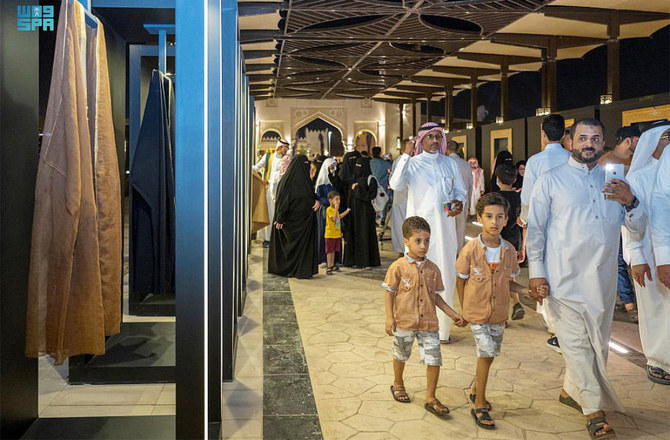
Al-Ahsa bisht festival showcases rich culture, heritage

A large number of visitors flocked to the headquarters of Al-Hasawi Bisht Festival in Hafouf, and many were eager to take their children while wandering between the festival's pavilions. (SPA)
Short Url
Updated 19 June 2022
Follow

Al-Ahsa bisht festival showcases rich culture, heritage

  • The Hasawi bisht, the finest in the world, in high demand among the elite

RIYADH: Tuesday marks the end of the Hasawi Bisht festival, which is held in the Souq Al-Arbi’a in Al-Ahsa.

The bisht is a traditional men’s cloak popular in Arab countries, worn over a thobe. It is placed on the shoulder and down to the leg without sleeves.

The week-long festival featured a variety of activities that reflected the historical and cultural heritage of hand knitting in Al-Ahsa, particularly in bisht production.
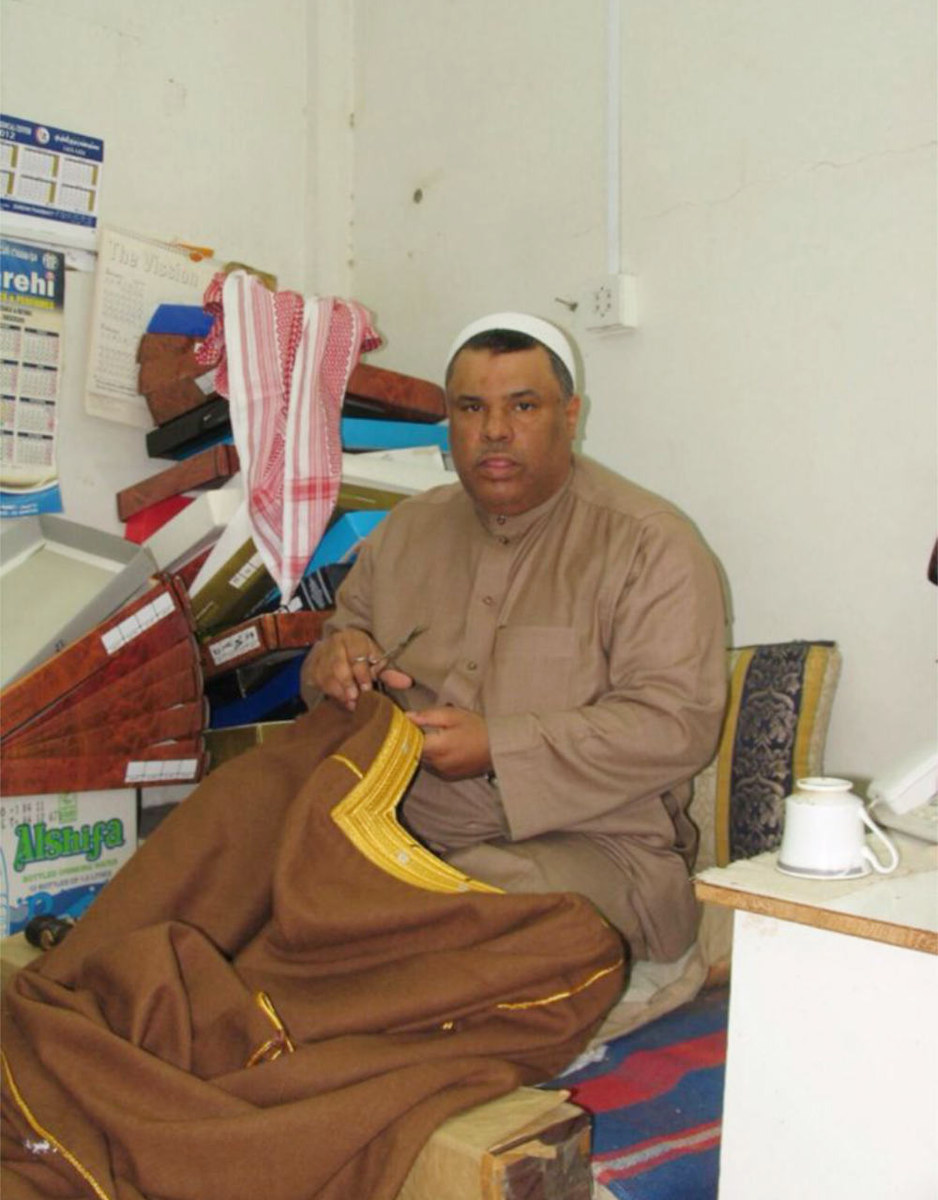


Ali Mohammed Al-Qattan, a well-known merchant in the business, is always keen to sew bisht by hand in his shop in Hafouf. (Supplied)

During the festival's inauguration last Wednesday, Eastern Province Gov. Prince Saud bin Naif wore a light brown bisht and was accompanied by Al-Ahsa Gov. Prince Saud bin Talal bin Badr, and Minister of Municipal and Rural Affairs and Housing Majid Al-Hogail.

Many people in Saudi Arabia and the Gulf enjoy wearing bishts on special occasions and holidays, and wear them with traditional ornaments and fine hand stitching, embroidered with various threads and buttons in gold or yellow, silver, white, and red.

HIGHLIGHT

Many people in Saudi Arabia and the Gulf enjoy wearing bishts on special occasions and holidays, and wear them with traditional ornaments and fine hand stitching, embroidered with various threads and buttons in gold or yellow, silver, white, and red.

Male grooms in Saudi Arabia almost always wear a bisht, and many universities insist on their students wearing one during graduation ceremonies.

Emad Al-Ghadeer, executive member of the national logistics committee at the Federation of Saudi Chambers, said: “There is no doubt that Hasawi bisht is a brand with a long history, and it needs to be cared for and properly introduced to ensure its continuity.”


Governor of the Eastern Province Prince Saud bin Naif wore a light brown bisht while touring the headquarters of the Al-Hasawi Bisht Festival. (SPA)

Al-Ghadeer urged the establishment of training institutes in the industry to boost bisht productivity, “as this work of art contributes significantly to the region’s economic development.”

He compared the Hasawi bisht to a Rolex watch in terms of quality, pointing out that many visitors to Saudi Arabia are eager to purchase them.

According to Ali Mohammed Al-Qattan, one of the biggest merchants in the business in Al-Ahsa, there has been an increase in bisht sales after many months of the industry being affected by the COVID–19 pandemic.
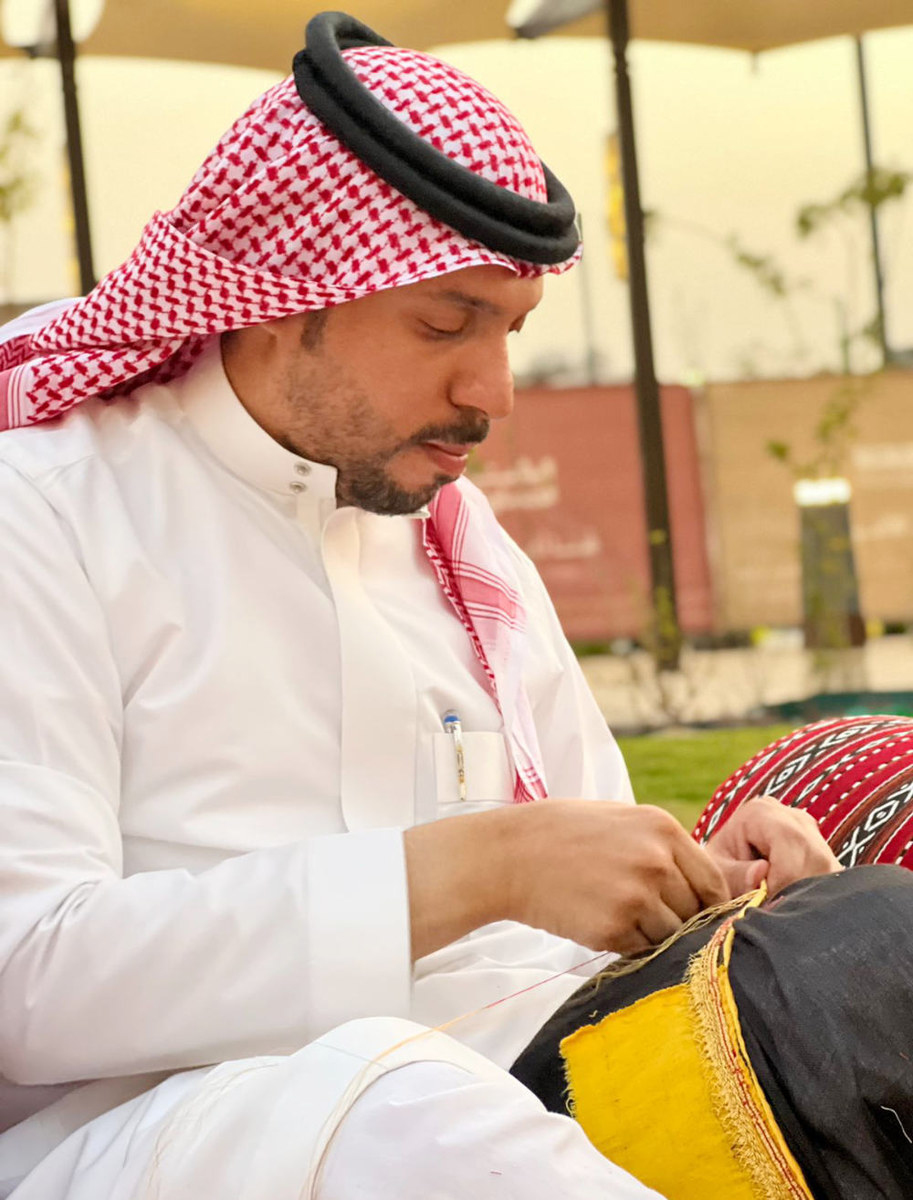


Muhammad Ali Al-Qattan follows in his father's footsteps by hand sewing bishts. The Al-Hasawi Bisht Festival began on Wednesday and will last seven days.   (Supplied)

While machine-made bishts began to dominate markets many years ago, aided by their low prices, handmade bisht continue to exist “at least among elites,” he said.

“For each specific part of the bisht, there is a tailor who is good at working with it and feels (it is) easy to sew it,” he added.

The seven-day festival features an exhibition documenting the value of bisht, live workshops on the bisht industry, and a celebration of national handicrafts, including bisht knitting.

Al-Ahsa is well-known for the bisht, a historical craft that has been passed down through many families for generations.


Emad Al-Ghadeer, Executive Member of the National Logistics Committee at Saudi Cambers Council. (Supplied)

Khaled Al-Farida, director general of the tourism authority in Al-Ahsa, said that the bisht industry was initially a women’s profession, as women were eager to knit them for their sons who went to the Kataib (Qur’an memorization sessions), distinguishing them from others.

Men ventured into the business as demand increased, and slowly the industry began to expand.

The names of the bisht are based on the rows of decoration, the width and the shape, which can be triangular, quadrilateral, hexagonal, or octagonal, he explained.

Al-Farida noted that the bisht was once only sold to the rich — merchants, and those with wealth and power. Later, the bisht evolved into a costume and a national symbol of Saudi Arabia and its Gulf neighbors.

According to him, black is the most desired color, particularly during marriages, and one reason for this is that it takes on a distinctive shape when inlaid with gold-colored buttons, as well as beige and brown.


National program identifies 165 native plants for afforestation efforts in Asir

Updated 29 December 2025
Follow

National program identifies 165 native plants for afforestation efforts in Asir

  • The survey is part of broader plans focused on restoring degraded land, using native vegetation 

JEDDAH: Saudi Arabia’s National Afforestation Program has identified more than 165 species of native plants suitable for afforestation in the Asir region, highlighting the ecological diversity of one of the Kingdom’s most environmentally varied areas, the Saudi Press Agency reported.

The findings form part of broader national efforts to expand vegetation cover, address land degradation, and support sustainability goals linked to the Saudi Green Initiative and Vision 2030.

According to the program, the identified species are distributed across a wide range of natural environments in Asir, including mountainous terrain, highlands, slopes, valleys, plains, rocky landscapes, and coastal areas stretching from the Red Sea to Tihama.

The species belong to numerous plant families, including Fabaceae, Anacardiaceae, Burseraceae, Capparaceae, Ebenaceae, Euphorbiaceae, Malvaceae, Myrtaceae, Oleaceae, and Primulaceae, among others.

Plants suitable for afforestation range from large and small trees to perennial and annual shrubs, herbs, succulents, bulbs, and climbing plants. 

Among the most notable species identified are the grey mangrove, mastic tree, mooring or ben tree, juniper, sycamore fig, wild olive, henna, wild jasmine, hawthorn, and arak.

The Saudi Arabian Botanical Society described the announcement as an important step in protecting plant diversity and strengthening the ecosystem conservation in the Kingdom. 

Munirah bin Hamad Al-Hazani, founder and president of the society, said that prioritizing native species is central to sustainable afforestation.

“Focusing on the cultivation of native plants adapted to diverse environments forms the cornerstone of sustainable afforestation projects, as it plays a pivotal role in enhancing vegetation cover, combating land degradation, and conserving natural and financial resources,” she told Arab News.

Al-Hazani added that long-term success depends on cooperation between government bodies and the nonprofit sector, alongside community involvement and environmental awareness programs.

The National Afforestation Program has increasingly emphasized community participation, working with government agencies, private companies, and nonprofit organizations to support planting initiatives and environmental education. Its approach includes promoting volunteerism and discouraging harmful environmental practices, while focusing on the use of native plants adapted to local conditions.

Parallel efforts are underway in other regions of the Kingdom to support vegetation restoration through research and infrastructure development. In Jouf, often referred to as the Kingdom’s food basket, the King Salman bin Abdulaziz Royal Reserve Development Authority has established a Central Nursery and a Wild Seeds Research and Production Station to address the growing demand for reliable sources of native seeds and seedlings.

The project was launched in 2023 under the directive of Prince Abdulaziz bin Saud bin Naif, the minister of interior and chairman of the authority’s board of directors. 

Since then, the facilities has become a key component of vegetation restoration efforts within the reserve.

The authority has focused on building operational capacity by recruiting and training specialists to manage cultivation and research activities. The research and production station includes 14 mother-seed production fields containing over 400,000 trees and shrubs. 

Planting began in late 2024, with more than 30 native plant species represented, selected for their role in the reserve’s natural ecosystem. 

The facility also includes two seed storage units with a combined capacity of 3,000 kilograms. Seeds are collected annually from multiple sites within the reserve and used for seedling production habitat rehabilitation.

The Central Nursery spans 6,000 square meters and includes 30 greenhouses spanning 1,500 square meters, as well as two shade houses used during summer months. A plant hardening facility, designed to prepare seedlings for natural environmental conditions, covers 10,000 square meters and is divided into seven sections. The nursery’s annual production capacity reaches 1.5 million seedlings, representing more than 15 native plant species. 

Together, these initiatives underscore the growing role of native plant research and propagation in Saudi Arabia’s afforestation strategy, particularly as the Kingdom works to balance environmental restoration with long-term sustainability goals.