


Saudi Arabia finalizes regulatory procedures for EV charging stations

As part of the Riyadh Sustainability Strategy, the Royal Commission of Riyadh launched an initiative last year to ensure that 30 percent of all vehicles in the capital would be powered by electricity by 2030. (Shutterstock)
Short Url
Updated 22 August 2022
Follow

Saudi Arabia finalizes regulatory procedures for EV charging stations

  • Electromin’s charging network will offer a complete spectrum of services from AC chargers to DC fast and ultra-fast chargers, catering to all customer segments

RIYADH: The Saudi Ministry of Energy, in cooperation with other governmental agencies, announced on Sunday that it had completed all legislative and technical aspects to regulate the electric vehicle charging market, according to the Saudi Press Agency.

The team includes the Ministry of Municipal and Rural Affairs, the Ministry of Transport and Logistics, the Ministry of Commerce, the Saudi Electricity Co. and the King Abdullah Petroleum Studies and Research Center, among others.

The move will enhance job creation in the Kingdom and contribute to its green initiative to reach net-zero carbon by 2060.

The regulating team will monitor and follow up on the activity to ensure that investors comply with the infrastructure requirements for EV charging stations, SPA reported.

The imports of EV charging equipment were permitted in 2020, said Saad Alkasabi, governor of Saudi Standards, Metrology and Quality Organization.

Sustainability to the core

As part of the Riyadh Sustainability Strategy, the Royal Commission of Riyadh launched an initiative last year to ensure that 30 percent of all vehicles in the capital would be powered by electricity by 2030.

Fahd Al-Rasheed, the CEO of the Royal Commission for Riyadh City, told Arab News earlier that they intend to be a global steward of environmental preservation and a global economic powerhouse driven by resource conservation. 
Highlighting the Kingdom’s green economy plan, he said last year that the private sector had a vital role in achieving these goals, and it would create 360,000 green jobs and raise $40 billion in investments.

The plan sought to reduce emissions and increase the share of renewables to 50 percent by 2030.

Charging the EV infrastructure

Electromin, a wholly owned e-mobility turnkey solutions provider under Petromin, in May announced the rollout of electric vehicle charging points across the Kingdom.

In an earlier interview with Arab News, Kalyana Sivagnanam, the group CEO of Petromin, said that the network includes 100 locations across the Kingdom powered by a customer-centric mobile application.

Sivagnanam said that the company would set up most of its charging stations in Riyadh, Jeddah and Dammam and eventually branch out across the country.

Electromin’s charging network will offer a complete spectrum of services from AC chargers to DC fast and ultra-fast chargers, catering to all customer segments.

According to a statement, the chargers installed in phase one will be compatible with all vehicles approved by the Saudi standards organization using AC Type 2 connectors. 

The second phase will include additional AC chargers and DC chargers up to 360 kilowatts, effectively allowing users to add up to 100 kilometers in four minutes. 

Swiss EV infrastructure major ABB E-mobility has been instrumental in driving the Saudi EV infrastructure by providing Electromin with EV chargers for installation at 100 petrol stations across the Kingdom.

The e-mobility company is the world leader in EV charging solutions and the partner of choice for some of the world’s biggest EV manufacturers. After receiving approvals from the Saudi standards organization, the company has been installing a network of chargers across the country.

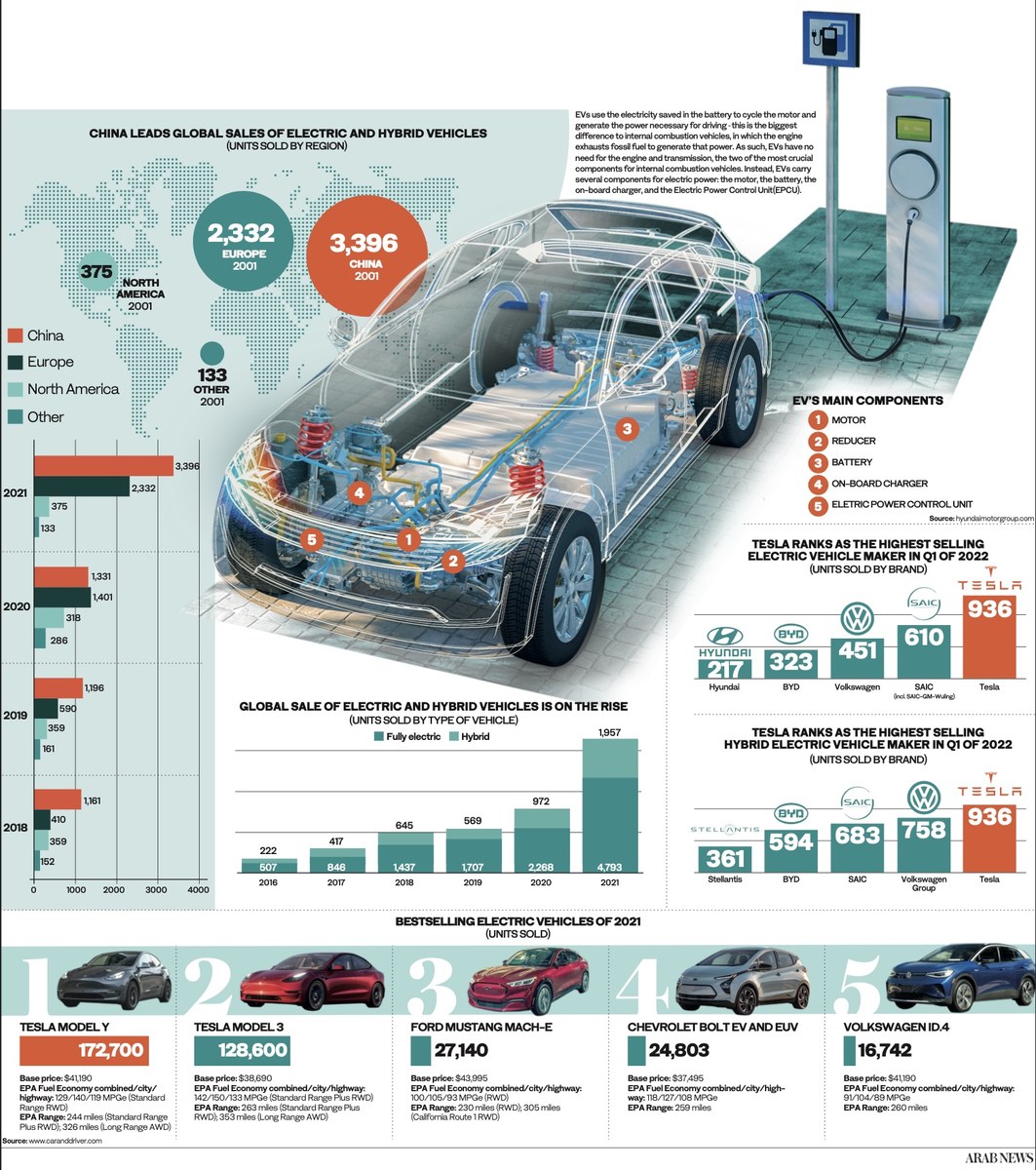
According to an ABB E-mobility press note, EV sales in the country will expand, with 1.3 million electric vehicles expected to be delivered in the next eight years. So, there is an urgent need to establish an EV ecosystem in the region that provides a one-stop e-mobility solution for EVs while monitoring and maintaining the network of charging stations in a flexible and efficient manner.

“Today, we are significantly expanding our e-mobility footprint and sustainability goals in the country. This partnership is momentous and supports the key objectives of ABB in Saudi Arabia – it shows our alignment and commitment to supporting the Kingdom’s Vision 2030,” said Fadi Alshaikh, E-mobility lead for ABB in the Kingdom, in the press note.

Moreover, to make the fuel-to-electric transition convenient for customers, Electromin has also devised an app to show all charging locations within the selected Petromin Express and Petromin AutoCare outlets. It will allow customers to check the charger’s status and fully control their charging sessions. The app will also facilitate payments and bookings. 

Empowering EV manufacturing

The Kingdom is also leading the EV wave by encouraging the US-based Lucid Motors to establish its first EV factory in the region with an annual capacity of 150,000 zero-emission units.

The deal is estimated to provide Lucid Motors financing and incentives of up to $3.4 billion over the next 15 years to build and operate the manufacturing facility in the Kingdom.

Peter Rawlinson, CEO of Lucid Motors, had told Arab News in an earlier interview that the company has an alignment of mindset with the Kingdom’s Vision 2030 which could extend beyond cars. His objective was to build a supply chain infrastructure that benefits the economy of the Kingdom.

The production will start next year, and a complete assembly will be ready by 2025. To be located in King Abdullah Economic City, the factory is the EV manufacturer’s first production facility outside the US.


Saudi Arabia brings the Asian houbara back from the brink

Updated 8 sec ago
Follow

Saudi Arabia brings the Asian houbara back from the brink

  • A science-led reintroduction is giving the iconic desert bird a chance to recover

JEDDAH: The Asian houbara (Chlamydotis macqueenii) is classified as critically endangered across the Arabian Peninsula by the International Union for Conservation of Nature, with populations continuing to decline despite decades of conservation initiatives and captive breeding programs.

Wild resident populations no longer exist in Saudi Arabia, and migratory birds are now only occasionally recorded along the Kingdom’s northern and eastern borders.

It was formally recognized as a distinct species only in 2003. For many years, it was considered a subspecies of the African houbara, until scientific research confirmed clear differences in morphology, plumage, vocalizations and genetic makeup. One of its most distinctive behavioral traits is the male’s courtship display, during which it raises its white breast feathers and performs a striking running display across open terrain.

FASTFACT

DID YOU KNOW?

  • The Asian houbara was only recognized as a distinct species in 2003.
  • Migratory Asian houbara can travel more than 5,000 km.
  • Captive houbara require strict genetic management to maintain wild traits.
  • Individual houbara can disperse up to 500 km after release in search of suitable habitat.

Physically, the Asian houbara is larger and paler than its African relative. Adult females typically weigh between 1.2-1.5 kg, while males range from 1.8 to 2.5 kg. Well adapted to arid and semi-arid environments, the species is a strong flier, with migratory individuals capable of traveling more than 5,000 km between breeding and wintering grounds.

Historically, Saudi Arabia supported large numbers of both resident houbara in the north of the Kingdom and migratory Asian houbara across its deserts. Birds arrived from Central Asia in autumn, spent the winter months in Saudi Arabia, and departed in early spring to return to their breeding grounds.

The species’ historical range extends from eastern Egypt to Mongolia, encompassing the entire Arabian Peninsula, Palestine, Syria, Iraq, Iran, Pakistan, western India, Turkmenistan, Uzbekistan, Afghanistan, Kyrgyzstan, Tajikistan, Kazakhstan, China — including Xinjiang and Gansu provinces — and Mongolia as far as the Gobi Desert.

During the second half of the 20th century, wild populations of both resident and migratory Asian houbara declined sharply, driven primarily by overhunting and widespread habitat degradation.

Today, the creation of large protected landscapes — aligned with Vision 2030 and the Saudi Green Initiative’s commitment to enhance biodiversity, restore desert ecosystems and protect 30 percent of the Kingdom’s land and sea by 2030 — is creating renewed opportunities for recovery. 

In particular, the royal reserves in northern Saudi Arabia are providing extensive suitable habitat, active restoration programs and strengthened wildlife protection systems, enabling houbara to return and complete their natural annual cycles in the wild.

The Reserve’s habitat is suitable to support resident populations of Asian houbara. (Prince Mohammed bin Salman Royal)

As part of its ReWild Arabia mission, the Prince Mohammed bin Salman Royal Reserve has reintroduced the Asian houbara bustard after more than 35 years of absence. The release of 20 birds marks a science-led effort, conducted in collaboration with the National Center for Wildlife and the Prince Mohammed bin Salman Houbara Conservation Foundation, to restore sustainable wild populations in Saudi Arabia.

Falconry, centered on the houbara bustard, has shaped life on the Arabian Peninsula for thousands of years and was recognized by UNESCO in 2021 as Intangible Cultural Heritage. While traditional practices once ensured sustainability, habitat loss, overhunting and poaching led to sharp population declines from the mid-20th century onwards.

In response, the late Prince Saud Al-Faisal established a pioneering houbara breeding centre in Taif in 1985. Although captive breeding programs across the Gulf have achieved technical success, restoring self-sustaining wild populations has remained a challenge — one now led by the Prince Mohammed bin Salman Houbara Conservation Foundation.

The Asian houbara is the 13th species to be reintroduced to the Prince Mohammed bin Salman Royal Reserve as part of its rewilding program, which aims to return 23 native species to their historical range.

Andrew Zaloumis, CEO of the Prince Mohammed bin Salman Royal Reserve, told Arab News that the present moment offers the best opportunity to reintroduce the species. “We have established the ecological, operational, and community foundations required to support large-scale rewilding, including the return of the Asian houbara.

“Habitat restoration across the reserve is re-establishing suitable conditions for the species to survive and disperse. At the same time, our advanced ranger program and community engagement initiatives provide the capacity needed to monitor wildlife effectively and counter the risk of illegal hunting.”

A science-led conservation approach has underpinned every stage of the reintroduction program. Zaloumis said: “Every stage of this program, from breeding to release to long-term monitoring, is guided by research, data, and specialist expertise.”

Prince Mohammed bin Salman Houbara Conservation Foundation CEO Olivier Combreau and Reserve CEO Andrew Zaloumis attach a satellite tag to an Asian houbara to be released into Prince Mohammed bin Salman Royal Reserve. (Prince Mohammed bin Salman Royal)

He added: “Captive breeding of the Asian houbara is technically complex. The species does not breed naturally in managed conditions, so artificial insemination is required, with limited breeding windows each year.

“Genetic management is equally critical. Captive populations must retain sufficient genetic diversity and wild-type traits to support survival after reintroduction. This requires controlled breeding programs, continuous genetic monitoring and meticulous records to prevent inbreeding and loss of genetic variability. In parallel, rearing techniques must be designed to ensure birds retain natural behaviors and do not become imprinted to maximize their chances of survival once released.”

Ten of the released birds have been fitted with satellite tracking devices to collect critical data on survival, movement, habitat use and threats encountered in the wild.

“The satellite transmitter weighs about 30g, in line with best practice that tags should weigh 3 to 5 percent of an animal’s body weight and is attached to the bird with a Teflon ribbon arranged in a harness configuration, the process takes less than 10 minutes. The harness is designed to minimize impact on the bird’s natural behavior, allowing normal movement, feeding, breeding, and migration,” Zaloumis said. “The devices are set to transmit data 4 times per day.”

The information gathered will help guide future releases and support the long-term recovery of houbara populations in Saudi Arabia and across the region.

Release sites were selected to maximize survival and long-term population stability through detailed ecological assessments. Zaloumis explained that these evaluations ensure the sites provide the conditions reintroduced houbara need to survive and establish in the wild.

“The three key criteria are: adequate natural food such as fresh green leaves, flowers and buds, insects and reptiles, an absence of disturbance (no vehicles, no or little grazing animals), an absence of poaching and a limited number of predators (foxes being the most common threat to reintroduced houbara).”

He added: “Houbara needs space, a lot of space to thrive.”

Individual houbara released into the Prince Mohammed bin Salman Royal Reserve are expected to disperse into neighboring reserves and beyond. “We have observed resident houbara traveling up to 500 km in search of suitable habitat. This underscores the importance of protected areas and the Kingdom’s royal reserve initiative.”

The ultimate indicator of success is natural population growth in the wild, assessed through regular, standardized field surveys conducted across large and representative areas. Repeating these surveys annually provides a clear picture of population trends over time.

Additional scientific indicators are also monitored, including evidence of breeding activity, breeding success, mortality rates and movement patterns, observed through field surveys and satellite tracking data.

“For a long-lived bird with a low reproductive rate, such as the Asian houbara, success cannot be measured over short timeframes. A period of at least 10 to 15 years of consistent monitoring is typically required to confirm with confidence that a reintroduced population is self-sustaining,” Zaloumis concluded.