

Founder of UK charity Penny Appeal visits Pakistan to review sustainable aid projects

1 / 3
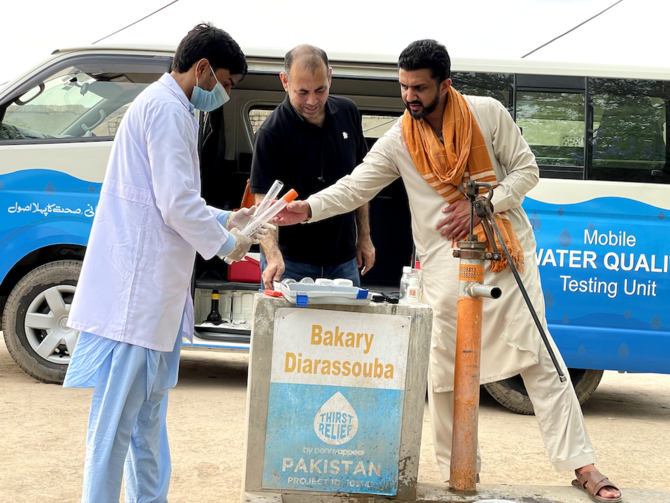
Penny Appeal founder Adeem Younis visited Pakistan joined by fellow trustees Mohammed Jahangir and Irfan Rajput. (Supplied/Penny Appeal)
2 / 3
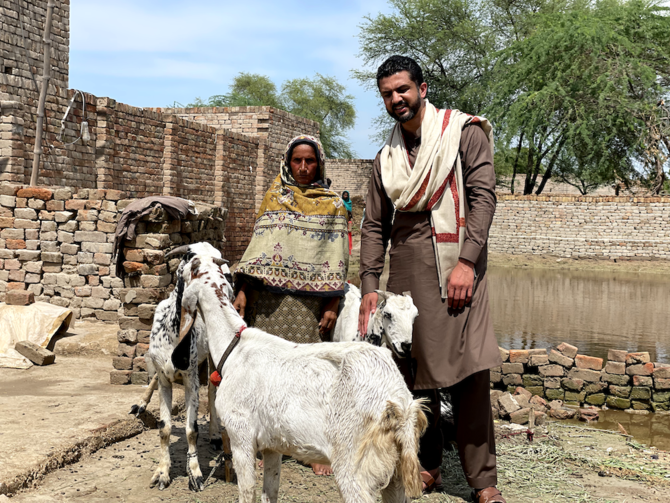
Penny Appeal founder Adeem Younis visited Pakistan joined by fellow trustees Mohammed Jahangir and Irfan Rajput. (Supplied/Penny Appeal)
3 / 3
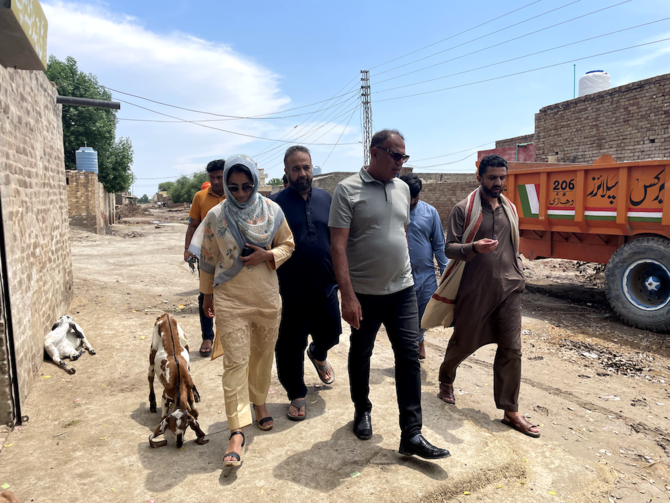
Penny Appeal founder Adeem Younis visited Pakistan joined by fellow trustees Mohammed Jahangir and Irfan Rajput. (Supplied/Penny Appeal)
Short Url
Updated 19 August 2022
Follow

Founder of UK charity Penny Appeal visits Pakistan to review sustainable aid projects

  • Adeem Younis and two of his fellow trustees visited projects serving vulnerable people, including children, orphans and the elderly, and some of the 31 mosques established by the charity
  • ‘We all have a great love for Pakistan. There is so much beauty and so much potential, we all must play our part in helping lift our country up,’ said Mohammed Jehangir, chair of trustees

LONDON: The founder of UK-based humanitarian charity Penny Appeal, Adeem Younis, visited Pakistan recently to monitor and evaluate some of the development projects funded by the organization across the country with the aim of providing a sustainable and empowering route out of poverty.

The charity said it funds a diverse portfolio of relief projects in the country, including water wells, hunger relief, eye surgery, care for the elderly, homes for orphans and a number of schools.

“Now in its 13th year, the charity has helped transform the lives of over 20 million people around the world and has worked in 60 countries,” Penny Appeal said.

“To date, the charity has distributed an estimated £9.7 million ($10.7 million) in aid across Pakistan and been instrumental in disaster relief, as well as launching income-generating projects to support women and children in need.”


Younis, who was joined by fellow trustees Mohammed Jahangir and Irfan Rajput, visited some of Penny Appeal’s ongoing projects serving vulnerable groups including children, orphans and the elderly. The charity said it prioritizes projects that have long-term, multiplying effects on the lives of beneficiaries.

“With cutting-edge water-waste management for example, through its network of 9,334 kitchen gardens, the charity produces the equivalent of 65,000 meals every single day,” according to Penny Appeal.

“This is in addition to 18,645 tube wells benefiting 216,020 individuals, 461 deep wells benefiting 105,200 individuals, and 27 solar-powered wells and power centers benefiting 32,600 individuals.”

“We all have a great love for Pakistan,” said Mohammed Jehangir, the charity’s chair of trustees. “There is so much beauty and so much potential, we all must play our part in helping lift our country up.
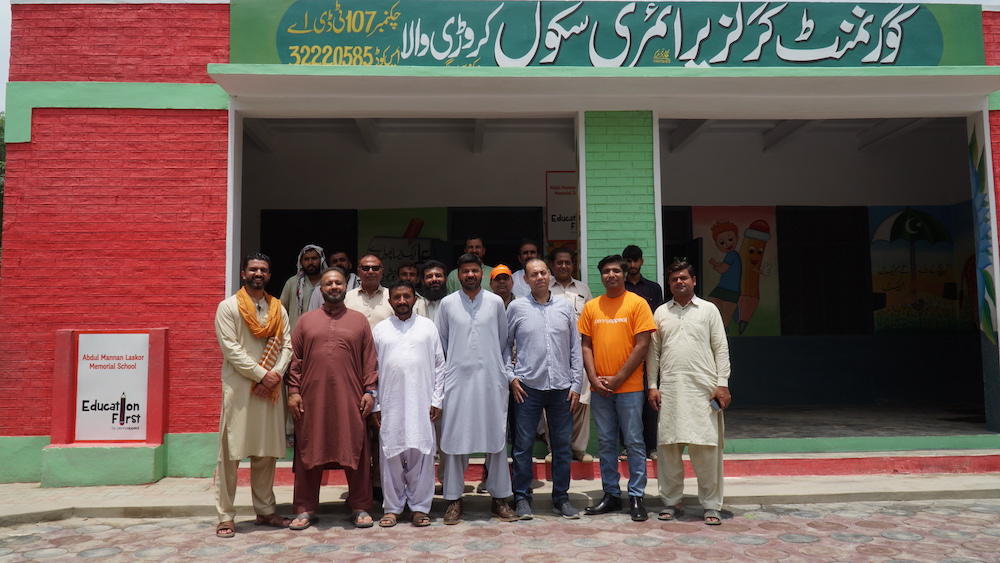


The charity said it funds a diverse portfolio of relief projects in the country and a number of schools. (Supplied/Penny Appeal)

“There is so much to do, no one person can do everything but we can all do something and this is the wonderful spirit of Penny Appeal, enabling everyone to play their part.”

The charity said that by focusing on sustainability, it has helped transform Zakat receivers into Zakat givers. In 2018, for example, it provided 168 pregnant goats to vulnerable families and widows in Vehari District, Punjab province, and four years later the number of goats has grown to 1,512. With the income, meat and milk the animals provide, Penny Appeal said, families who once struggled to feed their children are now able to support multiple families in addition to their own.

“As a child of this nation I’m very privileged to be asked to support Penny Appeal’s incredible work in Pakistan,” Rajput said.
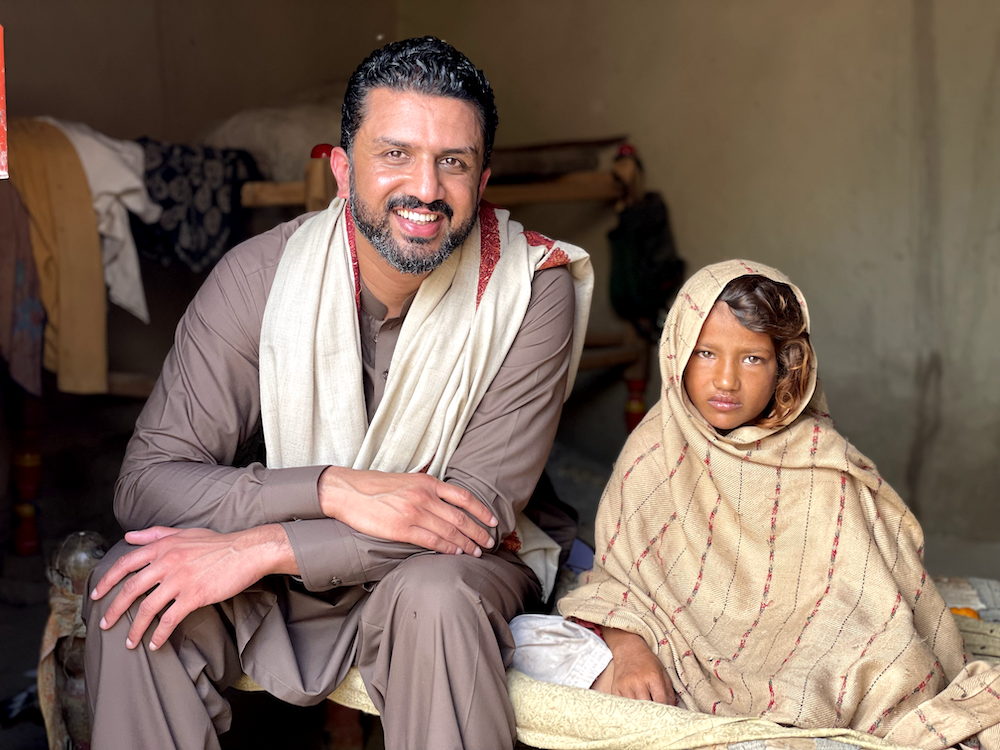


Adeem Younis visited some of Penny Appeal’s ongoing projects serving vulnerable groups including children, orphans and the elderly. (Supplied/Penny Appeal)

“The charity brings a wealth of expertise and experience, and its multi-pronged approach to sustainable development will help those in need not just lift themselves out of poverty but lift generations of Pakistanis out of poverty for good.”

The trustees also visited a few of the 31 mosques established by the charity, which serve 31,800 people. In addition to providing places of worship they are also used to provide about 6,700 children with a comprehensive Islamic education.

The charity began in Pakistan, Younis said, and “it’s here where we draw our inspiration to serve vulnerable people and communities all over the world … we want to help people not just escape poverty but become agents of change in their own communities.”


Campaigning starts for Bangladesh’s first national election after Hasina’s ouster

Updated 3 sec ago
Follow

Campaigning starts for Bangladesh’s first national election after Hasina’s ouster

DHAKA: Campaigning began Thursday for Bangladesh’s first national elections since the 2024 uprising that ousted longtime Prime Minister Sheikh Hasina.
The major political parties held campaign rallies in the capital, Dhaka, and elsewhere ahead of Feb. 12 election, which is seen as the most consequential in Bangladesh’s history as it follows Hasina’s ouster and is being held under an interim government with voters also deciding on proposed political reforms.
The interim government led by Nobel Peace Prize laureate Muhammad Yunus has pledged to hold a free and fair election, but questions were raised after his administration banned Hasina’s former ruling Awami League party. The Awami League and the Bangladesh Nationalist Party have historically dominated the country’s electorate.
There are also concerns about the country’s law and order situation, but the government says they will keep the voting peaceful.
Yunus assumed office three days after Hasina left the country for India on Aug. 5, 2024, following the deaths of hundreds of protesters and others in a violent crackdown.
With the Awami League excluded from the election, a 10-party alliance led by Jamaat-e-Islami, an Islamist party, is seeking to expand its influence. Jamaat-e-Islami has long faced criticism from secular groups who say its positions challenge Bangladesh’s secular foundations. A new party formed by student leaders of the uprising, the National Citizen Party, or NCP, is also part of the alliance.
Tarique Rahman, BNP chairman and the son of former Prime Minister Khaleda Zia, is widely seen as a leading contender for prime minister. His party has drawn strong support rooted in the political legacy of his mother, who died last month. Rahman returned to Bangladesh last month after 17 years in exile in the United Kingdom.
Rahman launched his campaign in the northeastern city of Sylhet with an address to thousands of supporters at a rally Thursday. He is scheduled to visit several other districts in the coming days.
In Sylhet, Rahman criticized the Jamaat-e-Islami party for using religious sentiment to get votes. He said that if elected, he would uphold national sovereignty and work for women and young people.
“Now we must establish the right to vote, rebuild the nation, and make it economically self-reliant,” he said.
Jamaat-e-Islami and the NCP began their campaigns in the capital, Dhaka.
“There are terrorism (crimes), extortion, corruption and forcible possession, (our fight) is against them to establish a just Bangladesh, and alongside to build a safe Dhaka for women and children,” said Nasiruddin Patwari, a leader of the National Citizen Party.
The election will also include a referendum on a national charter, with the interim government seeking voter support for what it describes as a new political course built on reforms. The charter was signed last year by 25 of the country’s 52 registered political parties. The Awami League opposed the idea and several other parties declined to sign the document.
Rahman’s return has reenergized his supporters.
“Under his leadership, in the coming time we want to see a self-reliant Bangladesh and organizing this country through a democratic process,” said Ali Akbar Rajan, a BNP supporter, at Rahman’s rally in Sylhet. “He will emerge as a successful statesman, that is what we hope for,“
The July National Charter, named after the uprising that began in July 2024 and led to the fall of Hasina, is currently nonbinding. Supporters of the charter say a referendum is needed to make it legally binding and a part of the constitution. Only Parliament can change the constitution in Bangladesh.
The interim government says the charter would bring more checks and balances to avoid authoritarian administrations, including by giving the presidency more authority to balance what had been a powerful prime minister position. It also proposes term limits for legislators, and measures to prevent conflicts of interest, money laundering and corruption.