KARACHI: A Pakistani stage production that spotlights the relationship between two leading figures of the Indian independence movement, Muhammad Ali Jinnah and Mahatama Gandhi, has received widespread applause from audiences in Karachi since it premiered there on the 75th anniversary of Pakistan’s birth.
Written by renowned dramatist Anwar Maqsood, “Saadhay 14 August” is the last part of a trilogy that centers on events leading to the emergence of two independent nations, India and Pakistan, after the end of British rule in the Indian Subcontinent in 1947.
The play tries to imagine interactions between Pakistan’s founding father Jinnah and Indian independence icon Mohandas Karamchand Gandhi.
The previous two parts of the series were called “Pawnay 14 August” and “Sawa 14 August.”
“I didn’t write ‘14 August’ because Independence Day never came for me after August 14, 1947,” Maqsood told Arab News in an interview this week. “People do not really understand what independence truly means and I have tried to convey it in the play.”
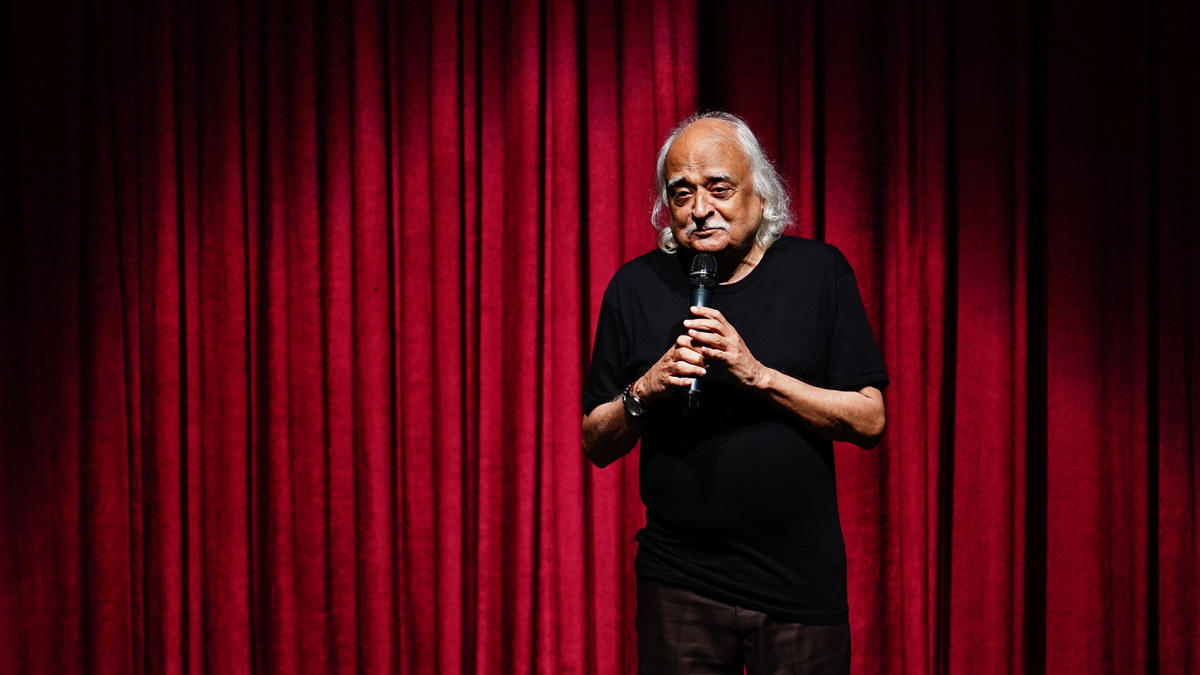
Playwright, Anwar Maqsood, addresses the audience at the Karachi Arts Council, Karachi, Pakistan, on August 16, 2022. (Kopykat Productions)
Discussing the central theme of the new production, the platwright said it was an attempt to determine who was responsible for the division of the Subcontinent and “should be punished.” The drama then plays out as a court case that takes Jinnah and Gandhi to London, Lahore, Kashmir and New Delhi in search of the answer to the play’s central puzzle.
“We wanted to show a lighter side of the two leaders,” Dawar Mehmood, who directed the play, told Arab News.
“It was a huge responsibility to portray a big, national leader,” actor Omar Kazi, who plays Jinnah, told Arab News. “It was a new look, new style and a new aura … as opposed to the clichéd Jinnah in his Karakul cap. The play is also set in current times so he is supposed to behave in a manner that aligns with present times.”
Tanveer Gill, who has won audiences with his portrayal of Gandhi, said he worked really hard to get into his character.
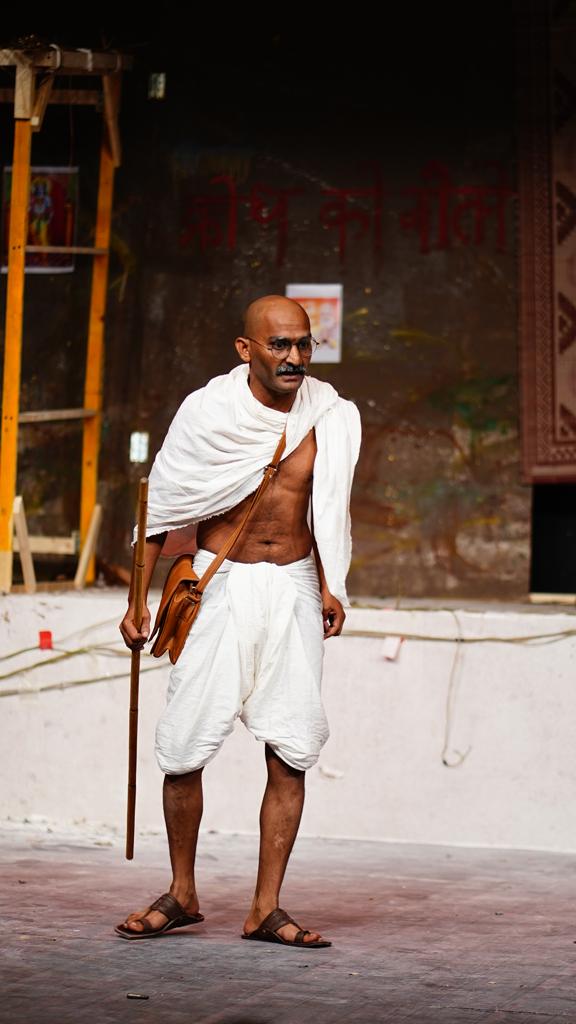
Tanveer Gill performs as India's founder Mohandas Karamchand Gandhi in Saadhay 14 August in Karachi, Pakistan, on August 16, 2022 (Kopykat Productions)
“There is only so much you find about original Gandhi on YouTube,” he said. “To make this character [work], I observed and thought of positive, older people who used to be in my life. It was their positivity that helped me play the part.”
Veteran actor Sajid Hasan, who played a small role in the production, said Maqsood had “done us a very big favor” by turning the two characters into “real humans.”
“There is a little irreverence in Anwar [Maqsood] Bhai for which he has always been known,” he said. “But it is a brilliant take on the overall India-Pakistan situation.”
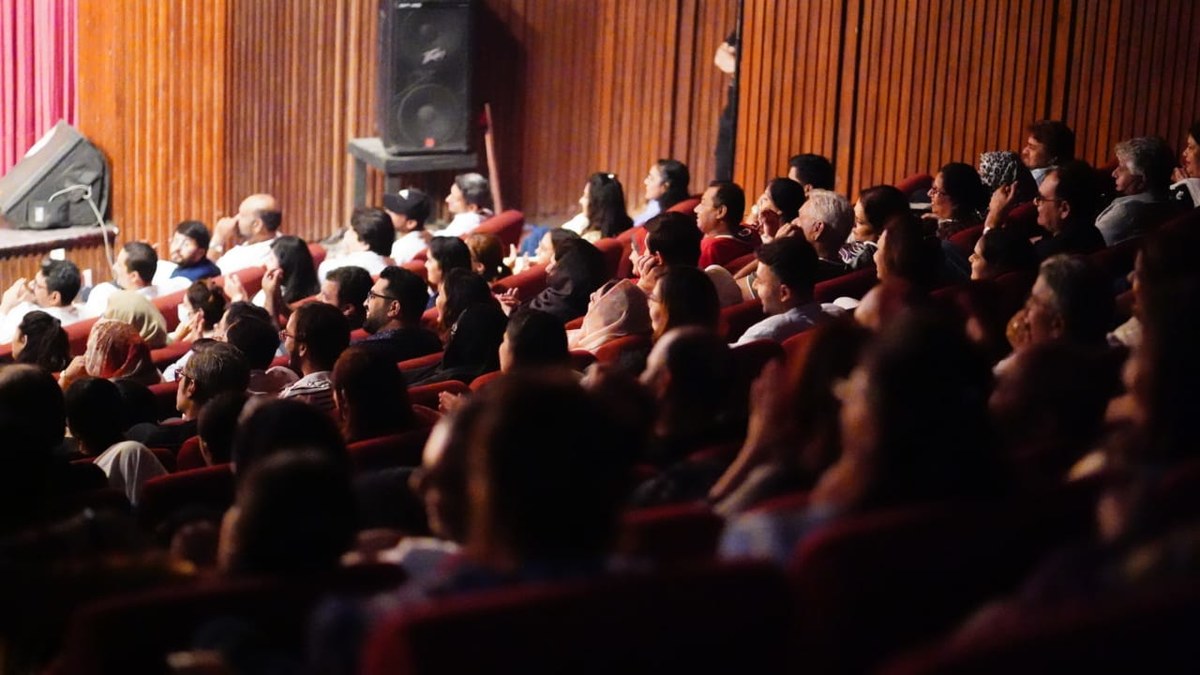
People watch the premiere of Saadhay 14 August at the Karachi Arts Council, Pakistan, on August 14, 2022. (Kopykat Productions)
Musician Ali Hamza said such historical plays were needed in Pakistan and Maqsood was well placed to write on partition since he had witnessed it closely.
“He uses humor but what he feels in his heart is also reflected in [the play],” Hamza said. “This was so engaging and so on-point.”
Actor Fahad Mirza said “Saadhary 14 August” could be compared to any international stage production.
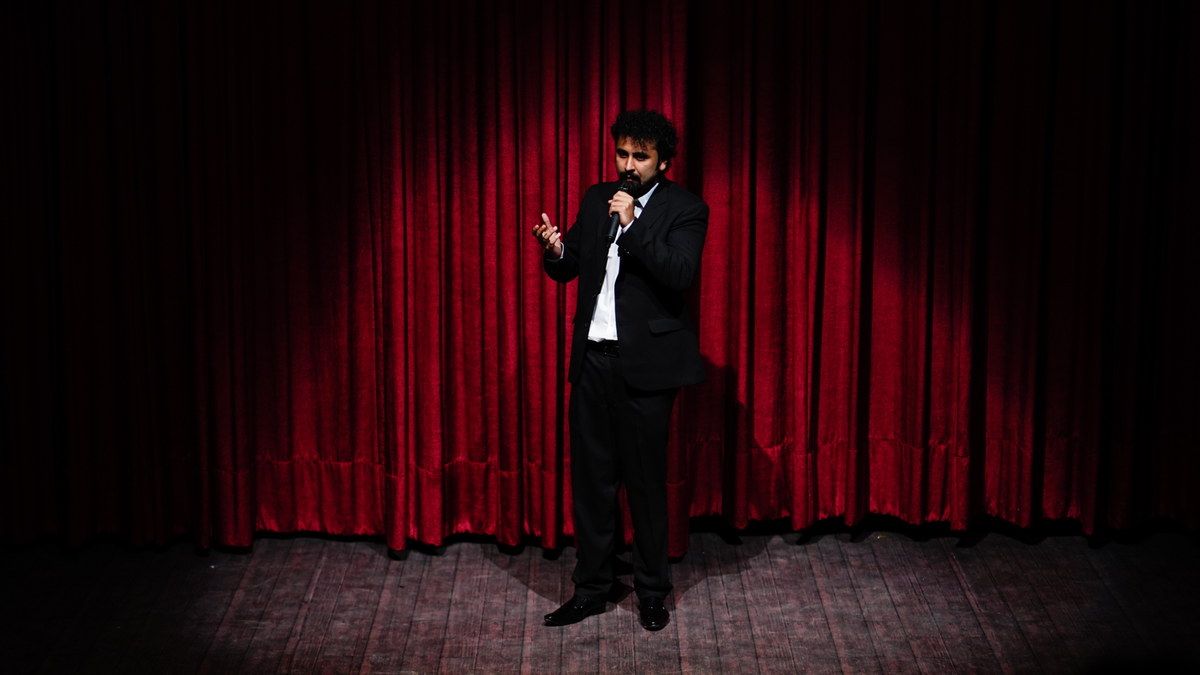
Director of Saadhay 14 August, Dawar Mehmood, introduces the play to the audience in Karachi, Pakistan, on August 16, 2022. (Kopykat Productions)
“I hope the world sees how much talent and skill we have,” he said. “It was so beautiful. There were times when people were horrified to see the scenes of partition and violence … Dawar [Mehmood] has nailed it and Anwar Sahib is at his best.”
“Saadhay 14 August” will be staged in Karachi until November 15, after which it will move to Lahore and Islamabad as well as to various international destinations next year.