

China In-Focus — Stocks rise; China to issue $741m of treasury bonds in Hong Kong

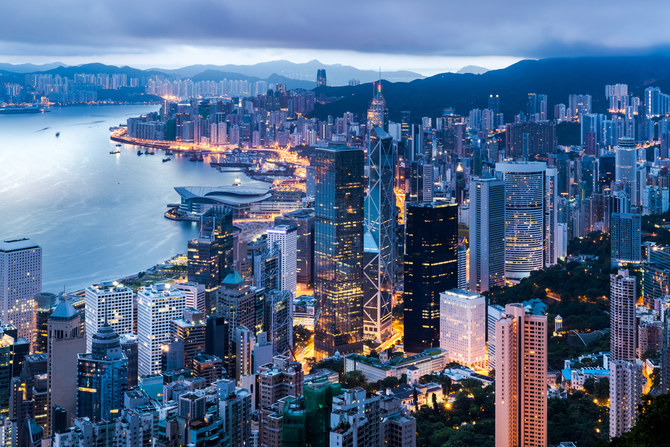
China’s finance ministry will issue $740.70 million worth of treasury bonds in Hong Kong (Shutterstock)
Short Url
Updated 04 August 2022
Follow

China In-Focus — Stocks rise; China to issue $741m of treasury bonds in Hong Kong

RIYADH: China and Hong Kong stocks rose on Thursday, as investors’ focus shifted from tensions around Taiwan to a raft of newly launched infrastructure projects that Beijing hopes can help stabilize its COVID-19-hit economy.

China’s blue-chip CSI300 Index climbed 0.9 percent, while the Shanghai Composite Index gained 0.8 percent.

Hong Kong’s benchmark index Hang Seng added 2.1 percent, led by technology shares.

Foreigners cut China debt, dump equities in July: IIF

Foreign investors continued to cut holdings in Chinese bonds in July and dumped equities for the first time in four months, according to a report by the Institute of International Finance.

Emerging markets posted a fifth straight month of portfolio outflows, setting the longest such streak in records going back to 2005, as global recession risk, inflation and a strong dollar drew away cash, the report showed.

Chinese debt witnessed outflows of around $3 billion last month, while $6 billion exited other EM, IIF estimated.

If confirmed by official data, it would be the sixth consecutive month of foreign outflows from China’s $20 trillion bond market.

During the same period, China’s stock market witnessed $3.5 billion of foreign outflows, compared with marginal inflows of $2.5 billion in other EM markets, IIF added.

China to issue $741 million of treasury bonds in Hong Kong on August 10

China’s finance ministry will issue 5 billion yuan ($740.70 million) worth of treasury bonds in Hong Kong on Aug. 10, including 1 billion yuan of 10-year bonds, the Hong Kong Monetary Authority said on Thursday.

The remaining 4 billion yuan will be added to bonds already issued and which mature in 2024, the HKMA said.

(With input from Reuters) 


Saudi Arabia, UAE and Kuwait to lead GCC property growth in H1: Markaz 

Updated 5 sec ago
Follow

Saudi Arabia, UAE and Kuwait to lead GCC property growth in H1: Markaz 

RIYADH: Gulf real estate markets are expected to extend their growth into the first half of 2026, with Saudi Arabia, the UAE and Kuwait leading activity, a new analysis showed. 

The report by Kuwait Financial Center, also known as Markaz, said sustained momentum across the Gulf Cooperation Council will be driven by steady economic growth, improving liquidity and a more accommodative interest rate environment. 

Developing a robust real estate landscape remains central to GCC governments’ diversification strategies as they seek to reduce reliance on crude revenues. 

In Saudi Arabia, the Real Estate General Authority expects the Kingdom’s property market to reach $101.62 billion by 2029, with an anticipated compound annual growth rate of 8 percent from 2024. 

Setting out its forecast for six months to the end of June, the report said: “Markaz expects the GCC real estate market to remain in an accelerating phase in the first half of this year.” 

It added: “Higher oil production, growth in the non-oil economy, continued government spending on infrastructure and development projects, along with policy rate cuts, are expected to improve liquidity and credit growth. 

“These factors support borrowing and investment activity across residential, commercial, and industrial real estate segments.” 

Markaz said the sector will remain a key contributor to regional economic development, offering attractive opportunities for investors across segments. 

Saudi Arabia outlook 

Saudi Arabia’s real estate market remains in an accelerating phase and is expected to sustain momentum in the first half of 2026, signaling stable conditions with room for further gains. 

The report said the Kingdom’s sector showed strong performance in the second half of 2025, driven by residential activity and tight office market conditions. 

Residential transactions increased 17.9 percent quarter on quarter in the third period of 2025, with Riyadh and Jeddah leading price gains, while developers accelerated supply through giga-projects and premium residential developments. 

The office sector remained highly constrained, with vacancy in Riyadh near zero at 0.5 percent, supporting prime rent growth of 7.3 percent year on year. 

Demand was underpinned by the Kingdom’s Regional Headquarters Program and expanding activity in the healthcare and technology sectors. 

In October, Saudi Arabia’s investment minister Khalid Al-Falih said the number of companies relocating their regional headquarters to Riyadh had exceeded 780, underscoring the Kingdom’s growing appeal as a global business hub. 

The regional HQ program offers a 30-year corporate tax exemption, withholding tax relief and regulatory support, reflecting efforts to attract multinational corporations to the capital. 

Some firms that have established regional bases in Riyadh include Northern Trust, IHG Hotels & Resorts, PwC and Deloitte. 

Highlighting future prospects, Markaz said: “While the fiscal deficit widened to 3.7 percent of GDP in 2025 and is expected to remain at similar levels in 2026, increased capital expenditure under Vision 2030 is anticipated to support construction activity, sustaining demand across commercial and residential segments.” 


It added: “Population growth continues to underpin housing demand, with Saudi Arabia’s population reaching 35.3 million by mid-2024, up 4.7 percent year-on-year, with non-Saudis accounting for 44.4 percent of the total.” 

 UAE momentum 

The UAE’s real estate market recorded a strong performance during the first three quarters of 2025, according to Markaz. 

In Dubai, transaction values increased 28.3 percent year on year to 554.1 billion Emirati dirhams ($150.88 billion), while Abu Dhabi recorded total sales of 58 billion dirhams, up 75.8 percent year on year. 

The number of transactions in Abu Dhabi rose 42.3 percent to 15,800. 

“Although Dubai’s annual sales values have consistently outperformed the previous year over the past three years, concerns regarding sustainability have emerged. Markaz notes that the current growth cycle is supported by strong fundamentals, reducing the likelihood of a sharp correction,” said Markaz. 

It added: “However, a period of moderation or cooling is expected over the medium term. Nonetheless, Markaz forecasts that the UAE real estate market could peak in the first half of 2026, marked by steady growth in prices and rental rates in both Dubai and Abu Dhabi.” 

Earlier this month, the UAE state news agency WAM reported that Dubai’s real estate sector grew 6.7 percent during the first nine months of 2025, with its contribution to the emirate’s GDP reaching 8.2 percent. 

Kuwait stability 

Kuwait’s real estate market is expected to remain stable in the first half of 2026, with prospects for rising land prices and rental rates. 

In the first nine months of 2025, the property market maintained a stable growth trajectory, supported by higher land prices and rental rates across investment and commercial segments. 

Real estate transaction activity strengthened during the first three quarters of 2025, with total sales rising 26.9 percent year-on-year to 3.04 billion Kuwaiti dinars ($9.92 billion), driven by growth across all segments. 

Land prices increased on an annual basis across governorates, while rental rates in the investment segment recorded steady gains. 

Investment segment sales increased 60 percent year on year, while residential and commercial sales rose 8 percent and 17.4 percent, respectively. 

Transaction volumes grew 27.8 percent to 4,247, supported by increased activity across residential, investment and commercial properties. 

The report added that Kuwait’s real GDP is projected to grow 3.9 percent in 2026, driven by higher oil production, improved non-oil activity, stronger project awards and anticipated interest rate reductions — factors expected to support demand for commercial and industrial real estate.