

Muharram, first month of Islamic New Year, to begin in Pakistan on Sunday

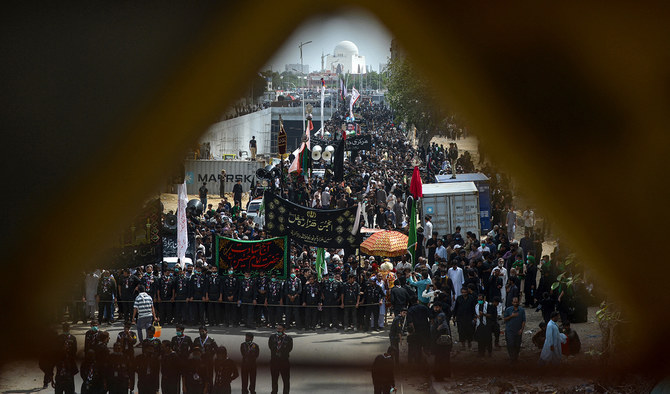
Shiite Muslims march for an Ashura procession during the month of Muharram in Karachi, Pakistan, on August 30, 2020. (AFP/File)
Short Url
Updated 30 July 2022
Follow

Muharram, first month of Islamic New Year, to begin in Pakistan on Sunday

  • The first day of Muharram will mark the beginning of Islamic New Year 1444
  • Pakistan issued guidelines to contain coronavirus spread during Muharram processions

ISLAMABAD: Muharram, the first month of the Islamic New Year 1444, will begin in Pakistan on July 31, the country’s moonsighting committee said on Friday.

The 12 Islamic, or Hijri, calendar months are determined by the sighting of the new moon. The first month is Muharram and the last is Dhu Al-Hijjah.

The Hijri calendar is a lunar calender named after the Arabic word “hijra,” referring to the migration of the Prophet Muhammad (peace be upon him) from Makkah to Madinah 1,400 years ago.

Pakistan’s Central Ruet-e-Hilal Committee held a meeting in Quetta — the provincial capital of Pakistan’s southwestern Balochistan province — to sight the Muharram moon on Friday.  

“The moon was not sighted in Pakistan today (Friday),” the committee said on Twitter. “Therefore, the 1st Muharram-ul-Haram, 1444 AH shall commence from Sunday, the 31" of July, 2022.”

The month of Muharram is significant for Shia Muslims as it marks the death anniversary of the Prophet Muhammad’s grandson, Hussain, who died in the Battle of Karbala on the 10th day of the month in 680 CE.

As mourning processions and gatherings are held throughout the month, the National Command and Operation Centre — Pakistan’s COVID-19 response body — issued health rules for upcoming congregations, making face masks and maintaining a distance of six feet mandatory.

“Venue for the conduct of Majalis [congregations] should be open and spacious with proper ventilation arrangements,” the NCOC said in a notification. “Wearing of masks and maintenance of social distancing is mandatory during majalis and processions. Availability of masks and sanitizers/hand washing arrangements at the entrance (should) be ensured by organizing committees.”

It advised that organizers regulate the entry and exit points of Muharram gatherings and processions to avoid overcrowding and spreading of the infection.

Pakistan has had very few COVID-19 cases in recent months and lifted almost all restrictions, but in the past few weeks it has been observing a spike in infection numbers.


Pakistani president arrives in Iraq to deepen trade, energy cooperation

Updated 20 December 2025
Follow

Pakistani president arrives in Iraq to deepen trade, energy cooperation

  • Visit follows recent high-level contacts as Islamabad seeks to expand limited commercial ties with Baghdad
  • Talks are expected to cover investment, manpower and facilitation of Pakistani pilgrims visiting holy sites in Iraq

ISLAMABAD: President Asif Ali Zardari arrived in Iraq on Saturday on an official visit aimed at expanding cooperation in trade, energy and investment, as Pakistan seeks to deepen ties with Baghdad after years of limited engagement.

Pakistan and Iraq established diplomatic relations in 1947 and have traditionally maintained cordial ties, though commercial links remain modest, with officials and business groups identifying scope for cooperation in construction services, pharmaceuticals, manpower and agricultural exports.

“President Asif Ali Zardari arrived in Baghdad on a four-day official visit to Iraq,” his office said in a post on X. “He was received by Culture Minister Dr. Ahmed Fakkak Al-Badrani. During the visit, meetings with senior Iraqi leadership are expected to advance cooperation and further strengthen Pakistan-Iraq relations.”

Zardari’s visit follows a series of recent high-level contacts between the two countries, reflecting efforts to broaden bilateral engagement beyond traditional diplomatic ties and explore collaboration across economic, political and people-to-people domains.

According to Pakistan’s foreign office, the president is expected to hold meetings with Iraq’s senior leadership to discuss cooperation in various areas such as trade and investment, energy, technology, education and manpower.

He is also expected to discuss regional and international issues with Iraqi officials.

Earlier this month, Pakistan’s Interior Minister Mohsin Naqvi met his Iraqi counterpart, Abdul Ameer Al-Shammari, on the sidelines of meetings in Brussels, where both sides agreed to enhance cooperation on security and facilitate travel for Pakistani Shia pilgrims to Najaf and Karbala.

The two officials discussed measures to ensure the smoother movement of these pilgrims and their compliance with visa regulations.