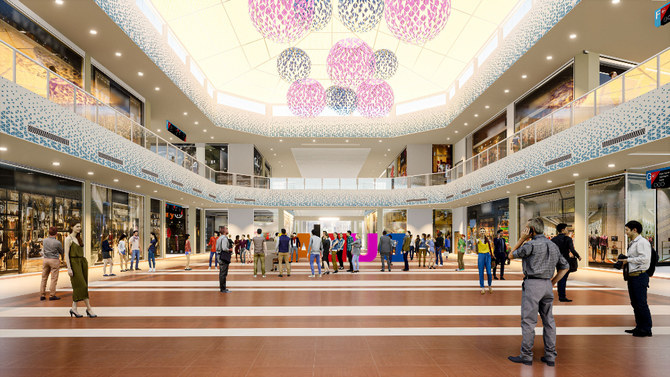
Dubai Outlet Mall, the first “value” concept mall in the MENA region, is all set to open the doors to its extension in Q4 2022. The major expansion drive embarked by DOM will bring the total area of the mall to 3.8 million square feet — making it the largest outlet mall not only in the region but in the world.
The expansion is in line with the brand’s commitment to delivering outstanding experiences to customers and demonstrates its ongoing drive to boost the country’s retail economy.
Strategically located at the intersection of MBZ and Dubai Bypass and Al-Ain Road, DOM is easily accessible to all UAE residents across the seven emirates and provides a well-structured comprehensive retail mix, offering great value from high-end brands to streetwear. While the extension is wrapping up its leasing phase and gearing up for its upcoming opening, a huge roster of international brands have joined the family of great brands at DOM.
Brands like Aigner and New Balance have taken serious positions in the expansion along with other brands such as Rivoli Group, Gallery One, Mumuso, Zippy Kids, OVS Kids, Simple Kitchen, Dwell, Supercare, Optivision, Optics for Less, Sensoline, Via Milano, Ricci Ceremony, Lens Kart, Notino Gallery, Intimate Collection, Mario Barutti, Tiyabi Taif Al-Emarat, Selz, and Duozoulo, while many more are looking forward to opening their stores later this year.
Mohammed Naser Khammas, CEO of Al-Ahli Group, said: “We are excited to see our list of partnering brands grow with us as we welcome New Balance and Aigner and all of the new brands that have joined the Dubai Outlet Mall family. As we realize the vision of reimagining the world of shopping and retail, I’ll be very excited to announce in due course all of the brands that have signed up for the expansion.”
The expansion will include a number of new features and concepts to entertain visitors of all ages around the year, joining 117 Live Arena as part of DOM’s entertainment cluster. The expansion will also provide a range of gastronomic experiences through unique food and beverage concepts such as the indoor Farmers’ Market and fine dining restaurants. The mall will also include a state-of-the-art cinema, a megamarket, and community space. Furthermore, the destination will be releasing an omni-channel that provides yet another exclusive experience for both shoppers and retailers alike.
Since its opening in 2007, DOM has made its mark as the first value shopping concept mall in the MENA region. It has been home to more than 1,300 premium brands with over 240 stores.

‘World’s largest outlet mall’ to open doors in Dubai in Q4
https://arab.news/n3k99
‘World’s largest outlet mall’ to open doors in Dubai in Q4
- The expansion will include a number of new features and concepts to entertain visitors of all ages around the year, joining 117 Live Arena as part of DOM’s entertainment cluster
Kuwait Fund for Arab Economic Development helps combat tropical diseases in Africa
The Kuwait Fund for Arab Economic Development is a leading contributor to health and development initiatives in many developing countries, especially in Africa, where tropical and neglected diseases continue to threaten public health and economic resilience. Through financing, technical support, and long-term development strategies, the fund plays a central role in strengthening health infrastructure, improving healthcare access, and supporting global efforts to reduce the burden of infectious and neglected tropical diseases.
KFAED’s approach combines infrastructure development — such as constructing and equipping hospitals and health centers — with broader public-health support including vaccination programs, awareness campaigns, and distribution of essential medical supplies. These efforts raise healthcare standards, lower infection and mortality rates, and contribute to sustainable social and economic development across vulnerable regions.
Disease burden in Africa
More than 2 billion people worldwide suffer from tropical diseases, including nearly 500 million children. Africa bears over 40 percent of this burden, with diseases such as malaria, HIV/AIDS, tuberculosis, lymphatic filariasis, and cholera causing severe humanitarian and economic consequences. In addition, a group known as neglected tropical diseases disproportionately impacts the poorest communities, resulting in chronic disability, disfigurement, and death. The WHO estimates that around 700 million people in Africa alone are infected with one or more NTDs.
High infection rates are driven by limited access to preventive care, exposure to contaminated water due to inadequate sanitation, weak healthcare systems, and conditions of fragility, conflict, and displacement. These challenges impede disease control and strain national health programs.
International cooperation to combat NTDs
In response, global institutions have mobilized to support African countries in controlling and eliminating NTDs. Research identified five diseases that can be effectively controlled through mass-treatment programs: lymphatic filariasis, river blindness (onchocerciasis), schistosomiasis, soil-transmitted helminths, and trachoma.
The NTD program now spans 47 African countries, with 36 affected by all five diseases. Each year, 300–400 million people receive treatment, and 700–800 million tablets are donated by pharmaceutical manufacturers. Despite this, only about 30 percent of infected individuals currently receive the required care, largely because many live in remote areas. Delivery depends heavily on volunteer networks and regional and local organizations.
The NTD program
The NTD program strengthens national disease-control efforts through clinical, logistical, and research support. It assists governments in developing strategic plans, conducting epidemiological studies, mapping disease distribution, evaluating program impact, and coordinating awareness and prevention campaigns. The World Health Organization oversees administrative and technical operations in partnership with several global bodies. Funding flows either directly from donors to field agencies or through pooled trust funds managed by institutions such as the World Bank and WHO.
The program targets five high-impact diseases:
- Lymphatic filariasis (elephantiasis): A parasitic disease transmitted by mosquitoes, affecting around 900 million people worldwide. Africa accounts for roughly 30 percent of cases, with more than 400 million people at risk.
- River blindness (onchocerciasis): Caused by filarial worms transmitted by blackflies, leading to blindness and chronic skin disease. About 250 million people are infected globally, 90 percent of them in Africa.
- Schistosomiasis (bilharzia): A waterborne disease affecting the digestive system and liver. Around 300 million people are infected worldwide, 90 percent in Africa.
- Soil-transmitted helminths: Parasitic worms transmitted through contaminated soil. Around 1.5 billion people worldwide are at risk, with over 290 million Africans requiring annual treatment.
- Trachoma: A bacterial eye infection that can cause irreversible blindness. About 2.2 million people globally suffer vision impairment due to trachoma, with nearly 185 million living in at-risk areas in Africa.
These diseases were selected due to the availability of free preventive medications, accessible field-survey tools, the ability to deliver multiple treatments simultaneously, and strong governmental commitment within affected countries.
Funding and global partnerships
KFAED is among the earliest and most consistent supporters of the NTD program. It contributed $5 million during Phase 1 (2016–2020) and another $5 million for Phase 2 (2024–2028). Other contributors include the World Bank, Bill and Melinda Gates Foundation, African Development Bank, USAID, the UK Department for International Development, pharmaceutical companies, NGOs, and African governments.
Kuwait Fund’s long-term role in Africa
Since 1974, the Kuwait Fund has financed multiple disease-control programs across Africa, particularly targeting river blindness. Its investments include:
- First Onchocerciasis Control Program: Covering 11 West African countries.
- Second Onchocerciasis Control Program: Supporting 20 additional countries in Central, Eastern, and Southern Africa.
Beyond NTD programs, the fund has provided more than $23 million in grants and technical assistance for global health initiatives, including the Guinea Worm Eradication Program, Roll Back Malaria, the Global Fund to Fight AIDS, Malaria and Tuberculosis, and national programs combating transboundary animal diseases.
KFAED has also financed over 70 health-sector projects worth approximately 196.7 million Kuwaiti dinars ($630 million), enhancing infrastructure, equipment, and healthcare access across many developing countries — most of them in Africa.


