



KHAPLU, Gilgit-Baltistan: Nelly Attar, a Lebanese mountaineer born and raised in Saudi Arabia, on Friday became the first Arab woman to summit the world’s second highest mountain, K2, while Pakistani climber Samina Baig and Iran’s Afsaneh Hesamifard became the first women from their respective countries to achieve the same feat.
At 8,611 meters (28,251 feet) high, K2 is known as the ‘Savage Mountain’ for its difficult terrain and treacherous weather, making it one of the most difficult mountains to summit in the world.
Fewer than 20 women globally have summited K2 and for about every five people who have attempted to scale the mountain, one has died in the attempt.
“It is a moment of pleasure for us that a Saudi Arabia-based woman climbed K2,” Karrar Haidri, the general secretary of the Alpine Club of Pakistan, told Arab News over the phone. “This is the first-ever summit of K2 by a Middle East climber.”
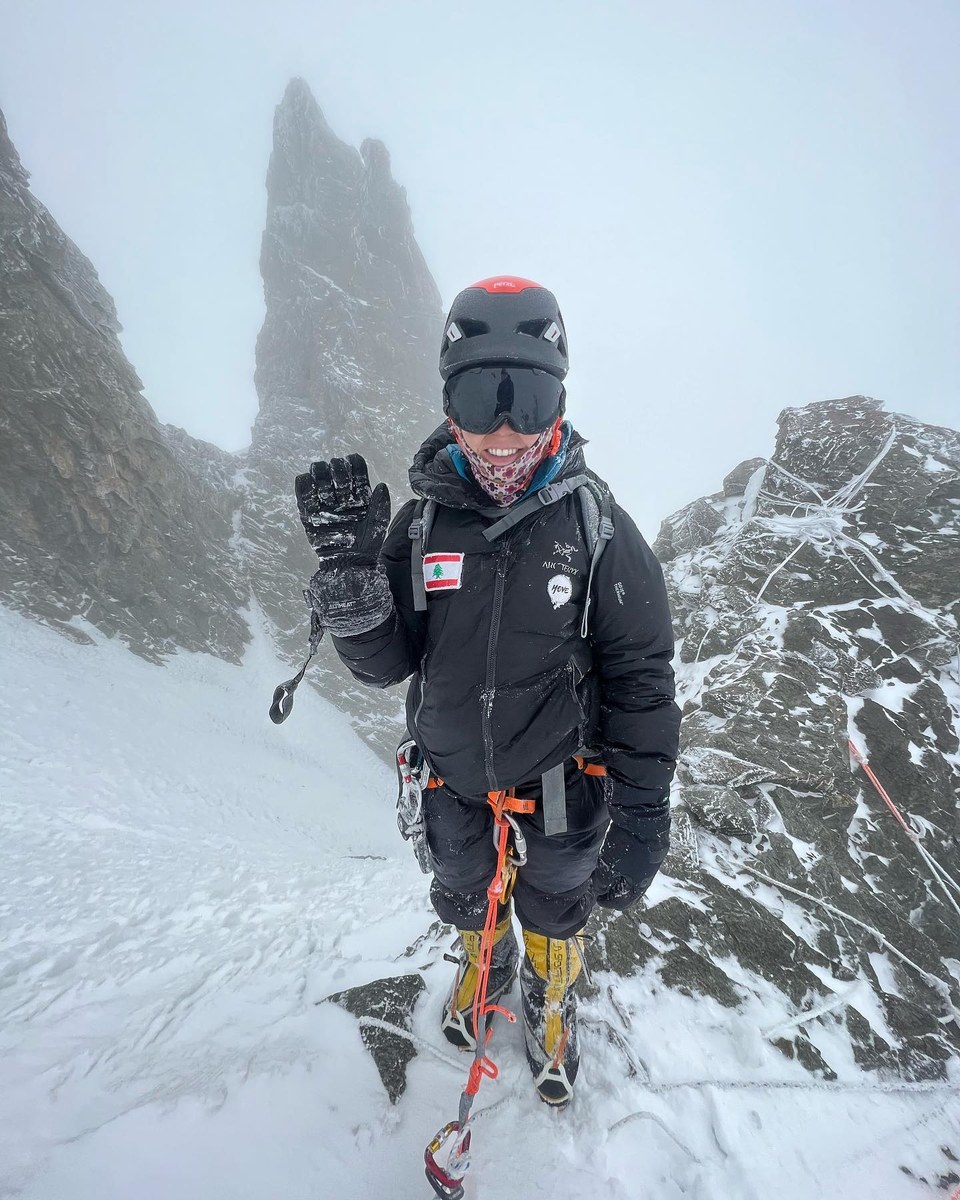
Nelly Attar, a Lebanese mountaineer born and raised in Saudi Arabia, waves as she reaches K2's basecamp on July 6, 2022. (Nelly Attar/Facebook)
Attar left her career as a mental health professional in 2017 to focus on sports and mountain expeditions. She is the founder of Move Studio, Saudi Arabia’s first dance studio. In 2020, the Muslim Women Network named her “One of the Top Influential Women in Sports,” while Sports 360 in 2019 called her the “Female Fitness Influencer of the Year Across the GCC.”
Attar successfully climbed Mount Everest in 2019 and had scaled 15 other peaks around the world before setting her sights on K2.
“I congratulate Nelly Attar and her family. Such kind of an expedition from the Middle East will pave the way for other Arab climbers and it will be helpful in promoting brotherhood and harmony between [Pakistan and Arab countries],” Haidri said.
Attar, who began her quest to summit K2 on June 20, told Arab News last month she had been thinking of summiting K2 for the past three years but her father’s passing sparked the urge to execute her dream on his first death anniversary.
She urged Arab and Pakistani women to pursue their dreams. “They can do it, regardless of the challenges that they’re faced with, regardless of the limitations, they can do it ... Nothing, and no one should stop you. If you have a vision, if you have a dream, go and achieve that dream … Don’t use your circumstances as an excuse, use them as your reason to go forward.”
Iranian climber Hesamifard also became the first woman from her country to summit K2 on Friday, the Alpine Club of Pakistan confirmed.
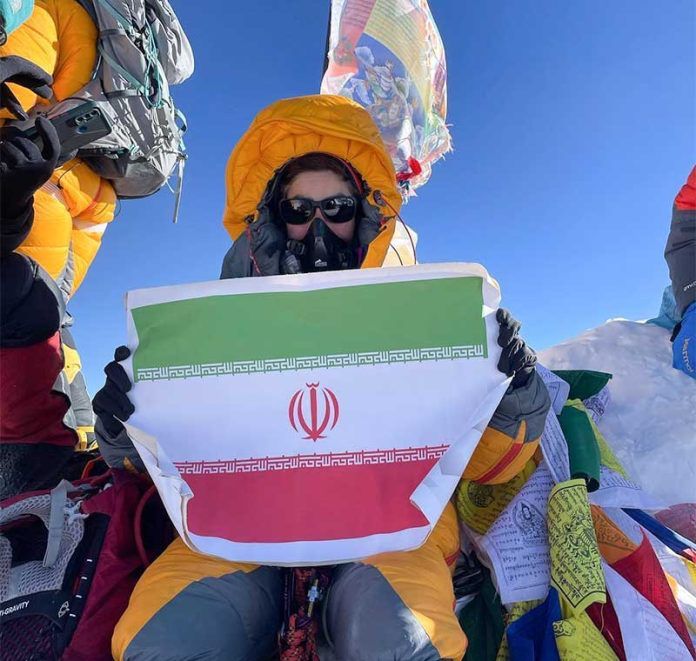
Iran’s Afsaneh Hesamifard holds Iranian flag as she scales K2 on July 22, 2022. (Apline Club)
Renowned mountaineer Samina Baig, the first Pakistani woman to climb Everest and the Seven Summits, also on Friday became the first woman from Pakistan to summit K2.
Born in Pakistan’s picturesque Gilgit-Baltistan (GB) region, a mountainous territory stretching across northern Pakistan, Baig was awarded the government’s ‘Pride of Performance’ award following her successful summit of Mount Everest in 2013. She has also served as an adviser on tourism, sports and culture for Gilgit-Baltistan’s chief minister last year
“We are extremely proud to announce that Samina Baig, with her strong Pakistani team, successfully summited the world’s most fascinating and dangerous mountain known as the ‘Savage Mountain’, the world’s second and Pakistan’s tallest mountain K2 (8,611meters high) this morning at 7:42 am,” Haidri said in a statement.
“Samina Baig comes from remote village Shimshal and takes the honor of being the first Pakistani woman to summit K2. Samina Baig holds the unique record of being the first Pakistani among men and women to climb the Seven Summit on seven continents,” the statement said.
Another Pakistani female climber, Naila Kiani, also summited K2 on Friday, along with her team members Sirbaz Khan and Sohail Sakhi.
“Another big news from K2! Naila Kiani has just reached the top of the world’s second highest peak along with Sirbaz Khan and Sohail Sakhi,” the Alpine Club of Pakistan said.
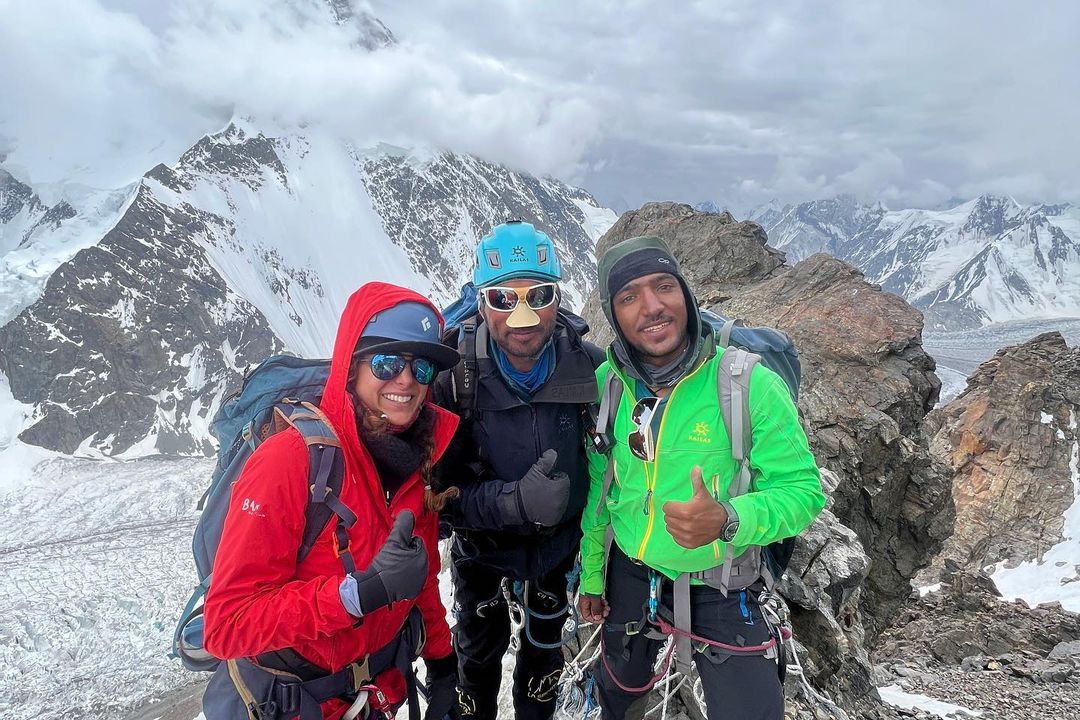
Pakistani climber, Naila Kiani (left) poses for a picture with her team before for the last leg of K2 summit on July 19, 2022. (Naila Kiani/Instagram)
Prime Minister Shehbaz Sharif congratulated Baig and her family on Twitter, praising the climber for emerging as a "symbol of determination, courage and bravery" for Pakistani women.
Pakistan’s Minister for Climate Change Sherry Rehman took to Twitter to congratulate the Pakistani women.
“Congratulations for scaling such spectacular heights to Samina and Naila! Must take exceptional commitment and grit to reach the top. #womenheroes,” Rehman wrote on Twitter.
“A great achievement by our women once again,” former human rights minister Shireen Mazari wrote on Twitter.


