



KHAPLU, Gilgit-Baltistan: A Dubai-based Pakistani woman, who got married at the base camp of K2, the world’s second tallest peak in 2018, before launching her rock-climbing career last month, told Arab News she was planning more mountaineering expeditions in Pakistan and would also travel to Nepal to get more experience.
Last month, Naila Kiani became the first female Pakistani mountaineer to successfully climb the world’s thirteenth highest mountain, Gasherbrum-II, which stands at over 8,000 meters above sea level. But her passion for the mountains has been clear since July 2018, when Kiani’s wedding became a social media sensation after she posted pictures of the ceremony at the K2 base camp.
“I am a professional banker and have been living in Dubai for the last five years,” she told Arab News over the phone on Monday. “I am also a boxer, so I was confident about my ability to climb G-II, though I was a little nervous at the beginning.”
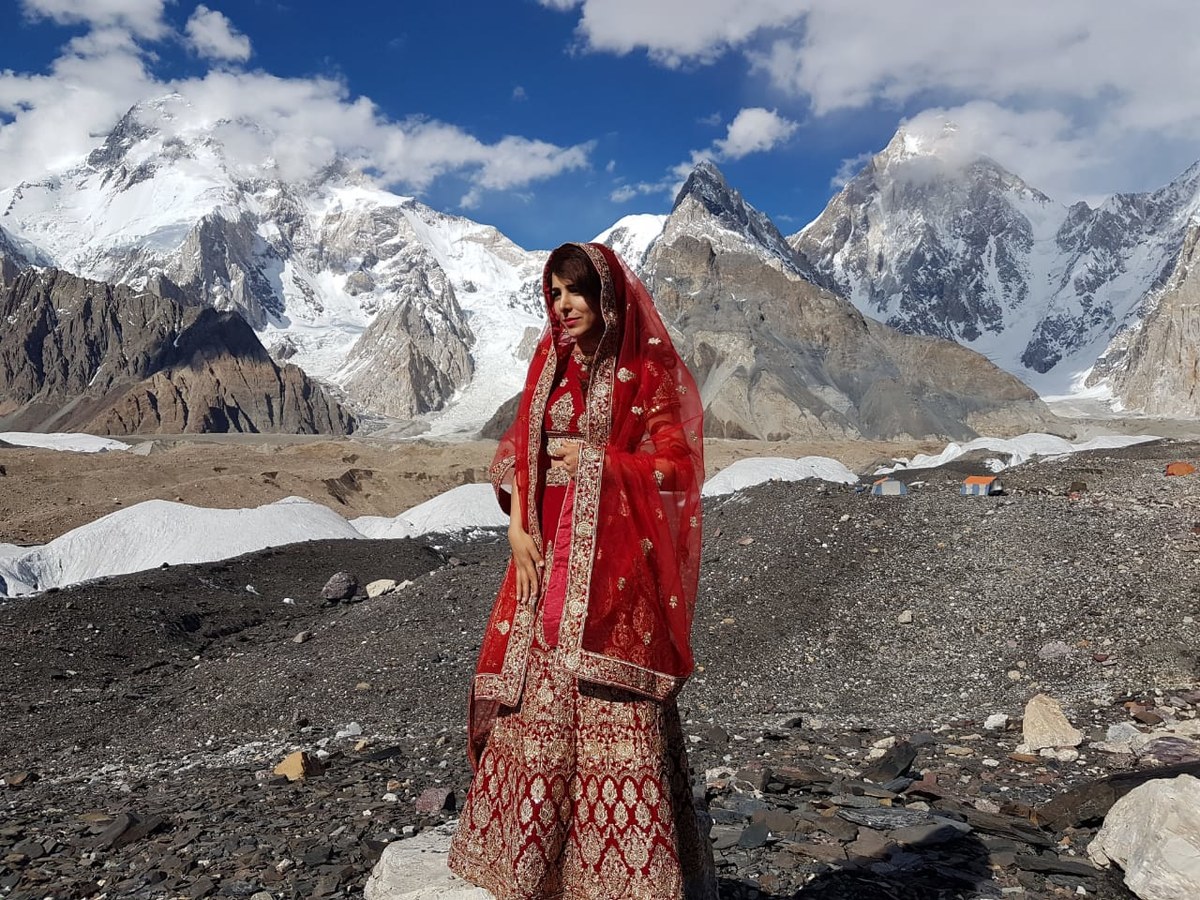
A Dubai-based Pakistan woman, Naila Kiani, poses for a photograph in her bridal dress at the base camp of the world's second tallest K2 Mountain in July 2018. (Photo courtesy: Naila Kiani)
Kiani was accompanied by Sirbaz Khan and Ali Raza Sadpara on her expedition and raised the Pakistan flag on Gasherbrum-II on July 18.
“Five more Pakistani women, including Samina Baig, were on their expeditions to different peaks above 8,000 meters in Pakistan this summer,” she said. “Allah chose me, and I scaled G-II.”
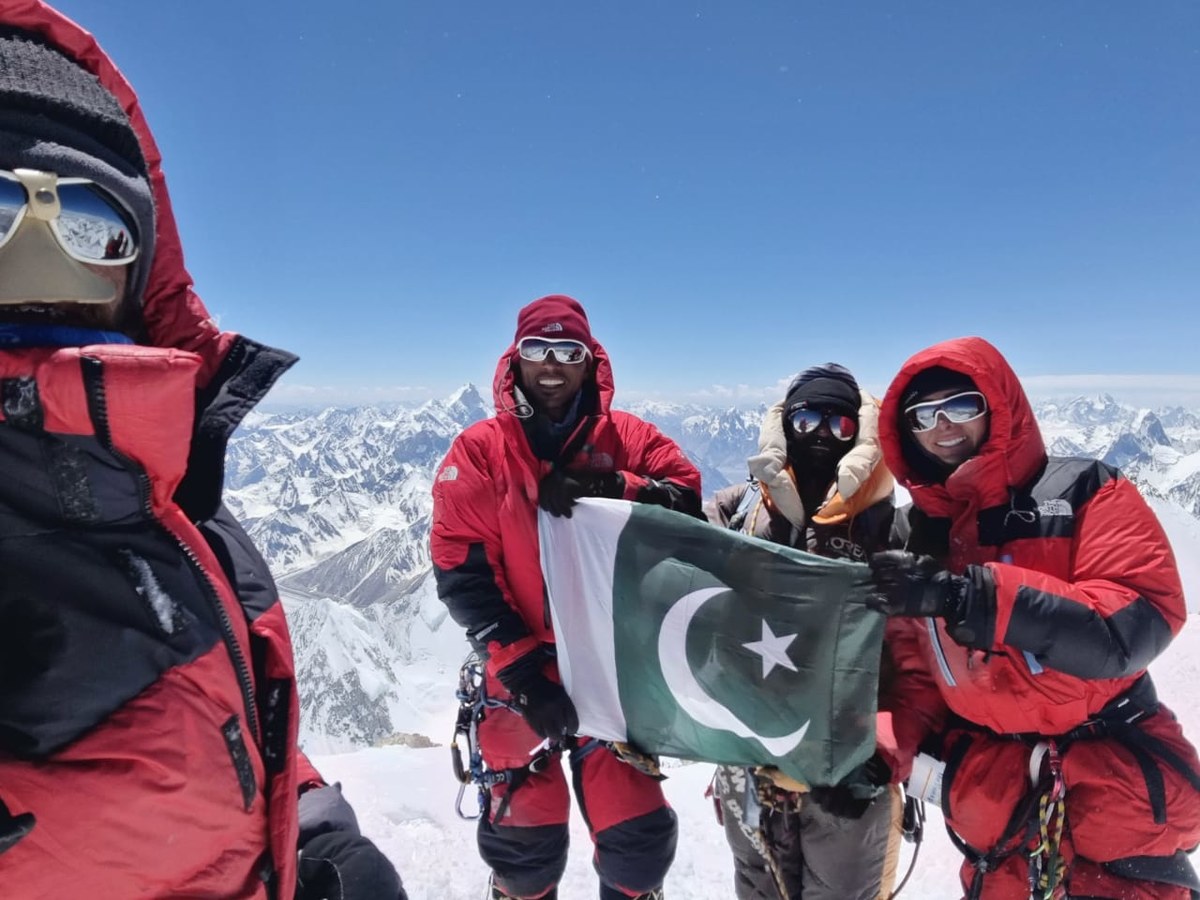
A Dubai-based Pakistani woman, Naila Kiani, waves her country's flag along with other mountaineers after summiting Gasherbrum II, located in District Shigar Gilgit–Baltistan region of Pakistan, on July 18, 2021. (Photo courtesy: Naila Kiani)
Asked about her previous mountaineering experience, Kiani said she had trekked to K2 base camp and visited Gondogoro La, 5,585-meter-high mountain pass 25 kilometers south of K2. However, Kiani said she had not scaled any peak and G-II was her “first summit.”
“I was faced with different options while planning to climb my first mountain,” she said. “When I did my research, however, I realized that both 7,000- and 8,000-meter-high peaks required the same expedition time. So, I decided it would be the 8,000-meter Gasherbrum II Mountain. All my family members, especially my husband, cooperated with me.”
Kiani said she wanted to project a soft image of Pakistan through her adventures.
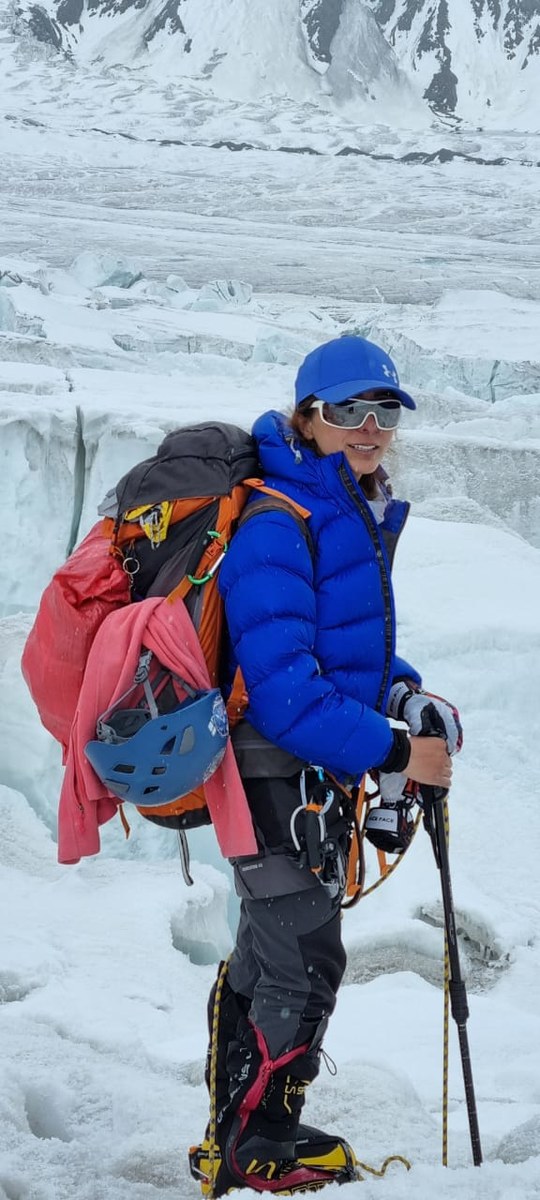
A Dubai-based Pakistani woman, Naila Kiani, poses for a pictrure while summiting Gasherbrum II, located in District Shigar Gilgit–Baltistan region of Pakistan, on July 18, 2021. (Photo courtesy: Naila Kiani)
“Pakistan has an image problem which prevents foreign climbers and tourists from visiting our country,” Kiani said. “That makes it imperative for us to depict a positive image of our country. I am trying my best to address that issue in my own network of friends by carrying out different sports activities.”
Asked if she had a message for other Pakistani women, Kiani said:
“There is no dearth of talents among Pakistani women, but they should not abandon their hobbies due to family issues … Women should step forward and carve out bigger spaces for themselves in society by utilizing their talent.”


