- Nelly Attar, born and raised in Saudi Arabia, summited Mount Everest in 2019
- She is using her experiences to help shape emerging sports landscape in Saudi Arabia
ISLAMABAD: Nelly Attar, a Lebanese mountaineer born and raised in Saudi Arabia, on Monday began a 50-day journey to become the first Arab women to summit K2, the world's second highest mountain, saying she wanted to use her climbs as a vehicle to inspire women in Pakistan and across the Middle East.
Attar in 2017 left her career as a mental health professional to focus on sports and expeditions. She is the founder of Move Studio, Saudi Arabia’s first dance studio. In 2020, the Muslim Women Network named her “One of the Top Influential Women in Sports,” while Sports 360in 2019 called her the “Female Fitness Influencer of the Year Across the GCC.”
Attar successfully summited Mount Everest in 2019 and had scaled 15 other peaks around the world before setting her sights on K2.
At 8,611 metres (28,251 foot), K2, known as the Savage Mountain, is widely considered the most dangerous climb in the world due to its difficult terrain and treacherous weather. Fewer than 20 women globally have summited K2 and for about every five people who have reached the top of the mountain, one has died in the process.
In 2014, three Nepali women led the first all-female team to climb what most mountaineers consider a much tougher challenge than Everest.
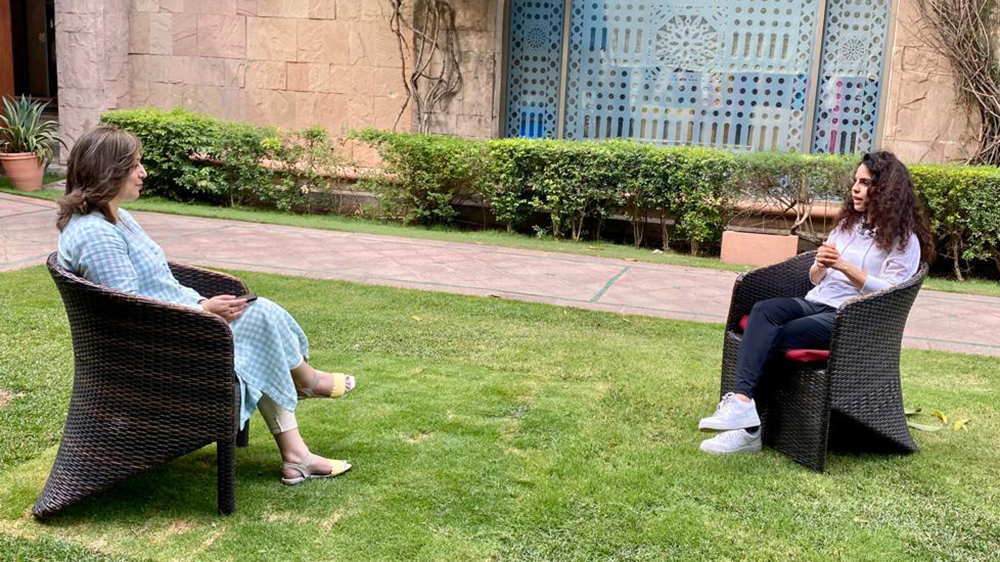
“I am embarking on the most challenging journey to climb K-2 on June 20 [today],” Attar told Arab News in an interview in Islamabad last week. “I feel like there's so much unknown, there's so much to this journey that we will be embarking on, so I'm very excited.”
Attar said she had been thinking about climbing K2 for the last three years but her father's passing last year had sparked the urge to execute her dream on his first death anniversary.
“It was a very difficult time for me and I was just thinking how can I find the purpose of this year that would give a bit of drive and excitement, so, I started work on the idea of K2,” she said.
After all, the love for hiking and climbing too was a gift from her father who she used to accompany at an early age on treks.
“This was something I feel like was part of my childhood and my first climb was with my father when I was 17, when he took me to Mount Kenya,” Attar said. “I liked the sport of mountaineering because you take so many risks and with those risks, you feel so alive and everything in life is amplified.”
The climber trained for K2 in Nepal at Ama Dablam, a 6,000 meter peak that many mountaineers say resembles K2.
“I went to Ama Dablam in early December last year and after coming back was ready for mission K2,” Attar said, saying she felt ready for the mountain’s tough weather, altitude and terrain.
“I am not afraid, no matter what happens…I have big faith that Allah is always with us and never leaves us and has the best plans for us,” the climber said, urging other Arab and Pakistani women to pursue their dreams.
“They can do it, regardless of the challenges that they're faced with, regardless of the limitations, they can do it,” she said. “Nothing, and no one should stop you. If you have a vision, if you have a dream, go and achieve that dream … Don't use your circumstances as an excuse, use them as your reason to go forward.”
Attar is now focused on utilizing her wide-ranging experiences and knowledge to help shape the emerging sports landscape in Saudi Arabia.
Beyond Move Studio, she has worked on numerous public sector initiatives to get people active across the kingdom, including partnering with Saudi Tourism initiatives and collaborating with global brands such as Nike, Adidas, Reebok, Nestle, and Apple to carry out community initiatives and activities across the GCC region.
“It is amazing to see that there are so many opportunities for women,” Attar said, commenting on the sports landscape in the kingdom. “They are not only encouraged now to take part in sports and businesses [in Saudi Arabia] but they are heavily supported.”