

Dubai issues ‘Musataha’ land decree to spur real estate investment

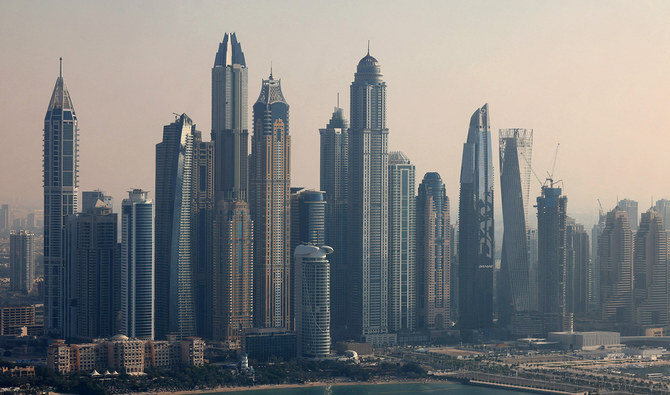
A picture taken from "the View at Palm" overlooks the Marina and skyscrapers in the Gulf emirate of Dubai on January 10, 2022. (AFP/File)
Short Url
Updated 22 July 2022
Follow

Dubai issues ‘Musataha’ land decree to spur real estate investment

  • Investors can construct, mortgage, lease, sell and buy on existing commercial land
  • Agreement’s terms, conditions and obligations must be specified by the Dubai Land Department

DUBAI: Dubai has issued a new law to spur real estate investment through public-private partnerships.

Sheikh Mohammed bin Rashid Al-Maktoum, vice president and prime minister of the UAE, issued the decree that regulates “Musataha” rights on commercial land in Dubai, Emirates News Agency reported.

Musataha agreements, according to the new law, allow investors to construct, mortgage, lease, sell and buy on a plot of land belonging to a third party for a term of up to 35 years.

The decree aims to spur the creation of new construction ventures in the emirate as part of plans to become a top international real estate investment location.

Musataha contracts may be extended for up to 50 years. Two years before the expiration date, a renewal request must be made.

The agreement’s holder is subject to a number of rules and regulations. Among them is refraining from altering the use of commercial property without a land owner’s consent.

Any Musataha agreement must also be registered in Dubai Land Department records or through the Dubai International Financial Centre registry, depending on the holder.

An agreement’s terms, conditions and obligations must be specified by the Dubai Land Department.

Commercial land subject to a Mustaha agreement may be inspected by the department to confirm that the deal is fully adhered to.

The Government Claims Act No. 3 of 1996’s provisions and revisions must be observed if the Dubai Land Department is to facilitate the peaceful resolution of any disputes brought about by complaints and grievances.

The decree mandates that the Dubai Land Department establish a special registry for Musataha agreements.

The new law also specifies the fines that will be imposed if no certificate of completion is provided for a projects constructed on commercial property covered by the agreement.


Military drone attack on Sudan oil field kills dozens and threatens South Sudan’s economic lifeline

Updated 7 sec ago
Follow

Military drone attack on Sudan oil field kills dozens and threatens South Sudan’s economic lifeline

  • RSF said the oil field in Heglig was attacked a day after they seized the facility near the border with South Sudan
  • South Sudanese soldiers were among the dead in the attack by an Akinci drone

JUBA: Dozens of people were killed Tuesday evening in a drone strike near Sudan’s largest oil processing facility carried out by the Sudanese Armed Forces, according to the paramilitary Rapid Support Forces.
The RSF, which has been fighting Sudan’s military since 2023, said the oil field in Heglig was attacked a day after the RSF seized the facility near the border with South Sudan.
Both sides told The Associated Press that the exact number of dead and wounded could not immediately be confirmed. Local news outlets reported seven tribal leaders and “dozens” of RSF troopers were killed.
South Sudanese soldiers were among the dead in the attack by an Akinci drone, according to the RSF, which condemned the attack as a violation of international law.
Two Sudanese military officials confirmed the drone strike, which they said targeted RSF fighters.
The government of South Sudan’s Unity State confirmed three South Sudanese soldiers were killed. A South Sudanese solider, who witnessed the strike and spoke on condition of anonymity because he was not authorized to speak, estimated 25 people were killed.
South Sudanese commander Johnson Olony said in a statement that South Sudanese forces may have been sent to secure Heglig after its capture. South Sudan’s military spokesperson declined to comment.
South Sudan relies entirely on Sudanese pipelines to export its oil and has seen production repeatedly disrupted by the conflict, worsening its economic crisis.
Sudanese soldiers and oil workers began evacuating Heglig on Monday and the RSF took control of the facility without resistance. By Tuesday, about 3,900 Sudanese soldiers had surrendered their weapons to South Sudanese forces after crossing into Rubkona County, according to Unity State’s information ministry.
Video from South Sudan’s state broadcaster showed tanks, armored personnel carriers and artillery among the weapons handed over.
Thousands of civilians from Sudan began crossing the border into South Sudan on Sunday and were still arriving Wednesday, the South Sudan government said, adding that the exact number was not yet known. South Sudan insists it remains neutral in the conflict despite accusations of siding with the RSF.
Heglig’s capture is the latest in a string of RSF territorial gains, including the October fall of el-Fasher, the capital of North Darfur and the Sudanese army’s last stronghold in Darfur. The war, which began in April 2023, has killed an estimated 150,000 people, displaced millions and triggered multiple famines. Both sides face allegations of atrocities.
The capture of Heglig, a vital state asset, could be a significant bargaining chip for the RSF, analysts said. But the opaque nature of oil finances makes it difficult to determine how much the SAF, RSF or South Sudan will be impacted economically over the short term.