



MAKKAH: The biggest Hajj pilgrimage since the coronavirus pandemic kicks off Wednesday, with hundreds of thousands of mostly maskless worshippers expected to circle Islam's holiest site in Saudi Arabia's Makkah.
One million fully vaccinated Muslims, including 850,000 from abroad, are allowed at this year's Hajj, a major break from two years of drastically curtailed numbers due to the pandemic.
At Makkah's Grand Mosque, pilgrims will perform the "tawaf", the circumambulation of the Kaaba, the large cubic structure draped in golden-embroidered black cloth that Muslims around the world turn towards to pray.
Many have chosen to perform the ritual ahead of Wednesday's official Hajj start date.
On Tuesday afternoon, white-robed male worshippers and women in colourful abayas walked side by side on the white floors near the Kaaba, the majority without a mask even though authorities said last month that masks would be mandatory at the site.
"I just prayed for you," one pilgrim, wearing a green robe, said during a video call with relatives.
"I love you mother, I love you all," she added, waving into her mobile phone screen as she continued walking around the Kaaba.

A Muslim pilgrim carries his son as he circumambulates around the Kaaba, the cubic building at the Grand Mosque, in the Saudi Arabia's holy city of Makkah, on July 5, 2022. (AP)
This year's Hajj is larger than the pared-down versions staged in 2020 and 2021 but still smaller than in normal times.
In 2019, some 2.5 million Muslims from around the world participated in the annual event -- a key pillar of Islam that able-bodied Muslims must undertake at least once in their lives.
But after that, the coronavirus outbreak forced a dramatic downsizing. Just 60,000 fully vaccinated citizens and residents of the kingdom took part in 2021, up from a few thousand in 2020.
The pilgrimage consists of a series of religious rites which are completed over five days in Islam's holiest city and its surroundings in western Saudi Arabia.
On Thursday, the pilgrims will move to Mina, around five kilometres (three miles) away from the Grand Mosque, ahead of the main rite at Mount Arafat, where it is believed the Prophet Mohammed delivered his final sermon.
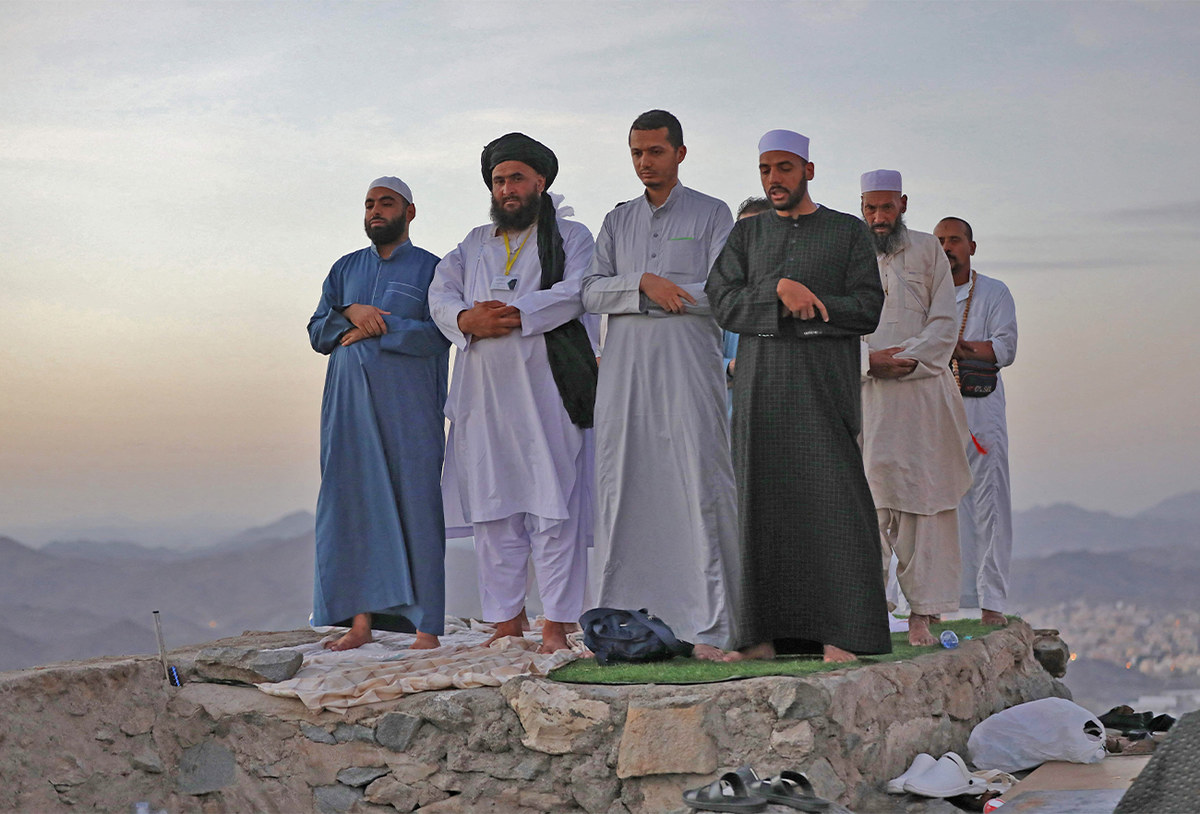
Muslim pilgrims pray at Jabal al-Noor 'mountain of light' in the holy city of Makkah on July 5, 2022. (AFP)
This year's Hajj is restricted to vaccinated Muslims under the age of 65 chosen from millions of applicants through an online lottery system.
Those coming from outside Saudi Arabia were required to submit a negative Covid-19 PCR result from a test taken within 72 hours of travel.
Since the start of the pandemic, Saudi Arabia has registered more than 795,000 coronavirus cases, more than 9,000 of them fatal.
Those attempting to perform the Hajj without a permit face fines of 10,000 Saudi riyals (around $2,600).
Policemen in the mountainous city have set up checkpoints and conducted foot patrols while holding green umbrellas to shield themselves from the scorching sun.
Temperatures in Makkah topped 40 degrees Celsius (104 degrees Fahrenheit) on Tuesday.
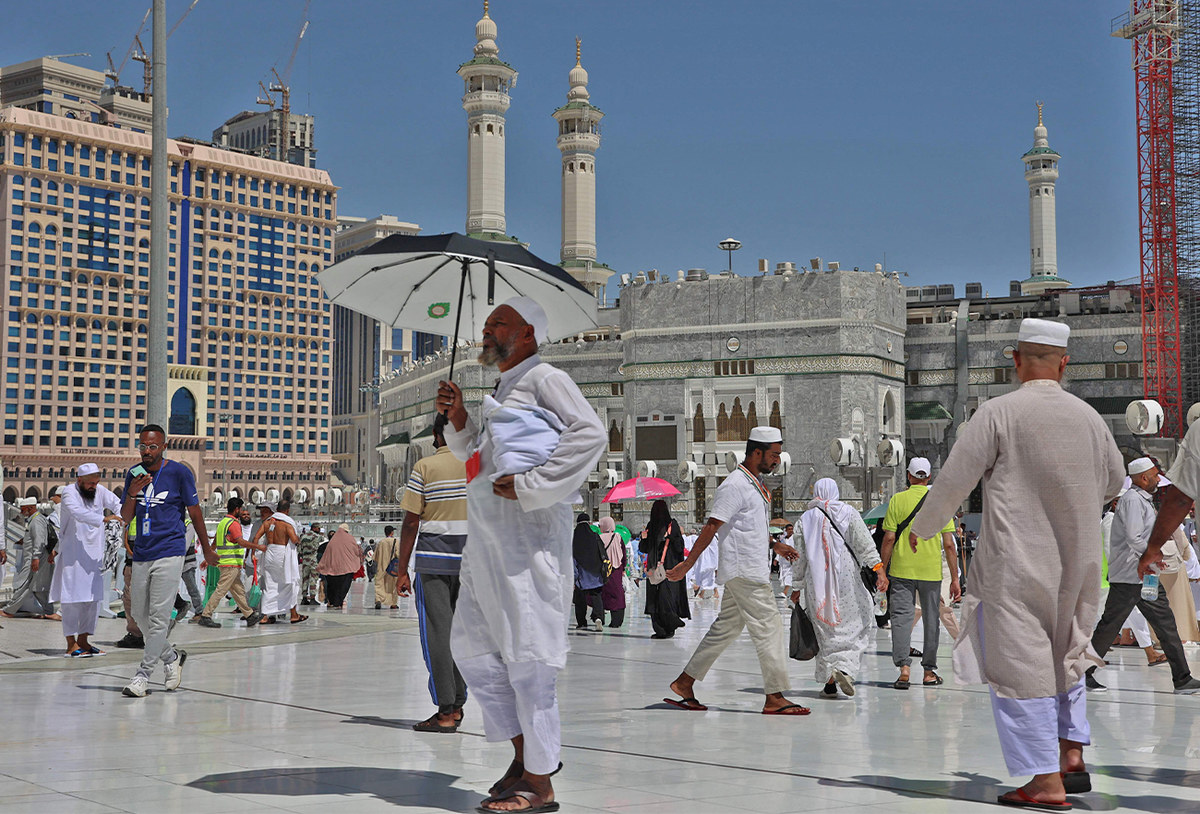
Muslim pilgrims arrive outside the Grand Mosque in Saudi Arabia's holy city of Makkah on July 5, 2022. (AFP)
Inside the Grand Mosque, female medics were on standby in different locations, and volunteers with wheelchairs were waiting in a long queue to help those needing assistance.
Authorities have set up multiple health facilities, mobile clinics and ambulances to cater to pilgrims.
Some pilgrims donned clothing featuring the names and flags of their countries. "Hajj 2020 – Chad" was written on the back of the white robes of one group.
Hosting the Hajj is a matter of prestige and a powerful source of political legitimacy for Saudi Arabia's rulers.
Costing at least $5,000 per person, it is also a money-spinner for the world's biggest oil exporter, which is trying to diversify its economy.
In normal years, the pilgrimage brings in billions of dollars.
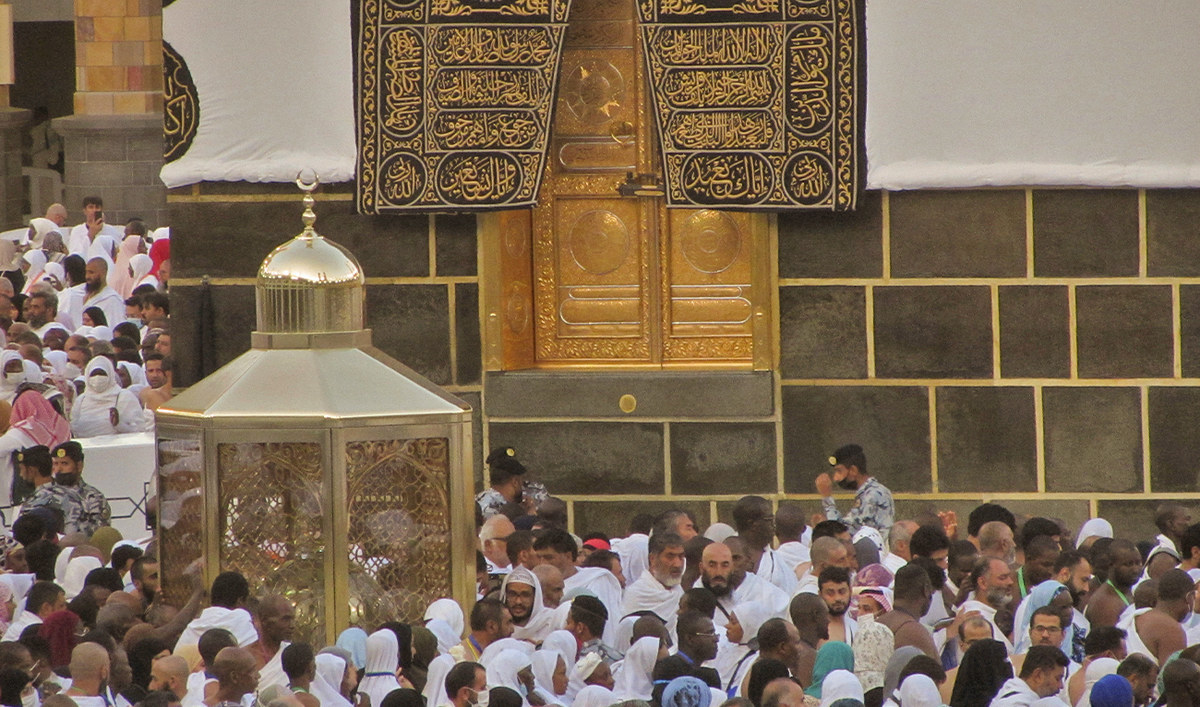
Muslim pilgrims circumambulate around the Kaaba, the cubic building at the Grand Mosque, as others watch Maqam Ibrahim, or the Station of Abraham, at left, in the Saudi Arabia's holy city of Makkah, on July 5, 2022. (AP)
These days it represents a chance to showcase the kingdom's ongoing social transformation.
Saudi Arabia now allows women to attend the Hajj unaccompanied by male relatives, a requirement that was dropped last year.
"Being here is the best thing that has ever happened to me. I can't wait for the rest," said 42-year-old Egyptian pilgrim Naima Mohsen, who came to the Grand Mosque by herself Tuesday.
"My only problem is the weather. It's just too hot."


