Royal Commission for AlUla showcase at Dubai Design week to host talk by architect Jean Nouvel

AlUla Design at Dubai Design Week 2021. Supplied
Short Url
Updated 09 November 2021
Follow

Royal Commission for AlUla showcase at Dubai Design week to host talk by architect Jean Nouvel

DUBAI: Visitors attending the seventh edition of Dubai Design Week (DDW), currently underway in Dubai Design District, are invited on a journey across the Saudi Arabian heritage site of AlUla via an immersive showcase, AlUla Design, coordinated by the Royal Commission of AlUla (RCU).

The design exhibition serves to highlight the diversity of projects that are shaping the site in northwest Saudi Arabia, with Pritzker-prize-winning French architect Jean Nouvel giving a virtual talk as part of the expansive program.
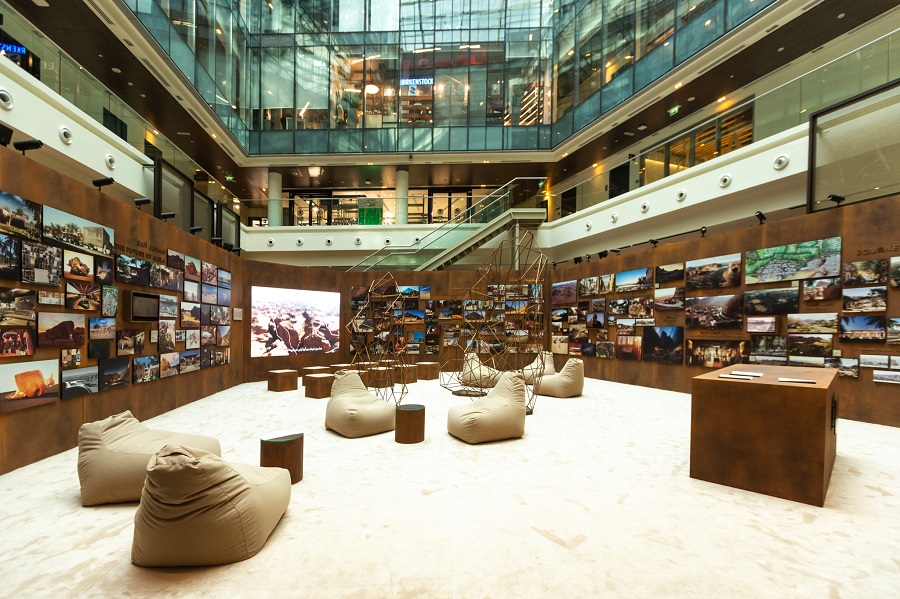


AlUla Design at Dubai Design Week 2021. Supplied

Nouvel was recently tapped to bring to life the extraordinary Sharaan Nature Resort, a postcard-worthy resort and residence that will be carved and sculpted from the rocks of AlUla, Nabataean style, deep in the protected Sharaan Nature Reserve.

The concept was first announced in 2019.

Set to be completed by 2024, the development will include 40 guest suites and three villas. Meanwhile, a retreat summit center nearby will feature 14 private pavilions.
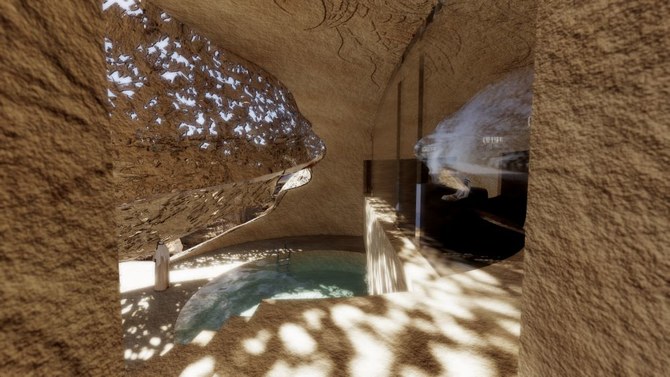


The concept designs for the Sharaan by Jean Nouvel. (The Royal Commission for AlUla)

“AlUla is sacred. It holds great significance, filled with unique sites for exploration and discovery, and is therefore deserving of innovation and respectful design to enhance the well-being of the local community and elevate its original authenticity,” said Nouvel in a released statement.

The talk, entitled “Shaaran, AlUla: A Journey Through Time” will take place on Nov. 12, with the award-winning architect in conversation with Samantha Cotterell, the Royal Commission for AlUla’s executive director of design.
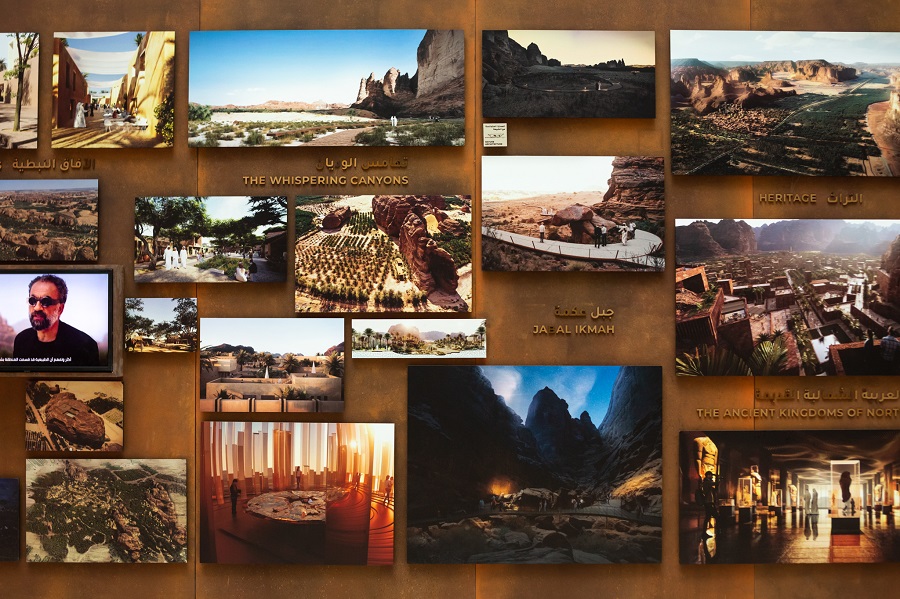


The design exhibition serves to highlight the diversity of projects that are shaping the site in northwest Saudi Arabia. Supplied

Additionally, “AlUla, A Cultural Landscape” is a second panel moderated by artistic programming director of RCU, Sumantro Ghose, that will explore how architecture and art can exist in harmony with the natural landscapes of the desert.

Visitors to DDW can also visit RCU’s specially designed exhibition designed by Gio Forma and Black Engineering inspired by the extraordinary rock formations in AlUla’s desert and mountain landscapes. 

The exhibition features concepts and designs by world-leading architects and designers. 


Lebanese filmmaker turns archival footage into a love letter to Beirut

Updated 28 February 2026
Follow

Lebanese filmmaker turns archival footage into a love letter to Beirut

LONDON: Lebanese filmmaker Lana Daher’s debut feature “Do You Love Me” is a love letter of sorts to Beirut, composed entirely of archival material spanning seven decades across film, television, home videos and photography.

The film premiered at the 82nd Venice International Film Festival in September and has since traveled to several regional and international festivals.

Pink Smoke (2020) by Ben Hubbard. (Supplied)

With minimal dialogue, the film relies heavily on image and sound to reconstruct Lebanon’s fragmented history.

“By resisting voiceover and autobiography, I feel like I had to trust the image and the shared emotional landscape of these archives to carry the meaning,” Daher said.

A Suspended Life (Ghazal el-Banat) (1985) by Jocelyne Saab. (Supplied)

She explained that in a city like Beirut “where trauma is rarely private,” the socio-political context becomes the atmosphere of the film, with personal memory expanding into a collective experience — “a shared terrain of emotional history.”

Daher said: “By using the accumulated visual representations of Beirut, I was, in a way, rewriting my own representation of home through images that already existed."

Whispers (1980) by Maroun Bagdadi. (Supplied)

Daher, with editor Qutaiba Barhamji, steered clear of long sequences, preferring individual shots that allowed them to “reassemble meaning” while maintaining the integrity of their own work and respecting the original material, she explained.

The film does not feature a voice-over, an intentional decision that influenced the use of sound, music, and silence.

The Boombox (1995) by Fouad Elkoury. (Supplied)

“By resisting the urge to fill every space with dialogue or score, we created room for discomfort,” Daher said, adding that silence allows the audience to sit with the image and enter its emotional space rather than being guided too explicitly.

 The film was a labor of love, challenging Daher personally and professionally.

“When you draw from personal memory, you’re not just directing scenes, you’re revisiting parts of yourself and your childhood,” she said. “There’s vulnerability in that.”