

Saudi medical team saves life of Iranian Hajj pilgrim in Makkah

1 / 2
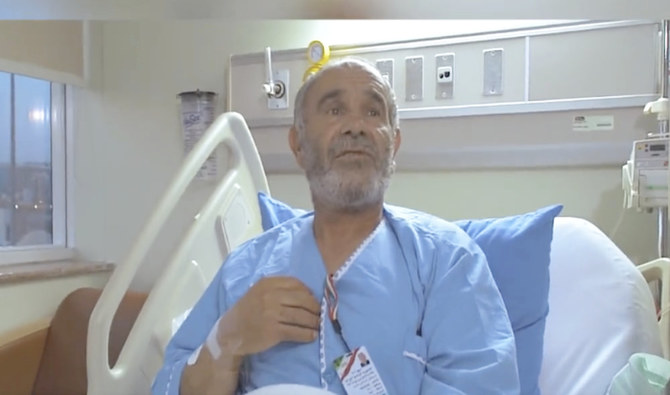
Iranian pilgrim Hussain Qasmi Jalmrazy is shown recovering at the emergency room of Makkah's King Abdullah Medical City on Saturday. (Screen grab from Al Ekhbariyah TV video)
2 / 2
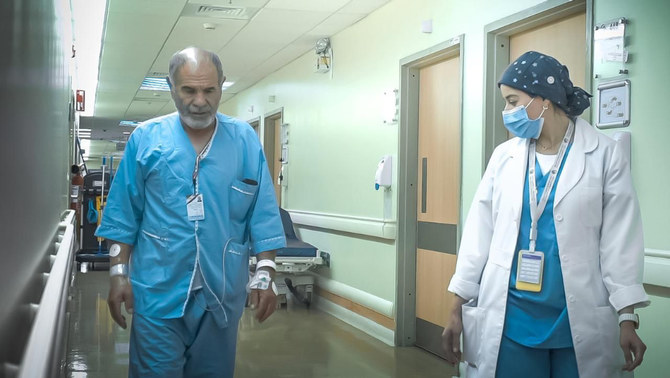
The patient recovered, is currently in good health, and will be able to return safely to perform his pilgrimage and complete his Hajj rituals. (SPA)
Short Url
Updated 04 July 2022
Follow

Saudi medical team saves life of Iranian Hajj pilgrim in Makkah

  • The medical team offered to perform an open heart operation, but the patient refused this medical procedure

MAKKAH: A specialized team from Makkah’s King Abdullah Medical City has successfully performed an emergency cardiac catheterization procedure to save the life of an Iranian pilgrim on Saturday, the Saudi Ministry of Health said.

In a statement carried by the Saudi Press Agency early Sunday, the ministry said that the Hajj pilgrim was taken to the hospital's emergency department when he complained of severe chest pain while he was on his way to the Grand Mosque in Makkah to perform prayers.
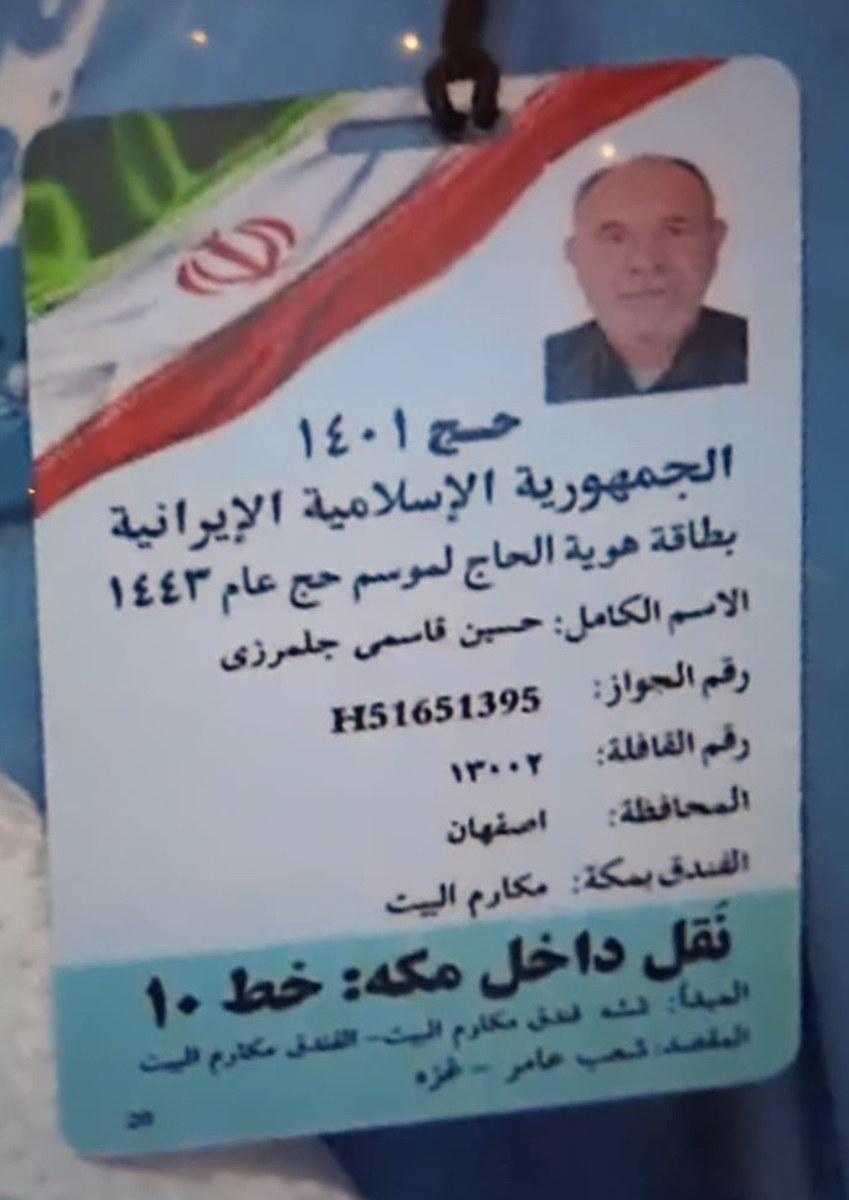


A digital copy of the Iranian pilgrim's Hajj tag, shared on social media by Ekhbariyah TV.

The patient was identified in his Hajj tag as Hussain Qasmi Jalmrazy, from Isfahan in central Iran.

Specialists performed an urgent diagnostic catheterization after examination results "showed the presence of blockage of more than two arteries in the heart," according to the Health Ministry.

The medical team offered to perform an open heart operation, but the patient refused this medical procedure. It was then decided to insert stents instead in the damaged arteries, enabling the patient to recover and continue his pilgrimage, the statement said.

King Abdullah Medical City, with full the support from the Saudi government, offers specialized health care for all Hajj and Umrah pilgrims.

A million Muslims from around the world will perform the Hajj this year, up from only 60,000 vaccinated pilgrims in 2021 and a symbolic 1,000 pilgrims in 2020 at the height of the COVID-19 pandemic. 


What makes the Taif Rose such a precious fragrance product?

Perfume artisan involvement aligns with Jazan Festival’s initiative repositioning traditional crafts as dynamic. (SPA)
Updated 09 January 2026
Follow

What makes the Taif Rose such a precious fragrance product?

  • These farms produce nearly 550 million roses annually, all harvested during a brief season of no more than 45 days, from early March to the end of April

TAIF: Taif roses, renowned for their exceptional aroma and the meticulous care required in cultivation, harvesting, and processing, are among the Kingdom’s most valuable natural perfume products and stand out as prominent agricultural and cultural symbols deeply connected to the region’s heritage and tourism.

Taif rose farms, numbering over 910 and spread across Al-Hada, Al-Shafa, Wadi Muharram, Al-Wahat, Al-Wahit, and Wadi Liya, are home to approximately 1,144,000 rose bushes covering about 270 hectares of agricultural land. 

FASTFACT

Taif rose farms, numbering over 910 and spread across Al-Hada, Al-Shafa, Wadi Muharram, Al-Wahat, Al-Wahit, and Wadi Liya, are home to approximately 1,144,000 rose bushes covering about 270 hectares of agricultural land.

These farms produce nearly 550 million roses annually, all harvested during a brief season of no more than 45 days, from early March to the end of April.

This harvest yields around 20,000 tolas of Taif rose oil. Producing a single tola requires approximately 12,000 roses, which are picked manually at dawn and distilled within 24 hours to preserve the purity and quality of the scent before reaching the market.