

Pakistan seeks recommendations from major local refineries on oil imports from Russia

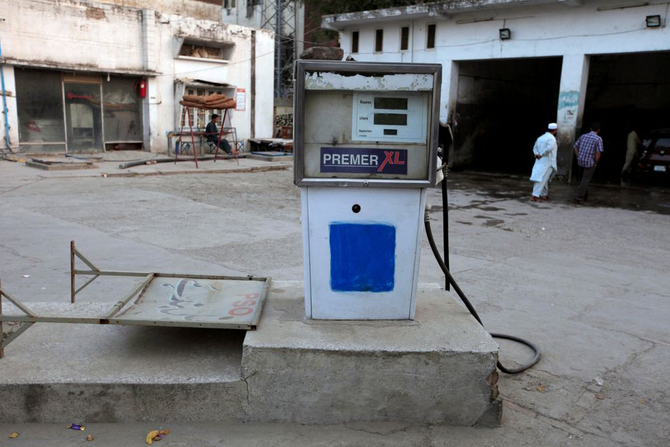
A fuel pump is pictured at a Pakistan State Oil petrol station in Rawalpindi, Pakistan October 6, 2017. (REUTERS/FILE)
Short Url
Updated 29 June 2022
Follow

Pakistan seeks recommendations from major local refineries on oil imports from Russia

  • Former Prime Minister Imran Khan has said Russia was willing to offer oil at cheaper rates to Pakistan
  • Current government says willing to buy oil from Russia if Islamabad didn’t face international sanctions 

ISLAMABAD: Pakistan’s energy ministry has sought recommendations from industrial experts and major local refineries on importing crude oil from Russia, as the country faces a growing energy crisis.

Former Prime Minister Imran Khan, who arrived in Russia in February the day it launched a full-scale invasion of Ukraine, has said Moscow was willing to offer oil at cheaper rates to Pakistan. Pakistan’s Finance Minister Miftah Ismail, who is in the new cabinet of PM Shehbaz Sharif, has rubbished Khan’s claims and said Islamabad would be willing to buy oil at cheaper rates from Russia only if Moscow made the offer and Islamabad didn’t have to face sanctions on the deal. 

In a letter to the Pak-Arab Refinery, National Refinery, Pakistan Refinery and Byco Petroleum, the energy ministry asked for recommendations on the import of crude oil from Russia.

“I am directed to refer to the subject cited about [Import of Crude Oil from Russian] and to request to furnish a detailed analysis with regard to option of crude oil along with the recommendations,” Thair Hussain, Deputy Director at the Energy Ministry said.

The ministry sought recommendations on the technical sustainability of crude grades in view of each refinery’s configurations and yield.

“Quantity and grade of the subject crude to be required by the refinery,” the letter said, asking the oil companies to submit the recommendation on “transportation/freight analysis for imports from Russia in comparison with normal imports from the Middle East based on cost and benefit analysis.”

It also asked for recommendations on “payment methodology” in case of crude oil import and “existing commitment to upliftment from the Arab Gulf region with respect to term contracts.”

Pakistan’s monthly fuel oil imports are set to hit a four-year high in June, Refinitiv data shows, as the country struggles to buy liquefied natural gas (LNG) for power generation amid a heatwave that is driving demand.


Pakistan, ADB sign $730 loan agreements to boost SOE reforms, energy infrastructure

Updated 25 December 2025
Follow

Pakistan, ADB sign $730 loan agreements to boost SOE reforms, energy infrastructure

  • Both sign $330 million Power Transmission Strengthening Project and $400 million SOE Transformation Program loan agreements
  • Economic Affairs Division official says Transmission Project will secure Pakistan’s energy future by strengthening national grid’s backbone

KARACHI: Pakistan and the Asian Development Bank (ADB) on Thursday signed two loan agreements totaling $730 million to boost reforms in state-owned enterprises (SOEs) and energy infrastructure in the country, the bank said.

The first of the two agreements pertains to the SOE Transformation Program worth $400 million while the second loan, worth $330 million, is for a Power Transmission Strengthening Project, the lender said. 

The agreements were signed by ADB Country Director for Pakistan Emma Fan and Pakistan’s Secretary of Economic Affairs Division Humair Karim. 

“The agreements demonstrate ADB’s enduring commitment to supporting sustainable and inclusive economic growth in Pakistan,” the ADB said. 

Pakistan’s SOEs have incurred losses worth billions of dollars over the years due to financial mismanagement and corruption. These entities, including the country’s national airline Pakistan International Airlines, which was sold to a private group this week, have relied on subsequent government bailouts over the years to operate.

The ADB approved the $400 million loan for SOE reforms on Dec. 12. It said the program seeks to improve governance and optimize the performance of Pakistan’s commercial SOEs. 

Karim highlighted that the Power Transmission Strengthening Project will enable reliable evacuation of 2,300 MW from Pakistan’s upcoming hydropower projects, relieve overloading of existing transmission lines and enhance resilience under contingency conditions, the Press Information Department (PID) said. 

“The Secretary emphasized that both initiatives are transformative in nature as the Transmission Project will secure Pakistan’s energy future by strengthening the backbone of the national grid whereas the SOE Program will enhance transparency, efficiency and sustainability of state-owned enterprises nationwide,” the PID said. 

The ADB has supported reforms by Pakistan to strengthen its public finance and social protection systems. It has also undertaken programs in the country to help with post-flood reconstruction, improve food security and social and human capital. 

To date, ADB says it has committed 764 public sector loans, grants and technical assistance totaling $43.4 billion to Pakistan.