

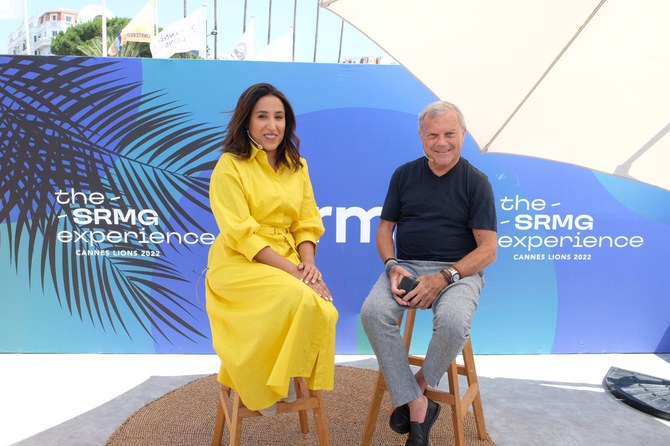


CANNES: Saudi Research and Media Group (SRMG) is hosting off a series of interactive panel discussions and a virtual experience at a dedicated pavilion at the Cannes Lions International Festival of Creativity.
SRMG was the host of a unique virtual experience at the festival. Nestled between Warner Bros and Meta, SRMG was among the biggest media conglomerates in the world providing a unique experience for festival attendees.
The virtual experience provides an integrated interactive session, which takes participants to 6 different destinations, before taking them on a tour of Al Sharq Bloomberg channel’s studios. It also presents the group’s activities across its political, sports, cultural and artistic news platforms via interactive screens.
In addition to the experience, SRMG is also hosting several thought-provoking and interactive panels and discussions.
“New technologies, innovative talent, and creative models are changing the media landscape as we know it,” SRMG CEO Jomana Al-Rashid said in a tweet. She added that for the first time at Cannes Lions, SRMG is celebrating the “industry’s vibrancy” shining a light on MENA’s media landscape.
New technologies, innovative talent, and creative models are changing the media landscape as we know it. And for the first time at @Cannes_Lions, @SRMG_HQ celebrates the industry’s vibrancy & and shines a light on the MENA media landscape through the #SRMGCannesLions experience. pic.twitter.com/y6ifOfc2N4
— Jomana Alrashid | جمانا الراشد (@jomanaalrashid) June 19, 2022
Led by Al-Rashid, “Advertising Reimagined” saw her spotlight SRMG’s digital transformation strategy and its vision to transform from one of the largest and most influential media groups in the MENA region into an integrated global media giant.
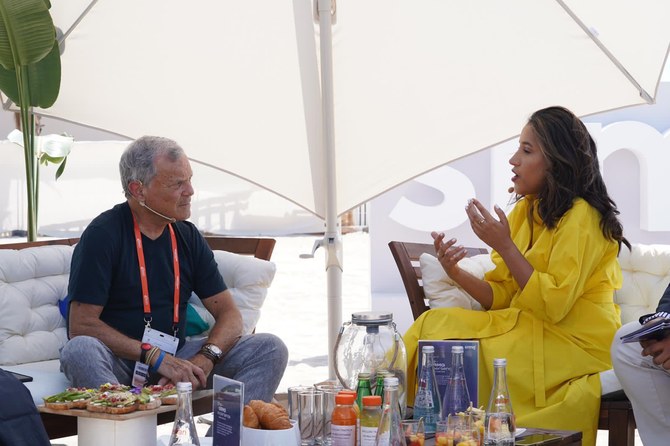
She discussed the future of advertising with Sir Martin Sorrell, co-founder of S4S Ventures, bringing up questions such as has the advertising industry recovered from the repercussions of the pandemic? How does it keep up with the rapid advances in technology? Will it succeed in achieving the sustainable goals through digitalization to maintain its competitiveness in the future?
Invaluable insights during the #SRMGExperience fireside chat with SRMG CEO @jomanaalrashid & @martinsorrell emphasizing the importance of shifting from global to regional strength within the media industry #CannesLions2022 pic.twitter.com/5fFQnHqp6G
— SRMG (@SRMG_HQ) June 21, 2022
Al-Rashid presented and explained SRMG’s strategy, which includes 5 key pillars: SRMG Media, which will develop and digitize platforms, produce and distribute qualitative, distinctive and exclusive content; SRMG International to enhance investments and expand international partnerships and opportunities for regional and global cooperation; SRMG Think to develop in-depth research and studies based on facts; SRMG X for developing and expanding events, conferences and exhibitions; and SRMG Labs for developing the media sector, keeping pace with the global accelerating technical development and embracing innovative ideas in the content and technology industry.
Kicked off the 1st day of the #SRMGexperience at @Cannes_lions with a chat with Sir @Martinsorrell, founder of @S4Capital, who’s fully moved to digital advertising after 30+ years of leading analog advertising. We discussed the future of digital media and developments in MENA pic.twitter.com/Ege6rqe0nX
— Jomana Alrashid | جمانا الراشد (@jomanaalrashid) June 20, 2022
The wider Middle East region is gaining increased prominence on the global advertising map — a trend Sorrell expects to continue. He praised the changes that Saudi Arabia has undergone during the last few years making Riyadh a regional hub.
He added: “I don’t think that in the West, we are aware of the size of the shift (the world is witnessing) in terms of wealth, with the rise in energy and commodity prices. The Middle East is a key area in (this shift), and I think what we have seen over the past month or two in terms of a big shift in activity, will continue.”
In addition to “Advertising Reimagined,” SRMG is hosting several engaging panels and riveting conversations to address the prominent and influential topics in the media industry. For example, the “Local Voices, Global Thoughts: Podcasting in MENA” panel discussed podcasting in the region; “Digital Wellbeing: A Global Imperative” discussed the impact of technology on our health and wellbeing; and “Towards a More Inclusive Creative Industry: Women in Power” looked at diversity, equity, and inclusion initiatives in the creative industries.


