

India In-Focus — India’s Russian coal buying peaks; EU resumes talk for free trade agreement 

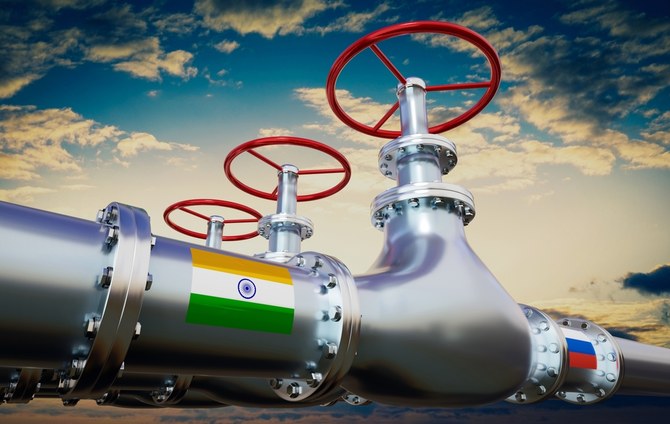
Indian refiners have snapped up cheap Russian oil shunned by Western countries. (Shutterstock)
Short Url
Updated 19 June 2022
Follow

India In-Focus — India’s Russian coal buying peaks; EU resumes talk for free trade agreement 

MUMBAI: India’s purchases of Russian coal have spiked in recent weeks despite global sanctions on Moscow, as traders offer discounts of up to 30 percent, according to two trade sources and data reviewed by Reuters.

India bought an average of $16.55 million of Russian coal a day in the three weeks through Wednesday, more than double the $7.71 million it bought in the three months after Russia’s Feb. 24 invasion, according to Reuters calculations.

Indian refiners similarly have snapped up cheap Russian oil shunned by Western countries. The value of India’s oil trade with Russia in the 20 days through Wednesday jumped more than 31-fold to $2.22 billion, the data showed.

Oil purchases averaged $110.86 million a day in the 20-day period, more than triple the $31.16 million it spent in the three months ended May 26.

India’s trade ministry did not immediately respond to a request for comment on Saturday.

“The Russian traders have been liberal with payment routes and are accepting payments in Indian rupee and the UAE dirham,” one source said. “The discounts are attractive, and this trend of higher Russian coal purchases will continue.” 

EU, India relaunch talks for free trade agreement

The EU and India on Friday relaunched negotiations to forge a free trade agreement, with the aim of completing talks by the end of 2023.

“This partnership will become a defining moment for world trade in the 21st century,” Indian Commerce Minister Piyush Goyal told a news conference.

The two sides previously launched talks in 2007, but they were frozen in 2013 due to a lack of progress. EU and Indian leaders agreed in May 2021 to resume negotiations.

EU Trade Commissioner Valdis Dombrovskis said the free trade agreement would cover “essentially all trade,” in line with World Trade Organization standards, including sectors such as automotive and spirits.

“For the European Union, the partnership with India is one of the most important relationships for the upcoming decade,” Dombrovskis said.

The next round of negotiations is scheduled to take place in New Delhi from June 27 to July 1. 

(With input from Reuters)


What changed in Saudi stocks on the first day of foreign entry 

Updated 13 sec ago
Follow

What changed in Saudi stocks on the first day of foreign entry 

RIYADH: Saudi Arabia’s stock market saw foreign non-strategic investors reduce their ownership in nearly half of the companies listed on the main Tadawul All Share Index, or TASI, on the first day of implementing the decision to open the market to all categories of foreign investors, according to Tadawul data reflecting ownership positions as of Feb. 1  

According to the Financial Analysis Unit at Al-Eqtisadiah, foreign ownership declined in 120 companies, increased in 97 others, and remained unchanged in the rest, with no variation in the number of shares held by foreign investors. 

Foreign investors favor growth stocks 

Looking at the changes purely through valuation multiples — without factoring in operational or sectoral considerations — foreign investors appear to be reallocating ownership toward growth stocks at the expense of value stocks, with higher multiples used as an approximate indicator of growth. 

Ownership declines were concentrated in companies with lower valuation multiples, where the median price-to-earnings ratio stood at about 17.1 times and the median price-to-book ratio was around 2 times. 

Conversely, ownership rose in companies with higher multiples, with a median price-to-earnings ratio of 23.3 times and a median price-to-book ratio of 2.6 times. 

Mid- and small-cap firms see biggest changes 

Raoom, Entaj, and Obeikan Glass saw the largest declines in foreign ownership, dropping between 10 percent and 16 percent. In contrast, Tamkeen, SACO, and Abo Moati led gains, with foreign stakes rising 10 to 20 percent. 

In terms of overall foreign ownership, Al-Babtain, Rasan, and Etihad Etisalat topped the list at roughly 34 percent, 29 percent, and 24 percent, respectively.

Gradual foreign inflow and delayed impact 

The initial changes remain insufficient to reflect a major impact of the full foreign access decision, especially as the first day coincided with the weekend. Additionally, entry is expected to be gradual until financial institutions are fully ready to open accounts, particularly for individuals. 

Mohammed Al-Shammasi, CEO of Derayah Financial, has told Asharq that the firm received around 500 individual investor applications on the first day of full foreign access. 

Meanwhile, foreign institutions managing under $500 million can now invest directly in the market with easier access, joining more than 4,000 qualified foreign investors who already hold assets worth SR377 billion ($100.5 billion)