

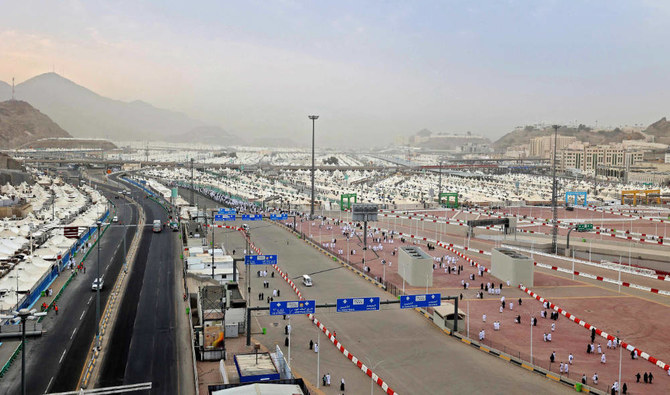

RIYADH: The Saudi Ministry of Hajj and Umrah has closed registration for domestic pilgrims for this year’s Hajj season, adding that the names would be announced later today following a draw.
The number of applicants for Hajj from inside Saudi Arabia had reached more than 390,000 requests, the ministry’s official spokesperson Hesham Saeed said. The selection of candidates will be done by e-lottery with priority given to those who have not performed Hajj previously, he said.
HIGHLIGHTS
• The number of applicants for Hajj from inside Saudi Arabia had reached more than 390,000 requests. The selection of candidates will be done by e-lottery with priority given to those who have not performed Hajj previously.
• Pilgrims successful in their request will receive a confirmation via text message on their registered devices.
“The sorting and the e-draw process will begin to select nominators from pilgrims who meet with the requirements that have been previously announced by the ministry,” said Saeed, who is also assistant deputy minister of Hajj and Umrah.
Pilgrims successful in their request will receive a confirmation via text message on their registered devices saying that they have been selected to perform Hajj, Islam’s fifth pillar.
“The nominators will be given 48 hours to complete the payment of the fees for the selected packages, after which the Hajj permits will be issued to them,” he said.
The ministry has also slashed prices for the three hospitality packages for the Hajj season this year.
The “Al-Abraj” package now costs SR13,943.75 ($3,716.33) per pilgrim, the “Developed Tents” package is SR11,970.35, and the “Undeveloped Tents” package cost SR9,098.80 per pilgrim. All prices are not inclusive of value-added tax and do not include land or air transportation to and from Makkah, the ministry said.
Registration opened for domestic pilgrims at the beginning of June through the “Eatmarna” application and via the ministry’s website.
The ministry stipulated that those who wished to register for Hajj, whether resident or citizen, should not exceed 65 years of age, and demonstrate complete immunization in the “Tawakkalna” application.
Earlier, the ministry confirmed that pilgrims from Europe, North America and Australia could also register electronically for this year’s Hajj.
Pilgrims from these countries were able to register their data and submit their official documents, including passports and necessary vaccination papers for COVID-19. They then were also entered into the lottery process for the appropriate packages, and if successful, should complete the online payment process. After that, the requests are sent to the Ministry of Foreign Affairs to issue visas in consultation with the ministry’s information center.
The ministry said that people should communicate by writing to [email protected], by phoning 920002814, or by using the official account on Twitter.
The likely date for Hajj this year will be during the first or second week of July, with the final date to be confirmed after the sighting of the new moon of Dhul Hijjah.


