

World experts debate future protection of Red Sea ecosystems at Saudi conference

1 / 4
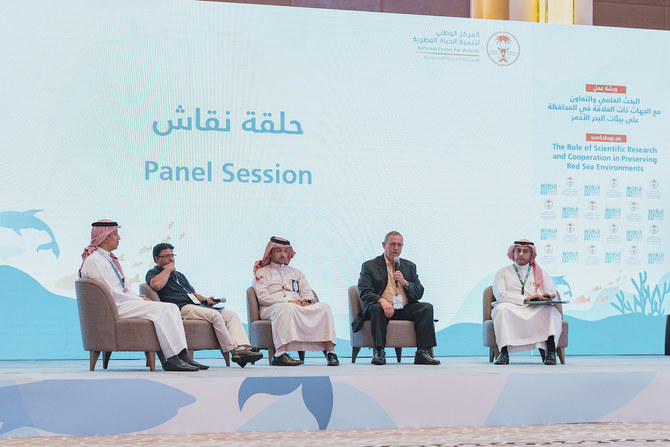
Marine environment experts gathered in Riyadh for a seminar to discuss ways to protect the future biodiversity of the Red Sea. (Supplied)
2 / 4
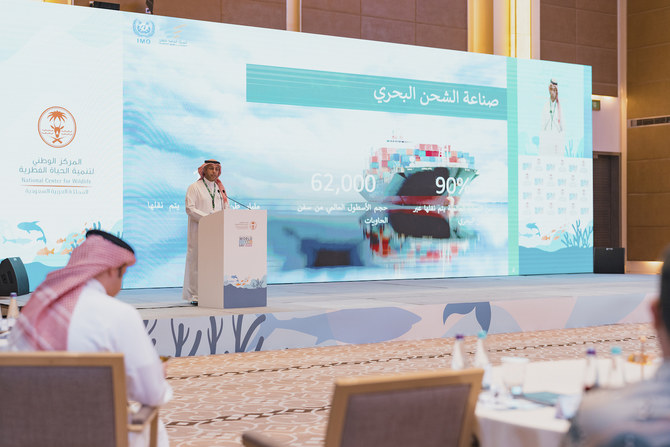
Marine environment experts gathered in Riyadh for a seminar to discuss ways to protect the future biodiversity of the Red Sea. (Supplied)
3 / 4
Marine environment experts gathered in Riyadh for a seminar to discuss ways to protect the future biodiversity of the Red Sea. (Supplied)
4 / 4
Marine environment experts gathered in Riyadh for a seminar to discuss ways to protect the future biodiversity of the Red Sea. (Supplied)
Short Url
Updated 09 June 2022
Follow

World experts debate future protection of Red Sea ecosystems at Saudi conference

  • Delegates focused on 12 key subject areas concerned with ensuring the long-term viability of Red Sea ecosystems

RIYADH: Marine environment experts from around the world recently gathered in Riyadh for a seminar to discuss ways to protect the future biodiversity of the Red Sea.

Saudi Deputy Minister of Environment, Water, and Agriculture Mansour Al-Mushaiti on Wednesday opened the workshop, organized by the National Center for Wildlife, to coincide with UN World Oceans Day.

Delegates attending the conference, titled “The Role of Scientific Research and Cooperation with Relevant Authorities in Preserving the Environments of the Red Sea,” focused on 12 key subject areas concerned with ensuring the long-term viability of Red Sea ecosystems.

World Oceans Day, held annually on June 8, aims to raise global awareness about the impact of human activity on oceans, and this year’s theme was “Revitalization: Collective Action for the Ocean.”

Addressing the workshop, Al-Mushaiti said humanity relied on having a healthy planet that could only exist with a thriving and sustainable marine environment.

“Oceans and seas are a source of food for millions of people, a source of mineral resources and energy for life on the planet, and a major economic resource on which more than 3 billion people depend for their livelihood,” he added.

The minister noted that studies and data had shown that human activity was depleting the oceans faster than they could be replenished, posing critical challenges that required immediate action.

Chief executive officer of the National Center for Wildlife, Mohammed Qurban, highlighted the importance of scientific research in helping to improve marine environments as a major source of food, water, and oxygen.

He said: “Given the importance of scientific research in advancing all aspects of life and finding solutions to urgent issues, the center organized this workshop in which a number of concerned parties have participated in order to achieve maximum benefit from the (12) working papers.”

Qurban pointed out that the center was involved in ongoing projects to rehabilitate and protect damaged marine environments while promoting the preservation of coastal areas.

He added that it was further developing and implementing plans to address threats to land and marine wildlife, and protect endangered species, with the overall goal of restoring the natural ecological balance of ecosystems.

In a recent tweet, Saudi Ambassador to the US Princess Reema bint Bandar bin Sultan, said: “Happy #UNWorldOceansDay #SaudiArabia strives for harmony between human and natural habitats via sustainable management of the world’s oceans, a critical element of the biosphere. @MEWA_KSA @NEOM @TheRedSeaGlobal.”


Economic growth and resilience at heart of 2nd AlUla Emerging Market Economies Conference

Updated 03 February 2026
Follow

Economic growth and resilience at heart of 2nd AlUla Emerging Market Economies Conference

  • Event on Feb. 8 and 9 will bring together ministers, governors of central banks, policymakers, economic experts and international financial institutions
  • Emerging-market economies a ‘pivotal element’ in global economic system due to effect they have on growth and stability, says Saudi Finance Minister Mohammed Al-Jadaan

RIYADH: The second annual AlUla Conference for Emerging Market Economies, which Saudi Arabia will host next week, offers a platform to exchange views on global developments and discuss policies and reforms that support inclusive growth and strengthen economic resilience, the Kingdom’s finance minister said.

The event on Feb. 8 and 9 will bring together finance ministers, governors of central banks and policymakers, alongside economic experts and representatives of international financial institutions.

Organized by the Saudi Ministry of Finance in partnership with the International Monetary Fund, it takes place as emerging-market economies face mounting challenges amid rapid global economic change.

Finance Minister Mohammed Al-Jadaan said the decision to host the conference reflects Saudi Arabia’s ongoing commitment to efforts that support global financial and economic stability, and highlights the growing influence of emerging economies on worldwide growth.

Emerging-market economies represent a “pivotal element” in the global economic system due to the direct impact they have on economic growth and stability, he added.

“The AlUla Conference for Emerging Market Economies provides a unique platform for exchanging views on global economic developments, and discussing policies and reforms that will support inclusive growth and enhance economic resilience, in light of broader international cooperation that contributes to confronting common challenges,” Al-Jadaan said.

Kristalina Georgieva, managing director of the IMF, said the event would help emerging economies deal with growing uncertainty driven by technological change, demographic shifts and geopolitical tensions.

“The AlUla conference provides a vital platform for emerging economies to discuss how they can navigate the risks and embrace the opportunities ahead,” she said.

“In these times of sweeping transformations in the global economy, policymakers face a more challenging and uncertain environment. Countries should work together to strengthen resilience through sound macroeconomic and financial policies.”