

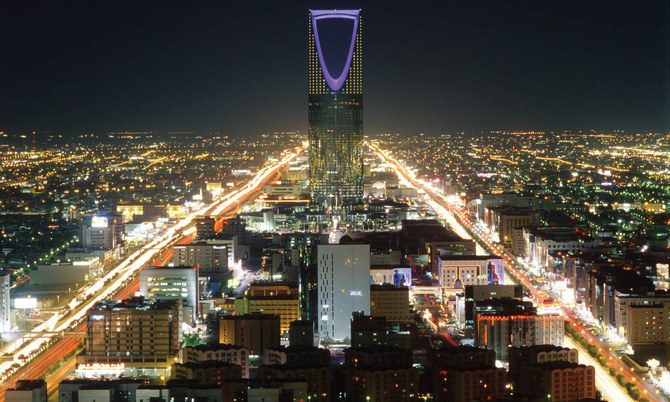
Saudi PMI unchanged at 55.7 in May: S&P Global

The increase in prices was also accompanied by a rise in input costs at the second quickest pace in a year and a half — aside from the uptick in March related to the aftermath of Russia’s invasion of Ukraine.
Short Url
Updated 07 June 2022
Follow

Saudi PMI unchanged at 55.7 in May: S&P Global

RIYADH: Saudi Arabia’s Purchasing Managers’ Index remained unchanged from April at 55.7, according to a press release from S&P Global.

The headline index figure signaled a marked expansion in activity and new orders in Saudi non-oil businesses, with lingering concerns that inflation could obstruct demand in global and domestic markets.

New business rose at a slightly quicker pace than in April, as demand started to pick up with a recovering post-pandemic economy, according to the press release.

“The continued strength of the domestic non-oil economy encouraged firms to pass through higher input costs to their customers in May, with the latest PMI data indicating another solid increase in selling prices due to greater fuel, material and transport costs,” it added, citing David Owen, an economist at the firm.

The increase in prices was also accompanied by a rise in input costs at the second quickest pace in a year and a half — aside from the uptick in March related to the aftermath of Russia’s invasion of Ukraine.

This is triggered by the global inflationary measures, which was reflected by higher fuel, material and freight prices. 

Constrained supply posed another limitation to supplier performance improvement, as backlogs of work at non-oil companies during May increased, marking the first incomplete business since COVID-19 pandemic began.

As such, employment numbers also showed a slight increase for the second straight month, according to the report.

“Reflecting these risks, the outlook for future activity remained notably weak, with just 11 percent of respondents signaling expectations of a rise in output by May 2023, less than half the survey’s long-run trend,” Owen pointed out.



BYD Americas CEO hails Middle East as ‘homeland for innovation’

Updated 21 January 2026
Follow

BYD Americas CEO hails Middle East as ‘homeland for innovation’

  • In an interview on the sidelines of Davos, Stella Li highlighted the region’s openness to new technologies and opportunities for growth

DAVOS: BYD Americas CEO Stella Li described the Middle East as a “homeland for innovation” during an interview with Arab News on the sidelines of the World Economic Forum.

The executive of the Chinese electric vehicle giant highlighted the region’s openness to new technologies and opportunities for growth.

“The people (are) very open. And then from the government, from everybody there, they are open to enjoy the technology,” she said.

BYD has accelerated its expansion of battery electric vehicles and plug-in hybrids across the Middle East and North Africa region, with a strong focus on Gulf Cooperation Council countries like the UAE and Saudi Arabia.

GCC EV markets, led by the UAE and Saudi Arabia, rank among the world’s fastest-growing. Saudi Arabia’s Public Investment Fund has been aggressively investing in the EV sector, backing Lucid Motors, launching its brand Ceer, and supporting charging infrastructure development.

However, EVs still account for just over 1 percent of total car sales, as high costs, limited charging infrastructure, and extreme weather remain challenges.

In summer 2025, BYD announced it was aiming to triple its Saudi footprint following Tesla’s entry, targeting 5,000 EV sales and 10 showrooms by late 2026.

“We commit a lot of investment there (in the region),” Li noted, adding that the company is building a robust dealer network and introducing cutting-edge technology.

Discussing growth plans, she envisioned Saudi Arabia and the wider Middle East as a potential “dreamland” for innovation — what she described as a regional “Silicon Valley.” 

Talking about the EV ambitions of the Saudi government, she said: “If they set up (a) target, they will make (it) happen. Then they need a technology company like us to support their … 2030 Vision.”