

Hindu folk singer in Pakistan’s Thar hopes to preserve desert’s unique music tradition

Bhagat Bhugro Mal performs with his students at his residence in Islamkot area of Tharparkar, Pakistan, on May 25, 2022. (AN Photo/Zulfiqar Kunbhar)
Short Url
Updated 06 June 2022
Follow

Hindu folk singer in Pakistan’s Thar hopes to preserve desert’s unique music tradition

  • Bhagat Bhugro Mal, popularly known by his stage name Nacheez, has been singing since he was less than 10 years old
  • Young people in Thar started to learn traditional music to tap opportunities brought by social media-inspired tourism

ISLAMKOT: Bhagat Bhugro Mal began to perform over half a century ago, singing traditional Hindu music of Pakistan’s Thar desert, a dying art form he is now trying to save. 

Bordering India, Tharpakar district, where half of 1.65 million residents practice Hinduism, is the largest area populated by Hindus in Muslim-majority country. 

It has a unique musical tradition, a blend of folk with bHajjans — devotional songs that have roots in the ancient metric of Hinduism — and spiritual music of Islam, but few practice it anymore. 

“In the past, old people in Thar desert used to sing bHajjans with the tambura string instrument in groups, but the trend is now decreasing,” Mal told Arab News at his home in Islamkot area. 

“This is mainly because old and experienced voices have left the world and new ones are not coming,” he said. “Thar’s old music is dying,” 
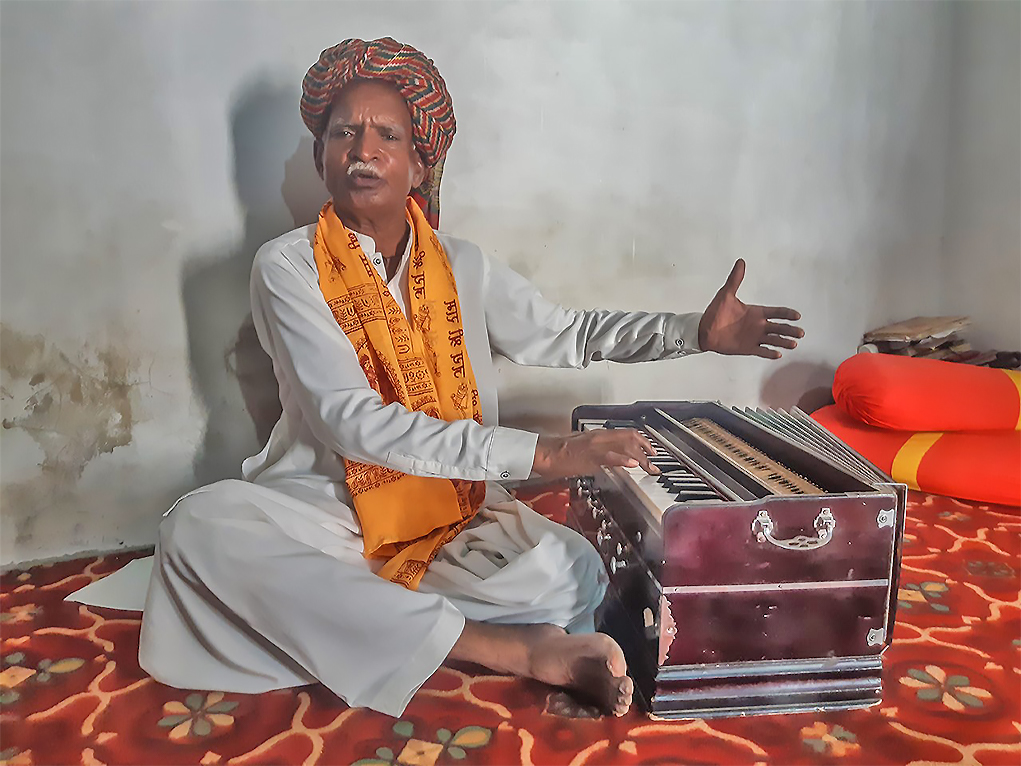


Bhagat Bhugro Mal sings traditional music of Thar desert at his residence in Islamkot area of Tharparkar, Pakistan on May 25, 2022. (AN photo by Zulfiqar Kunbhar)

Popularly known by his stage name Nacheez, Mal started singing when he was less than 10 years old. He specializes in Rajasthani folk music, bHajjans, and poems of the famous Sufi mystics Shah Abdul Latif Bhittai and Bulleh Shah. 

A regular performer of the Pakistani state radio, he is now focusing more on teaching others to save the region’s music before he himself is gone. 

Throughout his decades-long career, Mal has trained about a dozen musicians. Now, he has eight students, all of them young people who attracted by social media interest in local traditions started to explore the old art’s tourism potential. 

“People’s interest in spiritual and traditional music is lessening but the number of singers is increasing,” Mal said. “Due to tourism, youngsters are coming to learn, because this way, they have a chance to earn and establish their career in folk music while doing it part-time.” 
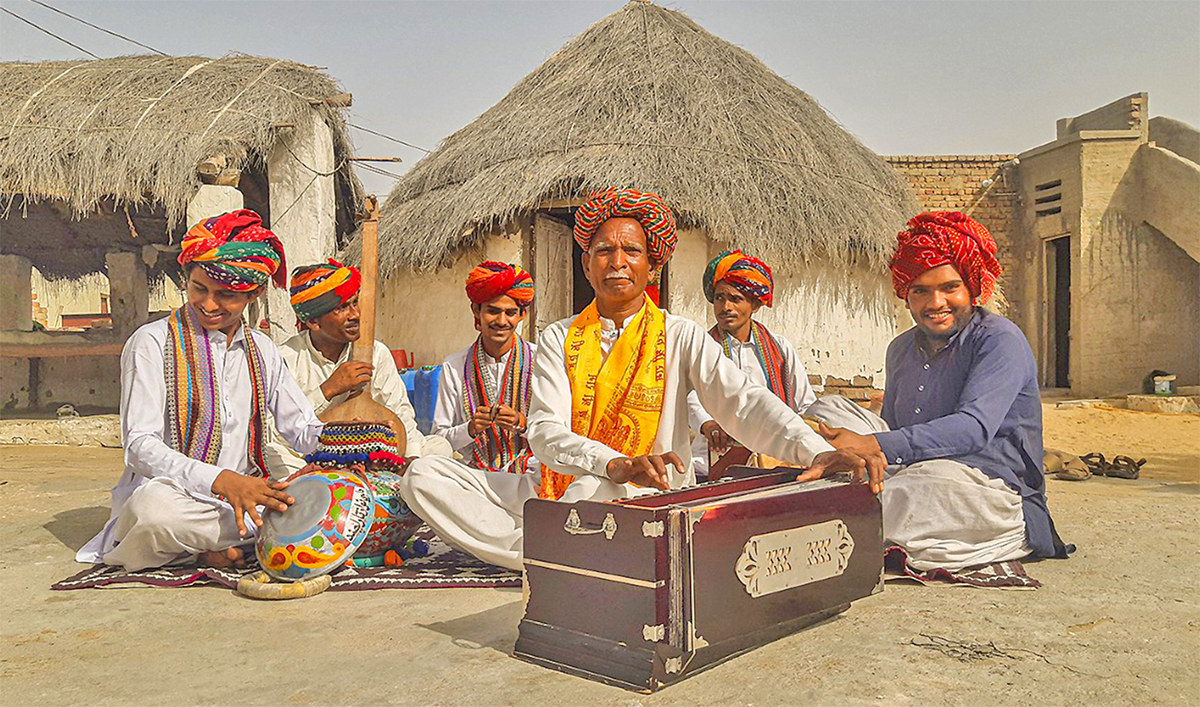


Bhagat Bhugro Mal performs with his students in Islamkot area of Tharparkar, Pakistan, on May 25, 2022. (AN Photo/Zulfiqar Kunbhar)

Anand Kumar Meghwar, 20, has been regularly attending Mal’s classes. 

“When I was young, there used to be musical gatherings in our neighborhoods, so I developed an interest and started learning,” he said. 

“With the rise in tourism, the number of musical events and the demand for artistes have also increased. We are invited to perform at such functions which helps us earn.” 
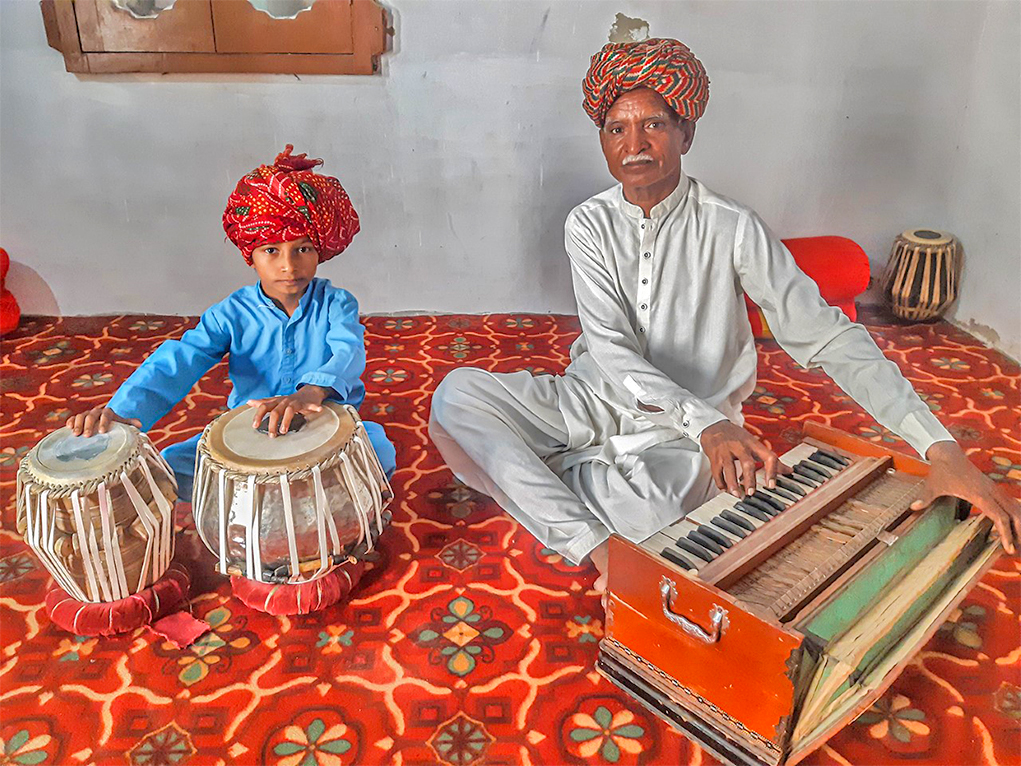


Bhagat Bhugro Mal performs with his seven-year old grandson, Hasrat Gul, at his residence in Islamkot area of Tharparkar, Pakistan, on May 25, 2022. (AN Photo/Zulfiqar Kunbhar)

Ramesh Rahi, 30, who has been training with Mal for the past decade, sees a niche opportunity in his region’s musical tradition. 

“There is a dearth of devotional singers, also locally. That provides an opportunity for me to come into this field,” he told Arab News. “I have also made music videos for my YouTube channel where I post bHajjan and other folk songs. I get a good response from that.” 

The chance for music’s revival brought about by social media-inspired tourism is what Mal hopes will help save the centuries-old tradition. 

“I want to preserve the desert’s melody, folk songs and bHajjans,” he said. “I am hopeful the new generation would preserve it.” 


Pakistan highlights economic reforms at Davos, eyes cooperation in AI, IT and minerals

Updated 6 sec ago
Follow

Pakistan highlights economic reforms at Davos, eyes cooperation in AI, IT and minerals

  • Prime Minister Shehbaz Sharif speaks at breakfast event in Davos at sidelines of World Economic Forum summit
  • Pakistan, rich in gold, copper reserves, has sought cooperation with China, US, Gulf countries in its mineral sector

ISLAMABAD: Prime Minister Shehbaz Sharif highlighted Pakistan’s recent economic reforms during the sidelines of the ongoing World Economic Forum (WEF) summit in Davos on Wednesday, saying that his country was eyeing greater cooperation in mines and minerals, information technology, cryptocurrency and artificial intelligence with other states. 

The Pakistani prime minister was speaking at the Pakistan Pavilion in Davos on the sidelines of the WEF summit at a breakfast event. Sharif arrived in Switzerland on Tuesday to attend the 56th annual meeting of the WEF, which brings together global business leaders, policymakers and politicians to speak on social, economic and political challenges. 

Pakistan has recently undertaken several economic reforms, which include removing subsidies on energy and food, privatization of loss-making state-owned enterprises and expanding its tax base. Islamabad took the measures as part of reforms it agreed with the International Monetary Fund (IMF) in exchange for a financial bailout package. 

“We are now into mines and minerals business in a big way,” Sharif said at the event. “We have signed agreements with American companies and Chinese companies.”

Islamabad has sought to attract foreign investment in its critical minerals sector in recent months. In April 2025, Pakistan hosted an international minerals summit where top companies and government officials from the US, Saudi Arabia, China, Türkiye, the UK, Azerbaijan, and other nations attended.

Pakistan is rich in gold, copper and lithium reserves as well as other minerals, yet its mineral sector contributes only 3.2 percent to the countrys GDP and 0.1 percent to global exports, according to official figures.

Sharif said Pakistan has been blessed with infinite natural resources which are buried in its mountains in the northern Gilgit-Baltistan, Khyber Pakhtunkhwa, Azad Kashmir and southwestern Balochistan regions. 

“But we have now decided to go forward at lightning speed,” he said. “And we are also moving speedily in the field of crypto, AI, IT.”

He said the government’s fiscal and economic measures have reduced inflation from nearly 30 percent a few years ago to single-digit figures, adding that its tax-to-GDP ratio had also increased from 9 to 10.5 percent. 

The prime minister admitted Pakistan’s exports face different kinds of challenges collectively, saying the country’s social indicators needed to improve. 

“But the way forward is very clear: that Pakistan has to have an export-led growth,” he said. 

Sharif will take part in an informal meeting of world leaders this year themed ‘The Importance of Dialogue in a Divided Global Landscape,’ his office said in an earlier statement. 

Pakistan’s participation at the WEF comes as Islamabad seeks to sustain recent economic stabilization and attract investment by engaging directly with policymakers, business leaders and international institutions at the annual gathering.