RIYADH: Private and foreign investments are necessary to elevate the Saudi Arabian aviation industry, even as the country targets 330 million passengers and 250 international destinations by the end of this decade, said a top civil aviation official.
“Public Investment Fund is our main partner. We are very happy to have such an investment powerhouse. But not just PIF; we need everyone’s cooperation. We need the private sector. We need the foreign investors as much as we need the PIF,” said Mohammed Alkhuraisi, head of strategy, General Authority of Civil Aviation, in an exclusive interview with Arab News.
Regional logistics hub
During the talk, Alkhuraisi revealed that GACA has solid plans to transform Saudi Arabia into a logistics hub, as it targets a cargo shipment of 4.5 million by 2030.
He added that out of the targeted 4.5 million cargo shipments, 2 million would be exclusively transshipment.
We need the foreign investors as much as we need the PIF
Mohammed Alkhuraisi, head of strategy, General Authority of Civil Aviation
Outlining GACA’s plans regarding logistics regulations, Alkhuraisi said, “There is a clear roadmap on what we will do in cargoes in terms of easing regulations, streamlining processes, and building specialized Economic Zones, having specialized warehouses and facilities, etc.”
He added: “With the help of the Ministry of Transport and Logistics services, we are marching on the execution of these regulations and publicizing them.”
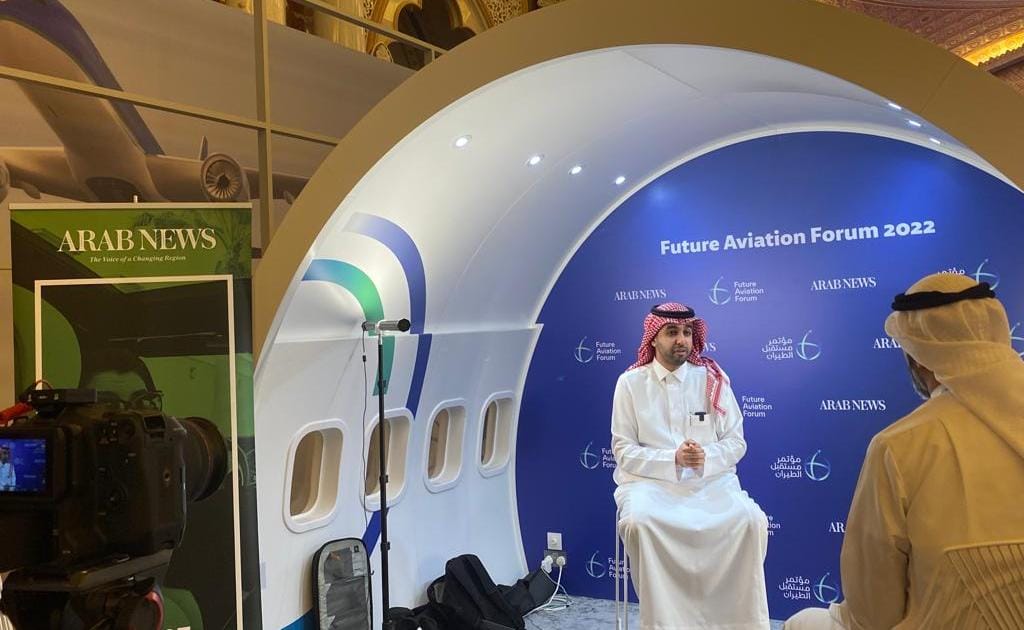
The GACA official also confirmed that a new national carrier would be soon launched in Saudi Arabia. (AN)
GACA is no longer an operator
During the interview, Alkhuraisi made it clear that GACA is no longer an operator but a regulator.
“So today, GACA is a pure regulator and no more an operator. GACA used to operate airports in the past decades, and now, we separated that completely. All the airports and operations are within companies focused on operational matters, while GACA focuses only on regulatory affairs,” he added.
During the interview, Alkhuraisi also highlighted the steps that should be taken to revive the aviation industry that was severely impacted due to the COVID-19 pandemic.
“To smooth out the airlines business recovery, you need to optimize the cost environment. And this is the responsibility of the regulator. So it is necessary to ensure that we have the right sets of regulations and incentive schemes in place to have a cost structure in line with the best practices.”
However, he admitted that there are several other things where the regulator does not have any control, including the cost of aircraft ownership, workforce and human capital.
HIGHLIGHTS
- GACA has solid plans to transform Saudi Arabia into a logistics hub by 2030
- It targets a cargo shipment of 4.5 million, 2 million of that would be exclusively transshipment
- GACA's strategy aims to attract 330 million passengers annually to the Kingdom
More partnerships with foreign carriers
Alkhuraisi also added that Saudi Arabia wants more foreign carriers connected to the Kingdom through bilateral agreements.
“We would like to have more foreign carriers connected to the Kingdom as part of our bilateral agreements. For example, KLM. They operated the routes from Amsterdam. Other airlines would be encouraged and welcomed; whether an Asian, Latin American, North American or different parts of Europe, all are welcome to come and start operating direct routes in the Kingdom.”
Alkhuraisi also confirmed that a new national carrier would be soon launched in Saudi Arabia, which was earlier announced by the Saudi Minister of Transport Saleh Al-Jasser during the recently concluded Future Aviation Forum.