

EU fails to agree on Russia oil embargo, to try again Monday before summit

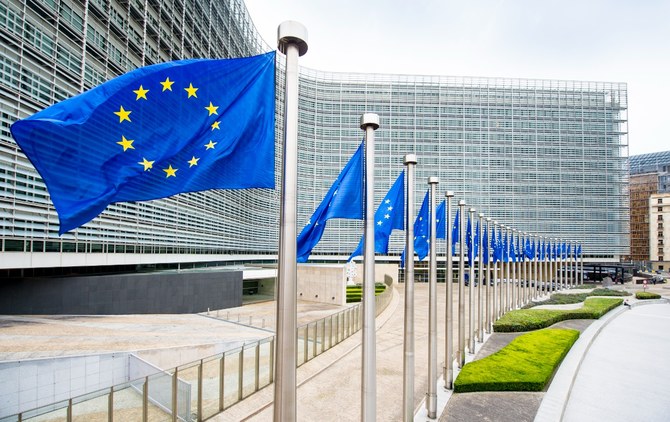
The proposed sanctions on oil imports is part of the EU’s sixth sanctions package on Russia over its invasion of Ukraine. Reuters/File
Short Url
Updated 29 May 2022
Follow

EU fails to agree on Russia oil embargo, to try again Monday before summit

BRUSSELS: The EU failed on Sunday to agree on an embargo of Russian oil, but diplomats but will still try to make progress ahead of a Monday-Tuesday summit on an exemption for pipeline deliveries to landlocked Central European countries, officials said.

However, a senior EU diplomat said there was “still too much detail to sort out” to hope for an agreement before EU leaders gather in Brussels on Monday afternoon.

The proposed sanctions on oil imports is part of the EU’s sixth sanctions package on Russia over its invasion of Ukraine.

The package includes cutting Russia’s biggest bank, Sberbank, off from the SWIFT messaging system, banning Russian broadcasters from the EU and adding more people to a list of individuals whose assets are frozen and who cannot enter the EU.

The whole package has been held up by Hungary, which says an oil embargo would be a body blow to its economy because it cannot easily get oil from elsewhere. Slovakia and the Czech Republic have expressed similar concerns.

Talks on the oil embargo have been going on for a month with no progress and leaders had been keen to reach an agreement for their summit to avoid looking disunited in their response to Moscow.

To break the deadlock, the European Commission proposed that the ban apply only to Russian oil brought into the EU by tankers, leaving Hungary, Slovakia and Czechia to continue to receive their Russian oil via the Russian Druzhba pipeline for some time until alternative supplies can be arranged.

Budapest supports this proposal, officials said, but talks on Sunday snagged on EU financing that Hungary wants to boost oil pipeline capacity from Croatia and to switch its refineries from using Russian Urals crude to Brent crude, officials said.

This will be discussed by EU envoys on Monday morning along with the problem of how to ensure fair competition given the higher prices that member states reliant on shipped Brent crude would face as a result of the sanctions.


Closing Bell: Saudi main index extends gains as market opens wider to foreign investment

Updated 02 February 2026
Follow

Closing Bell: Saudi main index extends gains as market opens wider to foreign investment

RIYADH: Saudi Arabia’s Tadawul All Share Index rose on Monday, gaining 153.61 points, or 1.38 percent, to close at 11,321.09.

The total trading turnover of the benchmark index was SR5.85 billion ($1.56 billion), as 207 of the listed stocks advanced, while 55 retreated.

The MSCI Tadawul Index increased, up 21.20 points or 1.41 percent, to close at 1,524.18.

The Kingdom’s parallel market Nomu gained 278.13 points, or 1.17 percent, to close at 24,013.03. This comes as 43 of the listed stocks advanced, while 29 retreated.

The best-performing stock was Saudi Pharmaceutical Industries and Medical Appliances Corp., with its share price surging by 7.26 percent to SR28.94.

Other top performers included Rasan Information Technology Co., which saw its share price rise by 6.51 percent to SR144, and Knowledge Economic City, which saw a 6.25 percent increase to SR13.09.

On the downside, the worst performer of the day was Najran Cement Co., whose share price fell by 2.11 percent to SR6.49.

Almasane Alkobra Mining Co. and Saudi Cable Co. also saw declines, with their shares dropping by 2 percent and 1.88 percent to SR103.10 and SR166.80, respectively.

On the announcement front, Riyad Bank has announced its annual financial results for 2025, with the total income from special commission of financing reaching SR24.1 billion, while net income from special commission of financing amounted to SR12 billion.

In a statement on Tadawul, the bank said: “Net income increased by 11.7 percent mainly due to an increase in total operating income and a decrease in total operating expenses.”

The bank further noted that the rise in total operating income was primarily driven by increased revenue from fees and commissions, trading activities, special commissions, gains on non-trading investments, and other operating sources. This growth was partially tempered by declines in exchange and dividend income.

“Net provision of expected credit losses and other losses decreased by 15.8 percent due to a decrease in impairment charge of credit losses and impairment charge for other financial assets, partially offset by an increase in impairment charge for investments,” it added.

RIBL’s share price closed at SR18.18 on the main market, marking a 1.43 percent increase.