


BEIJING: Uyghurs have urged UN human rights chief Michelle Bachelet to avoid falling victim to a public relations stunt as her trip to China enters a delicate new phase on Tuesday with a visit to the remote Xinjiang region.
The ruling Communist Party is accused of detaining over one million Uyghurs and other Muslim minorities in the far-western region as part of a years-long security crackdown the United States has labelled a “genocide.”
China vehemently denies the allegations, calling them the “lie of the century.”
Bachelet is expected to visit the Xinjiang cities Urumqi and Kashgar on Tuesday and Wednesday as part of a six-day tour.
“I hope she can also ask the Chinese government for the whereabouts of my mother,” said Jevlan Shirememet, adding that he had not been able to contact her in four years.
The Turkey-based 31-year-old — from the province’s northern reaches near the border with Kazakhstan — also said he hoped Bachelet would venture further than her itinerary.
“I don’t know why she can’t visit these places,” he told AFP.
Nursimangul Abdureshid — another Uyghur living in Turkey — was “not very hopeful that her trip can bring any change.”
“I request them to visit victims like my family members, not the pre-prepared scenes by the Chinese government,” she told AFP.
“If the UN team cannot have unlimited access in Xinjiang, I will not accept their so-called reports.”
Regional capital Urumqi — population four million — houses major government bodies believed to have orchestrated the province-wide campaign China described as a crackdown on religious extremism.
It is home to a sizeable Uyghur community and was the site of deadly ethnic clashes in 2009 as well as two terrorist attacks in 2014.
Meanwhile, Kashgar — home to 700,000 people — lies in the Uyghur heartland of southern Xinjiang.
An ancient Silk Road city, it has been a major target of Beijing’s crackdown, researchers and activists say, with authorities accused of smothering the cultural hub in a high-tech security blanket while bulldozing Uyghur homes and religious sites.
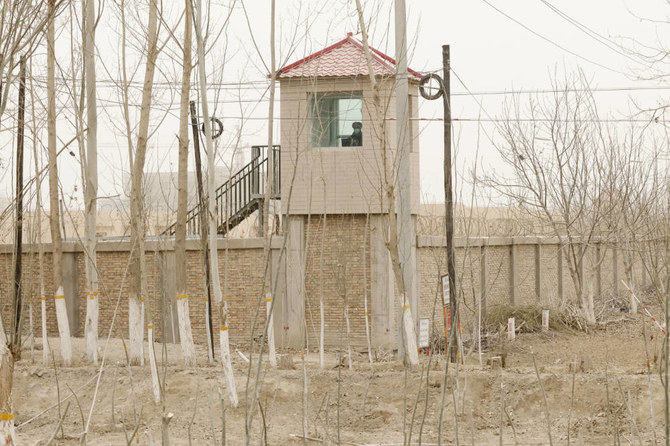
The outskirts of both cities are pockmarked with what are believed to be detention camps, part of a sprawling network of recently built facilities stretching across the remote province.
Campaigners have voiced concern that Chinese authorities will prevent Bachelet from conducting a thorough probe into alleged rights abuses and instead give her a stage-managed tour with limited access.
The US has said it is “deeply concerned” that she had not secured guarantees on what she will see, adding that she was unlikely to get an “unmanipulated” picture of China’s rights situation.
Speaking in Guangzhou where she met with Chinese Foreign Minister Wang Yi on Monday, Bachelet said she would be “discussing some very important issues and sensitive issues.”
“I hope this will help us build confidence, and enable us to work together,” she added.
Bachelet also gave assurances on her access to detention centers and rights defenders during a Monday virtual meeting with the heads of dozens of diplomatic missions in China, according to diplomatic sources in Beijing.
Caroline Wilson, the UK’s Ambassador to China, was on the call and said she stressed “the importance of unfettered access to Xinjiang and private conversations with its people.”
“There is no excuse for preventing UN representatives from completing their investigations,” Wilson wrote on Twitter.
Bachelet’s office has also said she will meet with civil society organizations, business representatives and academics.
In addition to mass detentions, Chinese authorities have waged a campaign of forced labor, coerced sterilization and the destruction of Uyghur cultural heritage in Xinjiang, researchers and campaigners say.
Uyghurs overseas have staged rallies in recent weeks pressing Bachelet to visit relatives believed to be detained in Xinjiang.


