


DUBAI: Advancing the role of women in society and the economy is a key driver for change in any country or region, particularly the Middle East.
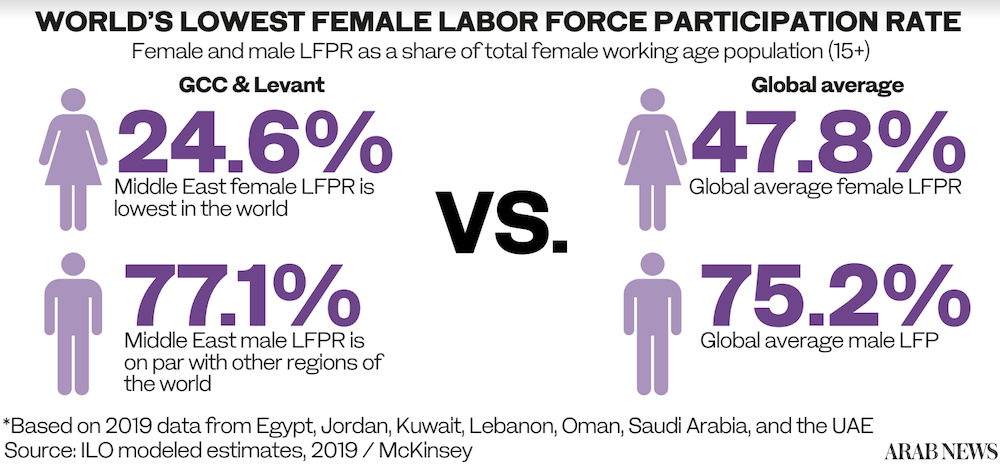
According to a 2020 study by management consulting firm McKinsey and Co., “increased female participation in professional and technical jobs can turbo-charge economic growth in a region that will be significantly impacted by the Fourth Industrial Revolution — making their participation all the more critical.”
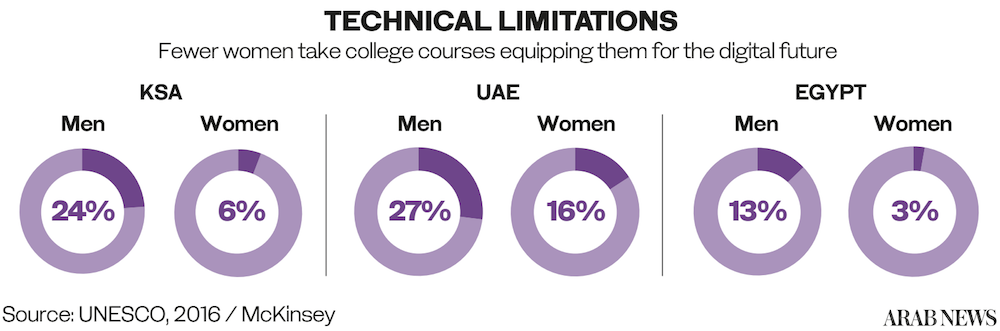
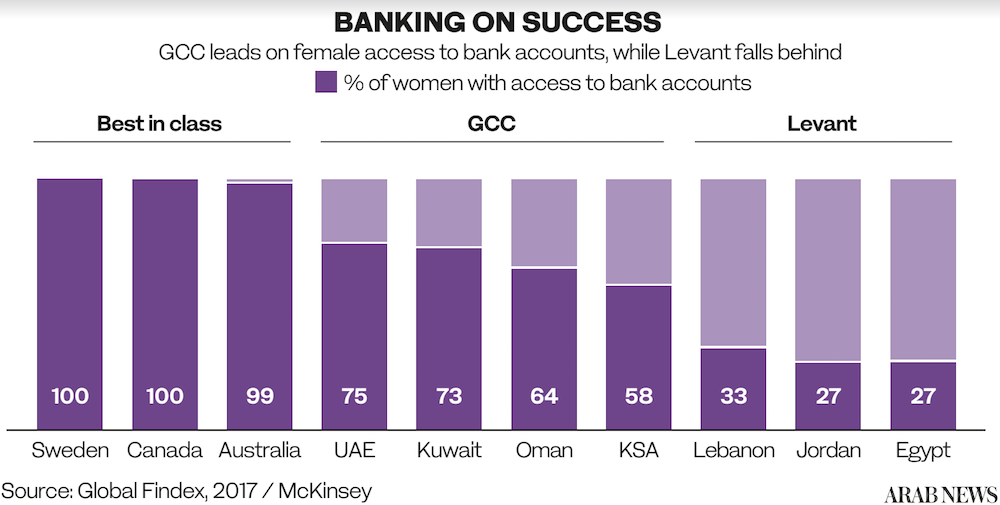
McKinsey emphasized four indicators that correlated with women’s participation in professional and technical jobs: Education, financial inclusion, digital inclusion, and legal protection.
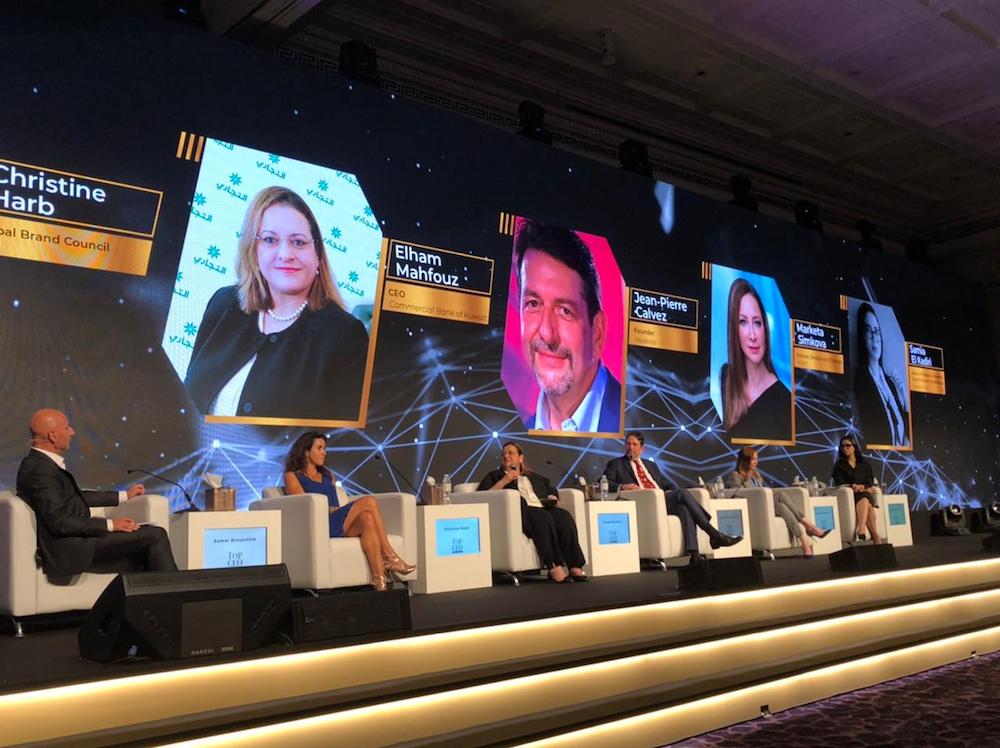
A panel of experts at the Arab Women Forum, held in Dubai on Tuesday, examined what the workplace of tomorrow may look like for women. (AN Photo/Zubiya Shaikh)
For the Middle East, high inequalities in these metrics persisted, most notably in legal protection and financial inclusion — with a significant number of women remaining unbanked.
The goal, the consulting firm said, was to introduce new legal frameworks as an important enabler for ending the gender-based inequalities endemic to the Middle East.
On a more positive note, McKinsey predicted that the share of women in professional and technical jobs was set to more than double by 2030. Crucial, then, was the need to capture this opportunity to bring the Middle East’s women into parity with their peers around the world.
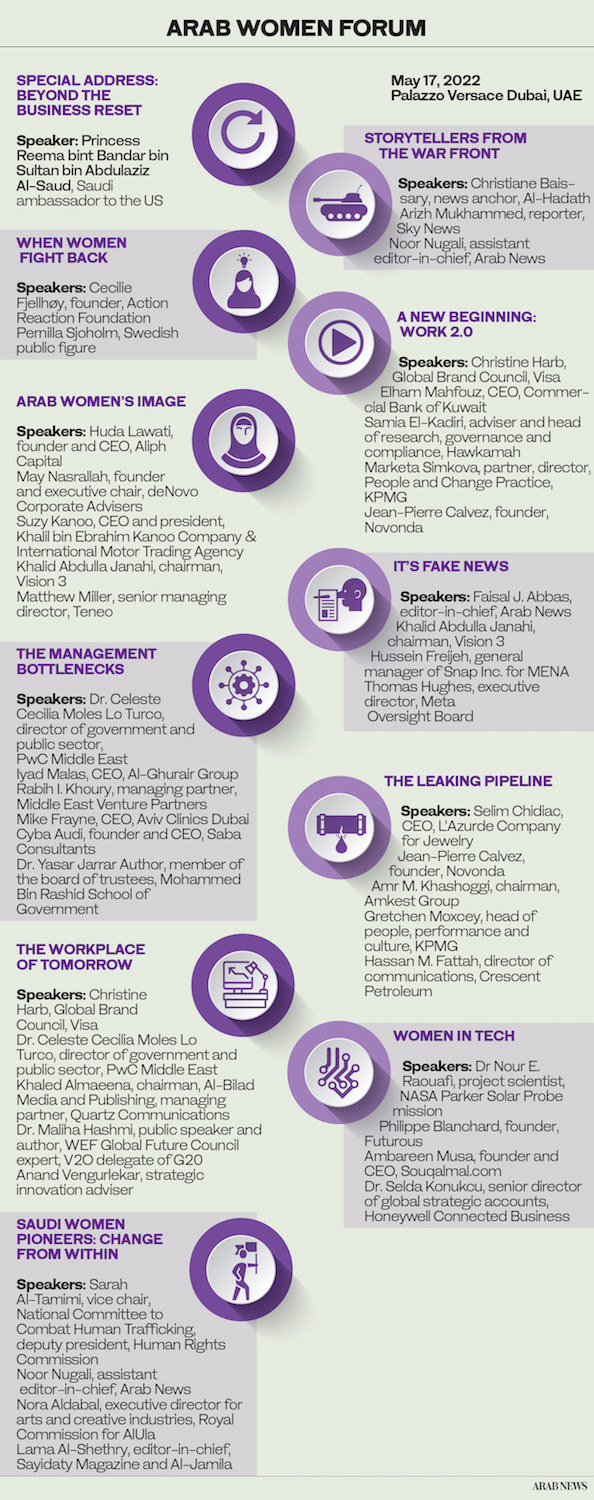
A panel of experts at the Arab Women Forum, held in Dubai on Tuesday, examined what the workplace of tomorrow may look like for women, and asked how companies could attract and retain female talent.
Speakers included Christine Harb, vice president of marketing at Visa Inc.; Dr. Celeste Cecilia Moles Lo Turco, director for PwC Middle East in the environmental, social, and corporate governance, and sustainability fields; Khaled Al-Maeena, chairman of Al-Bilad Media and Publishing and managing partner of Quartz Communications; Dr. Maliha Hashmi, World Economic Forum Global Future Council expert and V20 delegate of the G20; and Anand Vengurlekar, a strategic innovation adviser.
Harb said there were two main challenges facing women in the workplace today. “One is female representation in C-level positions. If we look at the Middle East and North Africa region, we still have a low representation of women in board rooms and C-level positions and, even if companies today are promoting diversity and inclusion, the representation in the region is still very low across industries and the region in general,” she told Arab News ahead of the event.
More women occupy C-level roles now than at any time in the past 10 years — but to address their persistent underrepresentation at all levels, the workplace of the future must provide flexibility and versatility for women, and they must be seen in the top-level roles, Harb added.
“How can women make sure they are sponsored and supported? Companies in the region also need to promote them to (C-suite) roles,” she said.
The second challenge, Harb noted, was the alignment of what organizations say and how they act toward their female employees.
“Many companies today are saying the right things, but there is no psychological safety, as such, for women to feel they can benefit from the flexible working hours or from the conditions that are being put in place that will allow them to find their balance as women,” she added.
She pointed out that some of the challenges stemmed from cultural limitations. “Historically, in the Middle East, most of these roles have been occupied by men.”
And to undo this, a concerted effort had to be made within organizations before a role opened up.
“When we look at the evolution, in the succession planning of these organizations, women were not really prepped to take on (high-level) roles. It’s not just the promotion, but it is about making sure the woman is equipped to be able to take over,” Harb said.


