

MENA Project Tracker: Contractors prepare for two Libyan drilling projects; Bids invited for $500bn Saudi Oxagon project and Alinma HQ

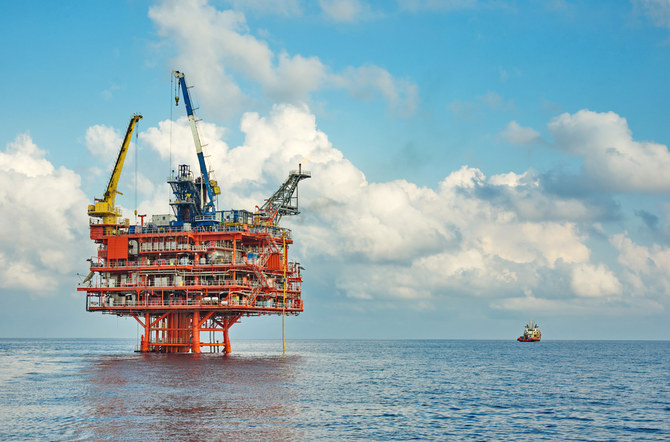
Stock image of offshore oil/gas platform (Shutterstock)
Short Url
Updated 09 May 2022
Follow

MENA Project Tracker: Contractors prepare for two Libyan drilling projects; Bids invited for $500bn Saudi Oxagon project and Alinma HQ

RIYADH: Contractors in the Middle East North Africa region are getting ready to submit bid documents for two Libyan drilling contracts, while others are preparing to be part of Saudi’s $500 billion Oxagon project. Meanwhile, bids have been invited for Alinma Bank’s headquarters in Riyadh. 

Drilling 

·Several contractors are set to submit pre-qualification papers by May 30 for two Libyan drilling contracts as part of the $3 billion Mellitah offshore complex expansion project, Meed reported. 

While the first contract covers the drilling of eight wells, the second contract covers the drilling of 23 wells, both in Block NC41 region.

Marine

·Saudi future city Neom is giving contractors until July 3 to bid for a contract to deliver dredging and quay wall works for the Kingdom's eight-sided floating city in the Red Sea Oxagon, Meed reported.  

Launched by Crown Prince Mohamed bin Salman in November, Oxagon is a project estimated to have a total value of $500 billion.

Tower

·Bidders for Saudi Arabia-based Alinma Bank’s headquarters project in Riyadh have been reported to have until May 22 to submit their bids, Meed reported. 

The package includes civil, structural, architectural, and electromechanical works.


UAE’s residential real estate market to see softer home sales

Updated 21 February 2026
Follow

UAE’s residential real estate market to see softer home sales

  • Moody’s sees mild softening of prices over the next 12 - 8 months as rising completions add supply

RIYADH: The UAE’s residential real estate market is expected to see a modest decline in developer sales and a mild softening of prices over the next 12 to 18 months as rising completions add supply, Moody’s said.

Despite near-term easing, the credit ratings agency noted that developers are supported by strong revenue backlogs and solid financial positions, while regulatory measures have reduced banks’ exposure to the construction and property sectors, helping to preserve robust solvency and liquidity buffers across the financial system.

The broader trend is reflected in the UAE’s real estate market, which recorded a strong performance during the first three quarters of 2025, according to Markaz.

In Dubai, transaction values increased 28.3 percent year on year to 554.1 billion Emirati dirhams ($150.88 billion), while Abu Dhabi recorded total sales of 58 billion dirhams, up 75.8 percent year on year. The number of transactions in Abu Dhabi rose 42.3 percent to 15,800.

The report said: “After five years of extraordinary growth in the UAE’s residential real estate market, particularly in Dubai, we expect developer sales to decline modestly and some price softening over the next 12 to 18 months as rising completions add supply. 

“From 2026 to 2028, around 180,000 new units will be completed in Dubai, a significant increase from prior years that is likely to weigh on demand and slow price growth. 

“However, fundamentals remain supportive, underpinned by continued population growth and an influx of high-net-worth individuals. Rated developers’ credit quality will remain resilient, supported by strong revenue backlogs, front-loaded payment plans and solid financial positions.”

Munir Al-Daraawi, founder and CEO of Dubai-based Orla Properties, told Arab News the Moody’s report underscores what the firm is seeing on the ground, namely “a market that is successfully transitioning from a period of extraordinary growth to one of sustainable stability.”

He added: “While a mild softening of prices and a modest decline in sales are anticipated over the next 12 to 18 months, these are natural adjustments for a maturing global hub like Dubai.” 

Al-Daraawi believes the the projected delivery of 180,000 units between 2026 and 2028 is not a cause for concern, but “a reflection of the UAE’s long-term appeal to high-net-worth individuals and a growing population.”   

The CEO added: “The report rightly points out that fundamentals remain supportive, underpinned by Dubai’s 2040 Urban Master Plan and a significant influx of global talent.” 

He went on to note that the resilience of the sector is further bolstered by the solid financial positions of developers and the strong regulatory measures that have shielded the banking sector from excessive exposure.

“This creates a robust ecosystem where credit quality remains high, even as we navigate a more competitive landscape. For boutique and luxury-focused developers, the current environment emphasizes the importance of quality, execution, and strategic capital allocation — factors that will continue to define the UAE’s real estate success story,” said Al-Daraawi. 

The current environment emphasizes the importance of quality, execution, and strategic capital allocation.

Munir Al-Daraawi, Founder and CEO of Orla Properties

Riad Gohar, co-founder and CEO of BlackOak Real Estate, told Arab News that while Moody’s is correct to say that supply is rising, the conclusion of a broad slowdown ignores the structure of this current economic cycle.

He added: “First, this is not a debt-fueled market. Around 83 percent of Dubai residential transactions in 2024 and 2025 were non-mortgaged. That means the market is equity-driven, not credit-driven. When cycles are not built on leverage, corrections are typically shallow and segmented, not systemic. “

He added that the macroeconomic backdrop is stronger than in past cycles, driven by sustained non-oil gross domestic product increase, structural reforms, population growth, and capital inflows aligned with long-term national plans.

“Demand is not purely speculative; it is driven by migration, business formation, and wealth relocation,” the CEO said.

“Third, prime vs. non-prime must be separated. Any pressure from increased completions is more likely to affect marginal locations, not established prime areas supported by global HNWI inflows. Historically, prime assets in Dubai have shown resilience even during broader market pauses,” Gohar added.

He continued to clarify that for smaller developers, some may feel margin compression if sales moderate, but this becomes a consolidation phase, not a systemic risk.

“Banks’ real estate exposure has already declined to around 12 percent of total loans — from 19 percent in 2021 — and NPLs (non-performing loans) are low at 2.9 percent, meaning financial contagion risk is limited. Regulatory escrow structures and stricter oversight further reduce spillover,” the CEO said.

“We are in a capital-rich, cash-driven cycle, regulated market with strong GDP and population growth. If anything, weaker fringe players exiting would strengthen the core not destabilize it,” he said.

The Moody’s report highlighted that while most developers it rates will generate “substantial excess cash” over the next two to three years, there will be fewer opportunities to make significant investments, especially within the Dubai real estate market.

As well as prompting a shift toward corporate governance and, in particular, how developers deploy their rising liquidity, some firms are looking to diversify beyond their core business models.

“For instance, Binghatti has recently launched its first master-planned villa community, marking a departure from its historical focus on single-plot high-rise developments, as demand for villas continues to outperform that for apartments,” said the report.

It continued: “Others are looking beyond Dubai and the UAE for growth, whether through geographic diversification or expansion into unrelated sectors.

“For example, Damac’s owner, Hussain Sajwani, has announced significant planned investments in data center development across the US and Europe.

“Emaar continues to develop actively in Egypt and India and is evaluating potential entry into China and the US. Aldar has started development projects in the UK and Egypt, while Arada has begun building in Australia and the UK and Sobha is expanding into the US.”