

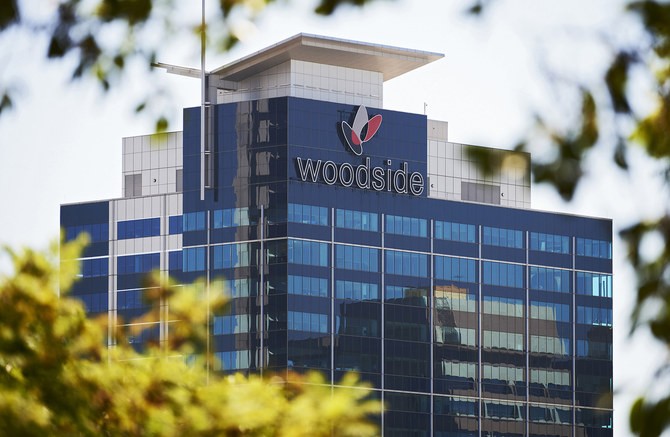
Australia’s Woodside receives criticism over emission reduction plans

Australia’s largest natural gas exporter is targeting to achieve net zero by 2050.
Short Url
Updated 09 May 2022
Follow

Australia’s Woodside receives criticism over emission reduction plans

RIYADH: Australian petroleum exploration and production firm Woodside Petroleum Ltd. has received criticism over its emission reduction plans, Bloomberg reported.

As a result of this, the firm might face potential investor backlash for being presumably behind in terms of climate strategy.

American proxy adviser services company Glass, Lewis & Co. has suggested that Woodside directly address the Scope 3 emissions from the use of its products. The adviser also recommended that shareholders vote against Woodside’s inaugural climate report.

Another American proxy adviser, Institutional Shareholder Services Inc., which has suggested backing the report; however, also voiced concerns over the absence of quantified Scope 3 targets in the report.

Australia’s largest natural gas exporter is targeting to achieve net zero by 2050. However, the firm is still exploring new investments even though the International Energy Agency has cautioned that new fields should not be developed, in order to be able to achieve net-zero goals on time.

“Shareholders should be afforded disclosure that allows them to understand and assess a company’s environmental and social risks. We have concerns regarding the Company’s Scope 3 emissions disclosure, its use of carbon offsets, its capital allocation disclosure, and its responsiveness to shareholders,” Bloomberg reported, citing Glass Lewis.


Oman launches 2026–2030 SME plan as fiscal recovery strengthens 

Updated 18 sec ago
Follow

Oman launches 2026–2030 SME plan as fiscal recovery strengthens 

RIYADH: Oman has launched a five-year plan to expand its small and medium-sized enterprise sector, seeking to deepen private-sector growth as the sultanate consolidates recent fiscal gains and returns to investment-grade status.  

The 2026–2030 SME Sector Implementation Plan, unveiled by the Small and Medium Enterprises Development Authority, or Riyada, aims to improve market access, boost SME competitiveness and raise the sector’s contribution to the economy, according to the Oman News Agency. 

The plan supports innovation and entrepreneurship while promoting the transition to a knowledge-based economy, the Oman News Agency reported. 

The initiative forms part of Oman Vision 2040 and the Eleventh Five-Year Development Plan, which prioritize private-sector expansion, diversification and job creation. 

The launch follows Fitch Ratings’ decision earlier this month to upgrade Oman to investment-grade status, raising the country’s long-term foreign-currency rating to BBB- from BB+. Fitch cited stronger public finances, a sharper reduction in government debt and an improved external position. 

“The implementation plan is based on several key strategic pillars, most notably: market access and value chains, financing and investment, enhancing local content, and developing a culture of entrepreneurship, skills, and innovation,” the ONA report stated. 

It added: “These pillars were developed through a participatory approach with contributions from several government and private entities supporting the SME sector, and are based on studies, benchmarking, and international best practices.”  

The plan also includes a package of specialized programs and initiatives targeting different stages of SME growth. These include measures to improve readiness for expansion and exports, integrated financing programs, initiatives supporting handicrafts and the creative economy, and the development of a network of entrepreneurship centers across Oman’s governorates.

Riyada said implementation of the plan would help strengthen the sustainability of SMEs, create quality job opportunities and empower entrepreneurs to build viable and scalable businesses, enhancing the competitiveness of the national economy. 

Oman has made significant progress in strengthening fiscal discipline, reducing government debt to around 36 percent of GDP in 2025, down from about 68 percent in 2020. 

With the outlook remaining stable, Fitch expects the budget deficit to remain at a manageable level of around 1 percent of GDP in 2026 and 2027, assuming an average Brent crude price of $63 per barrel. The fiscal breakeven oil price is estimated at around $67 per barrel over the same period.