

Pakistan celebrates Eid Al-Fitr with religious zeal and fervor 

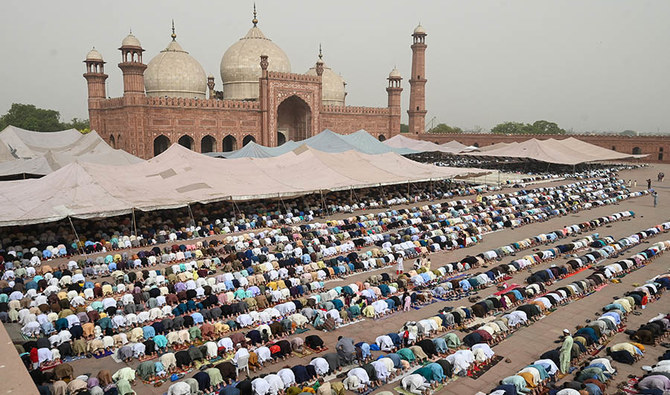
Muslim devotees offer special morning prayers to start the Eid al-Fitr festival, which marks the end of their holy fasting month of Ramadan, at the Badshahi Mosque in Lahore on May 3, 2022. (AFP)
Short Url
Updated 03 May 2022
Follow

Pakistan celebrates Eid Al-Fitr with religious zeal and fervor 

  • Pakistanis offered Eid prayers without COVID-19 restrictions for the first time in two years 
  • President Alvi, PM Sharif congratulate the nation, pray for the prosperity of the country 

ISLAMABAD: The people of Pakistan are celebrating Eid Al-Fitr today on Tuesday with traditional zeal and fervor and without the COVID-19 restrictions for the first time in two years.
The three-day Eid Al-Fitr festival starts on the first day of the month of Shawwal in the Islamic lunar calendar. The festival marks the end of the holy fasting month of Ramadan.
Major congregations were held at Eidgahs, mosques and open spaces in all cities, towns and villages across the South Asian country, where religious scholars highlighted the significance and philosophy of the Islamic festival.
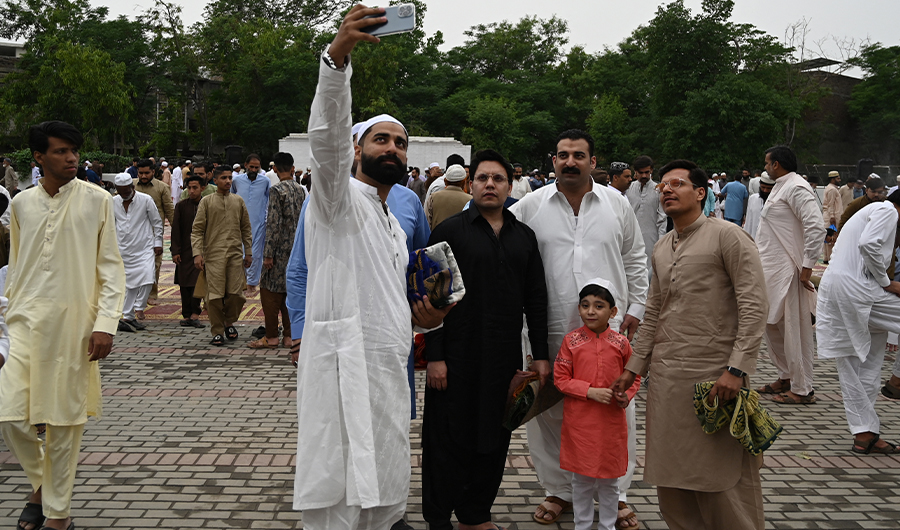


Muslim devotee takes a selfie with his family members after offering a special prayers on the occasion of Eid al-Fitr that marks the end of the holy fasting month of Ramadan at the Eidgah Sharif shrine in Rawalpindi on May 3, 2022. (AFP)

On the occasion, special prayers were offered for the progress and prosperity of the country and welfare of the Muslim Ummah.
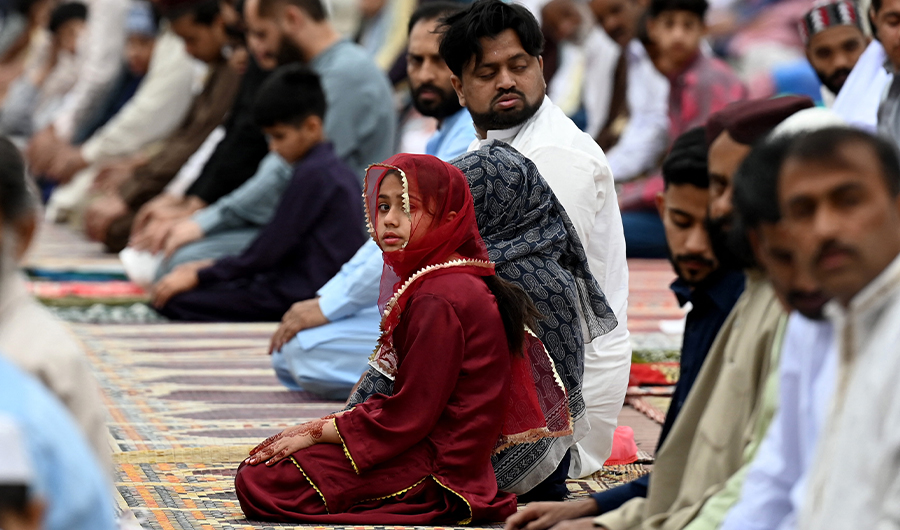


A young girl (C) offers a special prayers along with Muslim worshipers on the occasion of Eid al-Fitr that marks the end of the holy fasting month of Ramadan at the Eidgah Sharif shrine in Rawalpindi on May 3, 2022. (AFP)

In the federal capital, the main congregation was held at the Faisal Mosque where President Arif Alvi, envoys of Muslim countries and other high-ups offered Eid prayers.
“I want to congratulate everyone on the happy occasion of Eid,” President Alvi said in his message on Twitter. “I keep praying for the prosperity and glory of Pakistan.”
Prime Minister Shehbaz Sharif and Punjab Chief Minister Hamza Shehbaz offered Eid prayers in their hometown of Jati Umrah near Lahore.
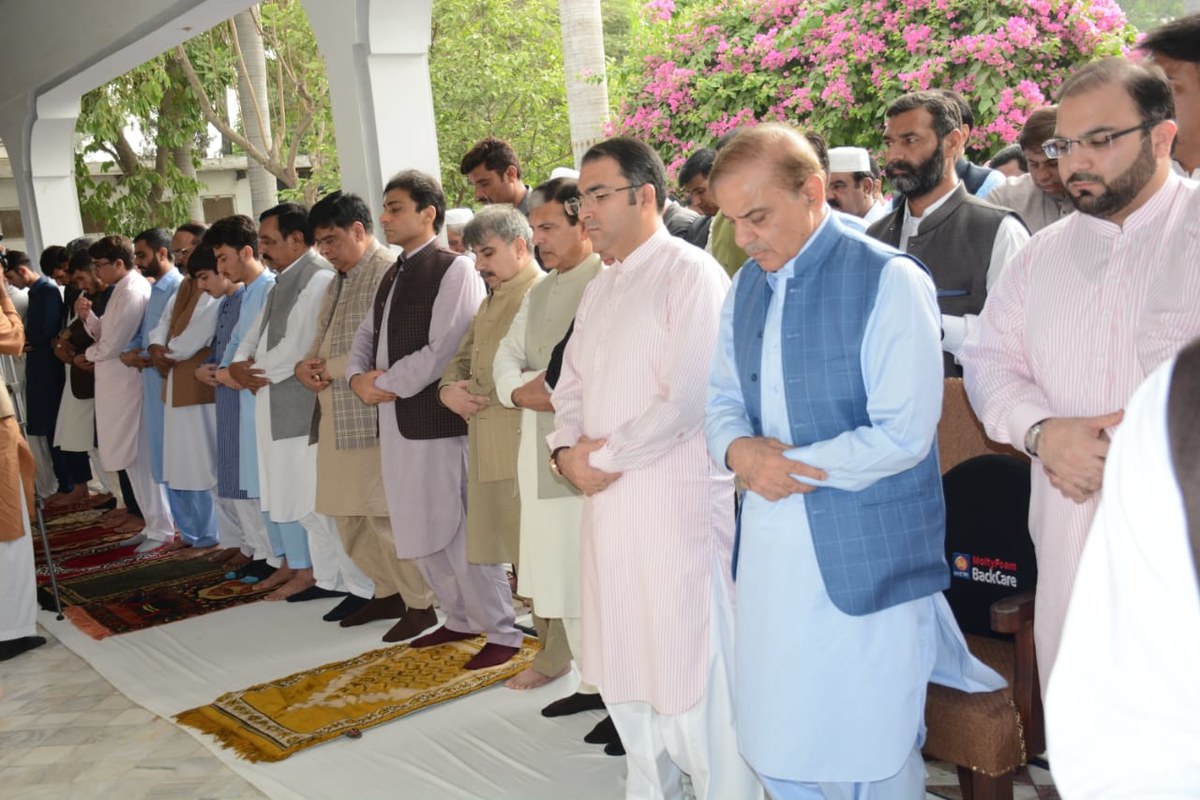


Pakistan's Prime Minister Shehbaz Sharif (2nd from front row) performs Eid prayers in Jati Umrah, Lahore, (Pakistan PM office)

“I congratulate you, your families and the entire nation on Eid,” PM Sharif said in his address with people after offering the Eid prayers.
“We pray to Allah that this Eid may bring progress and prosperity for us and rid Pakistan of difficulties.”
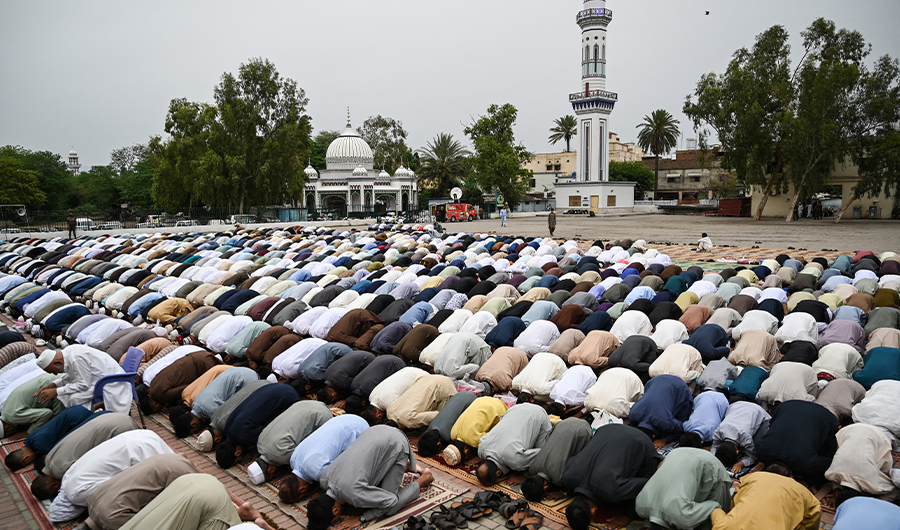


Muslim devotees offer special prayers on the occasion of Eid al-Fitr that marks the end of the holy fasting month of Ramadan at the Eidgah Sharif shrine in Rawalpindi on May 3, 2022. (AFP)

This is the first time that Pakistanis offered Eid prayers without COVID-19 safety precautions as the number of coronavirus infections has significantly declined in Pakistan over the past couple of months.
The South Asian reported 100 virus infections and 91 recoveries in the last 24 hours, according to official statistics.


Pakistan drops 8,000 MW power procurement, claims $17 billion savings amid IMF-driven reforms

Updated 11 sec ago
Follow

Pakistan drops 8,000 MW power procurement, claims $17 billion savings amid IMF-driven reforms

  • Government says decision taken “on merit” as it seeks to cut losses, circular debt, ease consumer pressure 
  • Power minister says losses fell from $2.1 billion to $1.4 billion, circular debt dropped by $2.8 billion

ISLAMABAD: Pakistan has abandoned plans to procure around 8,000 megawatts of expensive electricity, the power minister said on Sunday, adding that the decision was taken “purely on merit” and would save about $17 billion.

The power sector has long been a major source of Pakistan’s fiscal stress, driven by surplus generation capacity, costly contracts and mounting circular debt. Reforming electricity pricing, reducing losses and limiting new liabilities are central conditions under an ongoing $7 billion IMF program approved in 2024.

Pakistan has historically contracted more power generation than it consumes, forcing the government to make large capacity payments even for unused electricity. These obligations have contributed to rising tariffs, budgetary pressure and repeated IMF bailouts over the past two decades.

“The government has abandoned the procurement of around 8000 megawatts of expensive electricity purely on merit, which will likely to save 17 billion dollars,” Power Minister Sardar Awais Ahmed Khan Leghari said while addressing a news conference in Islamabad, according to state broadcaster Radio Pakistan.

He said the federal government was also absorbing losses incurred by power distribution companies rather than passing them on to consumers.

The minister said the government’s reform drive was already showing results, with losses reduced from Rs586 billion ($2.1 billion) to Rs393 billion ($1.4 billion), while circular debt declined by Rs780 billion ($2.8 billion) last year. Recoveries, he added, had improved by Rs183 billion ($660 million).

Leghari said electricity tariffs had been reduced by 20 percent at the national level over the past two years and expressed confidence that prices would be aligned with international levels within the next 18 months.

Power sector reform has been one of the most politically sensitive elements of Pakistan’s IMF-backed adjustment program, with higher tariffs and tighter enforcement weighing on households and industry. The government says cutting losses, improving recoveries and avoiding costly new capacity are essential to stabilizing public finances and restoring investor confidence.