

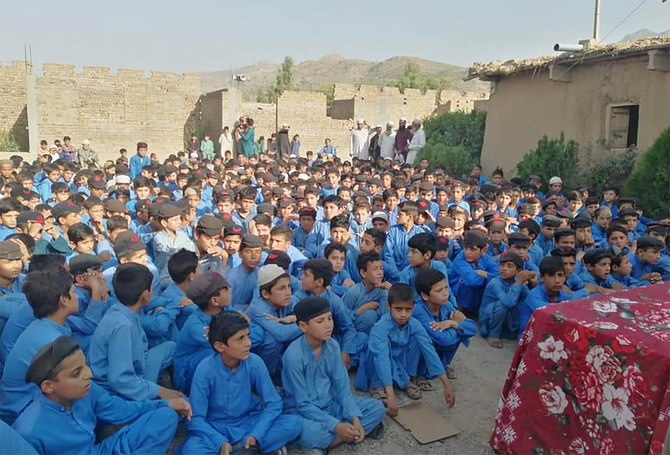

PESHAWAR: The provincial administration of Khyber Pakhtunkhwa has launched a pilot project to enroll children of Afghan refugees in four districts while hoping to extend the education drive to the remaining parts of the province in the coming months, officials said.
Pakistan is home to 1.4 million Afghan refugees, though officials say the number has increased by at least 100,000 more since the departure of the international forces from the war-battered country which is now ruled by the Taliban once again.
Ume Laila Jaffry, who works with the provincial department of elementary and secondary education, told Arab News on Saturday the enrollment plan for Afghan children had remained under consideration for about a year, though the authorities only started implementing it shortly before the beginning of Ramadan.
She said the project, Continuation of Education for Children in Afghan Refugee Hosting Areas in KP, would initially cover Haripur, Kohat, Peshawar and Mansehra districts.
“It is a pilot project but we plan to extend it to the rest of the districts after evaluating its success. Afghan children are being admitted in primary and middle classes, but we will work out a future strategy with our partner after completion of their initial education,” Jaffry said while mentioning that her department was working on the project in collaboration with UNICEF.
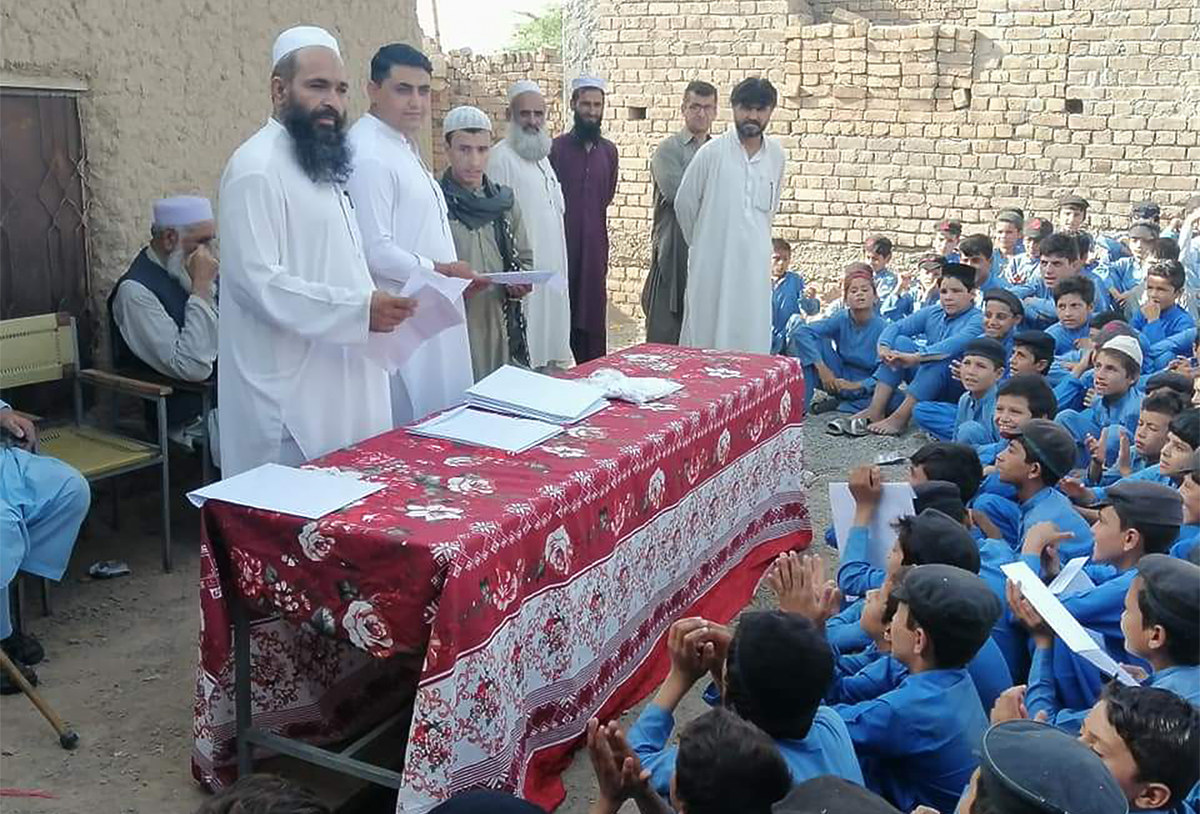
In this undated photo, Afghan students attend a function with local officials and teachers at their school in a refugee camp in Kohat, Pakistan. (Photo courtesy: Waheed Ullah)
Speaking to Arab News, UNICEF’s communication officer Adresh Laghari said his organization was not actively involved in the enrollment process, though he said it was providing “technical support” to the provincial administration.
Under the program, each Afghan student will get a learning kit which has notebooks, pencils and other stationery items.
“This is sort of an Eid gift for Afghan refugees,” said Waheed Ullah, a resident of Ghamkol Sharif Refugee Camp in Kohat. “Before this offer, few Afghans could afford to send their children to private schools by paying hefty fees. This initiative will help all children get equal learning opportunities regardless of their social standing.”
Muhammad Ayaz, who also works with the provincial elementary and secondary education department, said the enrollment of Afghan children had already started in the four districts.
“The campaign will gain further momentum after Eid Al-Fitr,” he continued. “We have identified 100 schools in Haripur, Kohat, Peshawar and Mansehra where Afghan refugees reside in large numbers.”
He added the authorities wanted all Afghan refugee children to get formal education.
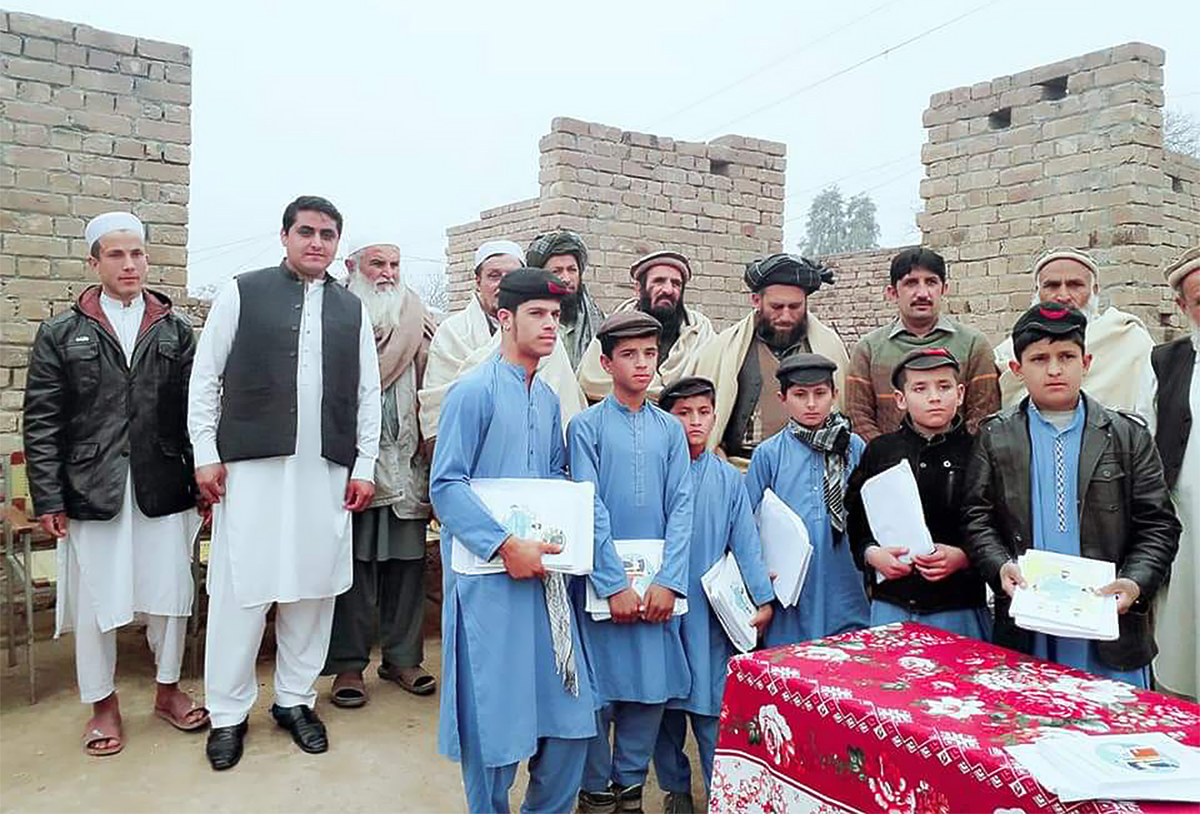
In this undated photo, teachers and officials distribute certificates among Afghan students at a school in a refugee camp in Kohat, Pakistan. (Photo courtesy: Waheed Ullah)
Ayaz said the provincial administration had launched significant reforms and special initiatives in recent years, adding the overall enrollment in public schools had witnessed a record surge in the last five years.
Hajji Tahir, an Afghan refugee who has been educating his young community members in Kohat, said the project was welcomed by everyone.
“Pakistan hosts millions of Afghans, though offering education opportunities to our children with Pakistani students is a matchless favor,” he said. “Afghan students will now use Pakistani curriculum that will help them compete for local and international scholarships.”
Khan Muhammad Babar, another refugee from a camp in Nowshera, said several schools were funded by foreign organizations to make education possible for Afghan children, though these institutions only offered education up to the primary level.
Most children, he added, quit their studies after that.
“My own two sons go to a private school,” he said. “I pay their fee every month which is nearly impossible for me to afford. Now I plan to enroll them in a government-run school.”
Abdul Razzaq, a former teacher of Afghan children in Tank district, said many refugees could not even afford food, adding it was difficult for them to pay for their children’s education.
“Afghan refugees did not focus too much on the education of their children since they knew that higher studies would not be possible for them due to various constraints,” he added. “Now, there is some optimism that children of refugees will also get higher education along with their Pakistan peers.”
Jaffry said the provincial education authorities were planning to give more supplies to children that not only contained learning kits but also sports materials and first-aid equipment.


