

Pakistani capital’s favorite ‘sahoor street’ bounces back after pandemic lull

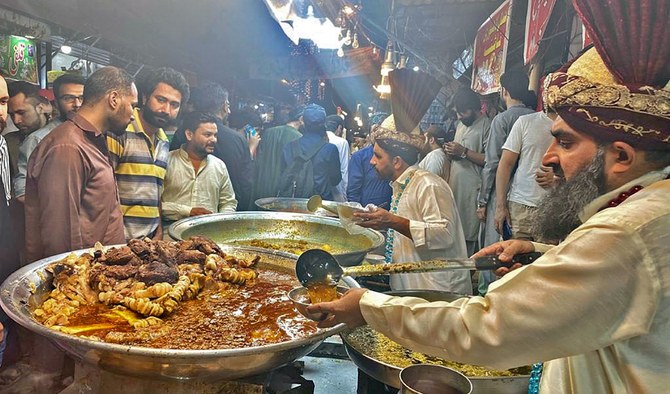
Food vendors sell traditional Pakistani dishes at Kartarpura street in Rawalpindi, Pakistan on April 27, 2022. (AN Photo)
Short Url
Updated 30 April 2022
Follow

Pakistani capital’s favorite ‘sahoor street’ bounces back after pandemic lull

  • Kartarpura street in Rawalpindi, Islamabad’s twin city, is famous for treats such as nihari and siri paya
  • After two years, it is now again bustling with food stalls and teeming with people waiting in long queues for their turn

RAWALPINDI: After two years of pandemic lull, the sights of Pakistani delicacies, as well as crowds, have returned to Kartarpura street, the most favorite area for the residents of Islamabad to have their predawn sahoor meal during Ramadan.
In the 19th century, Kartarpura street was part of the Sikh neighborhood of Rawalpindi, the Pakistani capital’s twin city, and its main commercial area. But for the past few decades it has been known as “sahoor food street,” famous for treats such as tender beef or mutton meat with bone marrow, known as nihari, and siri paya, a traditional breakfast dish of cow or goat head and trotters cooked overnight.
Deserted during the Muslim fasting month for two consecutive years, when coronavirus restrictions forced businesses to offer only takeaway food, the street is now again bustling with food stalls and teeming with people waiting in long queues for their turn.
As Muslims are getting ready to celebrate Eid Al-Fitr, the end of the fasting month, vendors are clad in traditional festive clothing, and serving their specials.
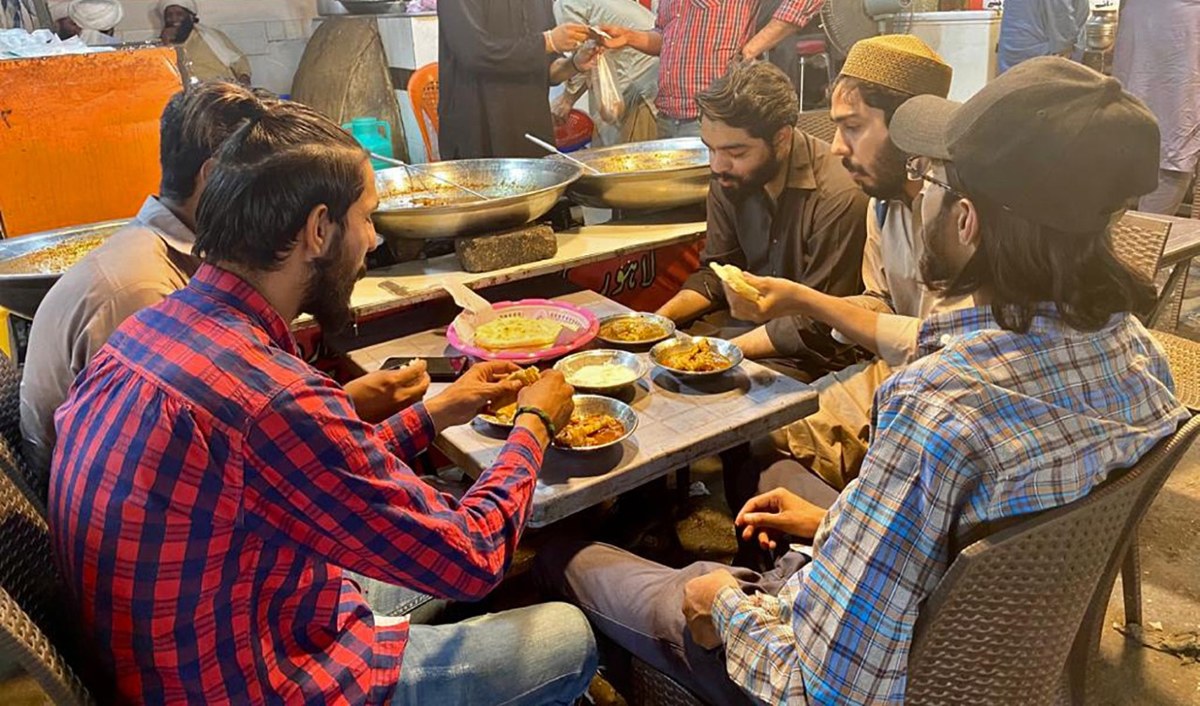


Pakistanis have their predawn meal during Ramadan at Kartarpura street in Rawalpindi on April 27, 2022. (AN Photo)

“This Ramadan we prepared more food everyday but all sold out even before the end of sahoor time,” Akbar Ali, who arrived from Lahore to sell nihari in Kartarpura street, told Arab News.
“This year our business has increased more than three times.”
Visitors are coming not only from Rawalpindi and Islamabad, but also from other nearby cities.
Abdul Rauf, who sells pathora, or fluffy deep-fried leavened sourdough bread, said his profits in Kartarpura street are a few times more than at his stall in another part of Rawalpindi.
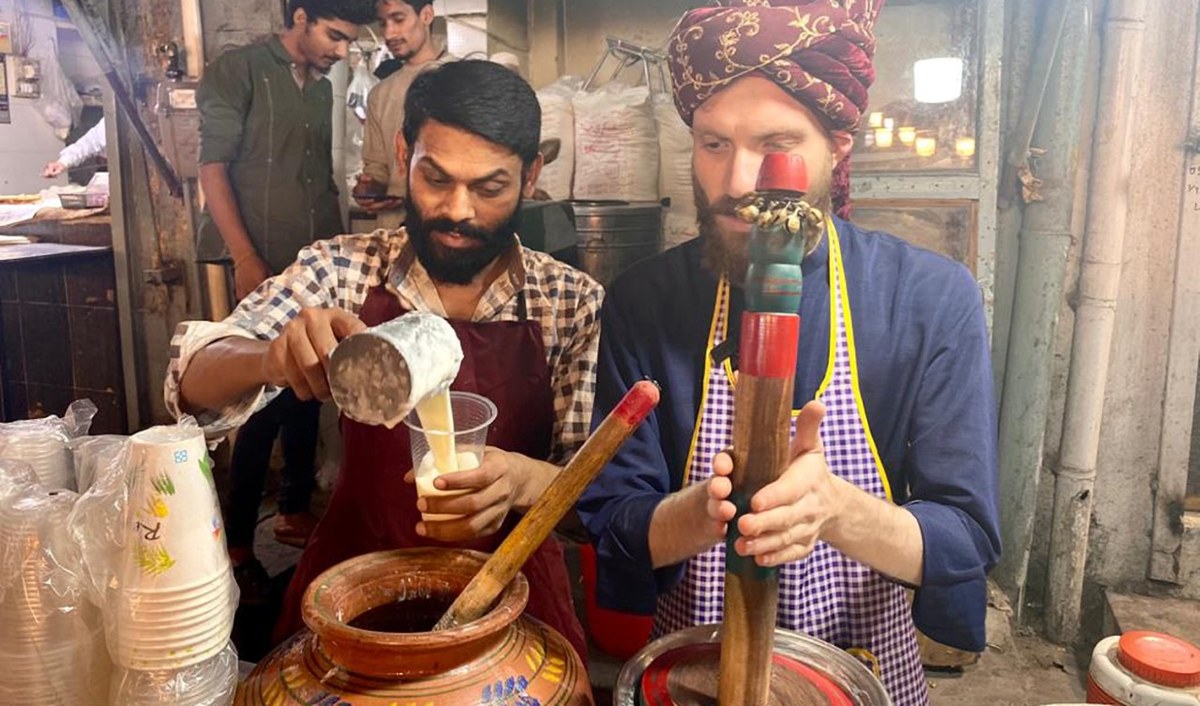


Food vendors sell traditional treats at Kartarpura street in Rawalpindi, Pakistan on April 27, 2022. (AN Photo)

“I am selling pathora to around 500 people daily this year, which is more than double than last two years,” he said. “I have a stall in Saddar, Rawalpindi but earned here in one day what used to earn there in a week during normal days.”
Vendors say the real feel of Kartarpura street has returned this Ramadan.
Shehbaz Ahmed, a photographer from Azad Kashmir, who sells lassi, a traditional buttermilk drink, has observed that more people are coming to area than before the pandemic.
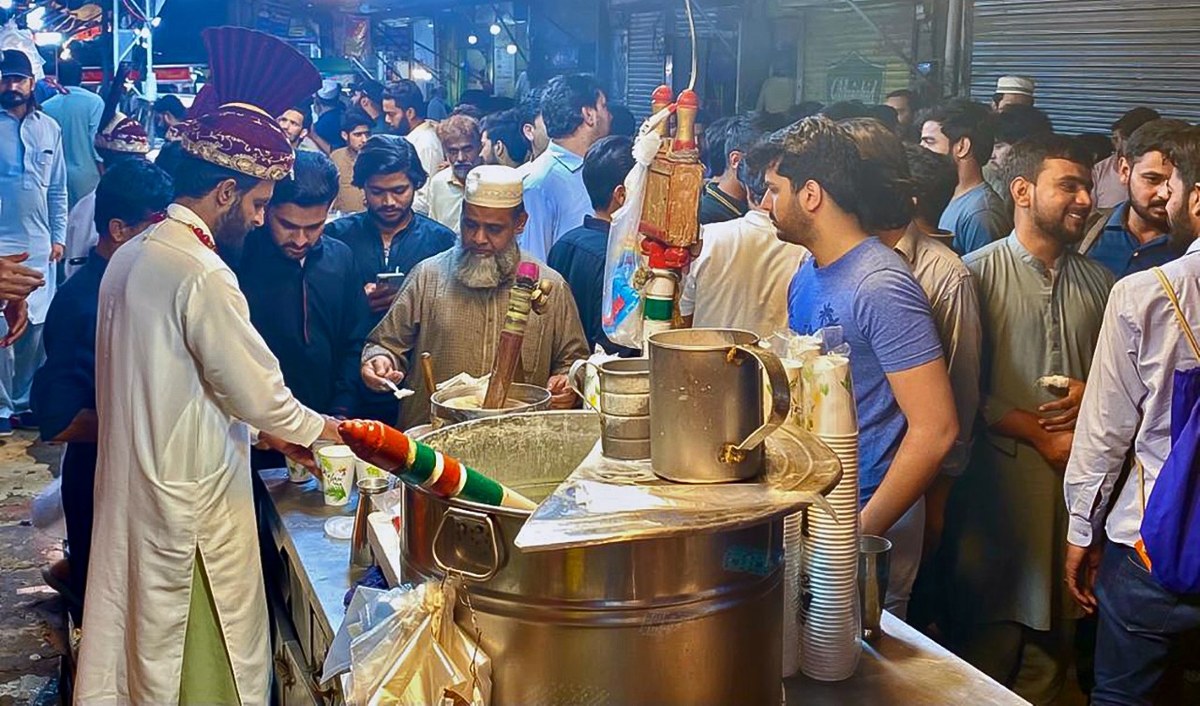


People throng stalls in Kartapura street, an area famous for sahoor food, in Rawalpindi, Pakistan on April 27, 2022. (AN Photo)

“The whole street remains full of people daily, from 12 a.m. till the end of sahoor time,” he said.
Customers, too, are happy to be back.
Saima Ahmed, whose family comes to the historic food street every year, said it felt good to see all the festivity and life return to normal.
“We missed it,” she told Arab News.
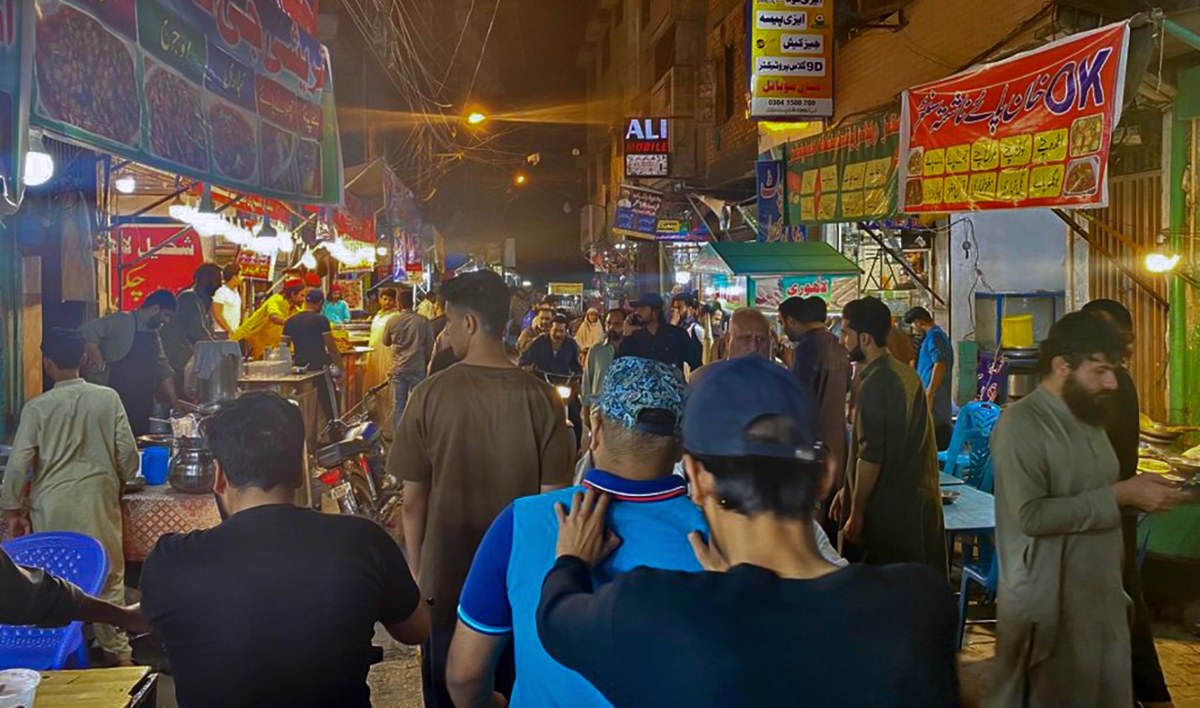


Crowds of people throng stalls in Kartapura street, an area famous for sahoor food, in Rawalpindi, Pakistan on April 27, 2022. (AN Photo)

Some visitors, like Saqib Zeeshan, a software engineer from Islamabad, have to Kartarpura street for the first time.
“We have heard a lot about Kartarpura street and came from Islamabad to experience this,” he said. “We’ve had a phenomenal experience here, the atmosphere is amazing, with very good food.”



Pakistan, Egypt reaffirm support for dialogue, diplomacy to resolve regional issues

Updated 04 January 2026
Follow

Pakistan, Egypt reaffirm support for dialogue, diplomacy to resolve regional issues

  • The development comes amid tensions over Yemen following the Southern Transitional Council advance into Hadramaut, Al-Mahra
  • Saudi Arabia has invited factions in south Yemen to hold a dialogue in Riyadh to 'discuss just solutions to the southern cause'

ISLAMABAD: Pakistan and Egypt have reaffirmed their support for dialogue and diplomacy as the preferred means to resolve regional issues, the Pakistani foreign office said on Sunday, amid tensions over Yemen.

The development comes days after Saudi Arabia-led Coalition to Support Legitimacy in Yemen said it conducted a “limited” airstrike targeting two shipments of smuggled weapons and other military hardware coming from the Emirati port of Fujairah into Mukalla in southern Yemen.

Coalition Forces spokesman Major General Turki Al-Maliki said the weapons and combat vehicles were meant to support the Southern Transitional Council (STC) forces, backed by the United Arab Emirates (UAE), in Yemen's Hadramaut and Al-Mahra "with the aim of fueling the conflict." The UAE has since announced withdrawal of its remaining troops from Yemen, rejecting any actions that could threaten the Kingdom or undermine regional stability.

Pakistan's Foreign Minister Ishaq Dar on Sunday spoke with his Egyptian counterpart Badr Ahmed Mohamed Abdelatty over the phone and discussed the current regional situation with him, according to a Pakistani foreign office statement.

"Both leaders reviewed current regional situation and appreciated efforts of all parties in resolving issues through dialogue and diplomacy," the statement said.

Separately, Saudi Arabia’s foreign ministry has invited factions in south Yemen to hold a dialogue in Riyadh to “discuss just solutions to the southern cause.” The STC on Saturday welcomed Saudi Arabia’s invitation to take part in the inclusive dialogue among southern Yemeni factions.

Disregarding previous agreements with the Arab Coalition, the STC group had launched a sweeping military campaign early in December, seizing the governorates of Hadramaut along the Saudi border and the eastern governorate of Al-Mahra in Yemen’s border with Oman. It also took control of the strategic PetroMasila oilfields, which account for a massive portion of Yemen’s remaining oil wealth.

Pakistan this week expressed solidarity with Saudi Arabia and reaffirmed Islamabad’s commitment to the Kingdom’s security.

“Pakistan expresses complete solidarity with the Kingdom of Saudi Arabia and reaffirms its commitment to security of the Kingdom,” Pakistani foreign office spokesperson Tahir Andrabi told reporters at a weekly news briefing.

“Pakistan maintains its firm support for the resolution of Yemen issue through dialogue and diplomacy and hopes that Yemen’s people and regional powers work together toward inclusive and enduring settlement of the issue, safeguarding regional stability.”

Pakistan and Saudi Arabia signed a landmark defense pact in September last year, according to which aggression against one country will be treated as an attack against both. The pact signaled a push by both governments to formalize long-standing military ties into a binding security commitment.