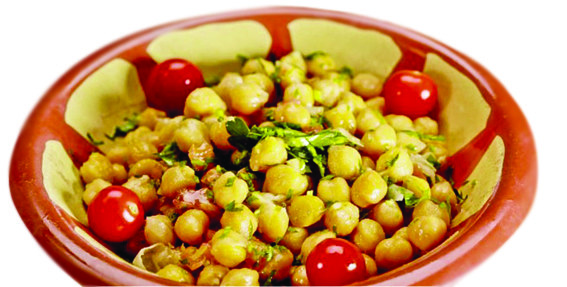
JEDDAH: Balila is a popular Arab dish, widely spread among Arab societies, especially in the Levant, Iraq, Egypt, and the Hijaz region of the Kingdom.
The dish consists mainly of boiled chickpeas, cumin, vinegar, pickled cucumber and other spices.
It is often sold on carts by street vendors who roam neighborhoods, or can be found near local shopping malls.
Arab News spoke to Abeer Sinan, 55, who has been making and selling the dish for around a decade.
She said balila is consumed at other times of the year as well, but the dish gains in popularity in the holy month.
“The Hijaz region is famous for balila, and it is associated with beautiful memories especially in Jeddah,” she said.
“Every year in Ramadan, the balila season really begins in Qabil Street in Al-Balad,” she added.
The vendor usually wears traditional Hijazi attire like an ommah (scarf), vest, and foutah (a garment wrapped around the hips), and chants witty phrases about the product to attract customers.
Sinan said the benefits of balila are plenty because chickpeas are wholegrain and loaded
with minerals.
“Don’t you see the Levants eat chickpeas all the time? The first thing is that these are whole grains, they are not peeled or anything. All their components in them are known to help in losing weight and reduce sugar in the blood,” she said.
“It also supports the digestive tract, contains many vitamins and minerals that give the body strength and increases energy and activity, and also improves the mood,”
she added.
She said while every balila maker gives their own twist to recipes, most do try to present it in its most traditional way.
“Of course, balila is great
when it is presented in its traditional form. It is visually pleasing. I always try to present it in its traditional way as much as I can,” she said.
Although balila’s popularity rises during Ramadan, Sinan plans to open a shop that sells the dish all year round.


![]()

Demand for local Saudi dish balila rises during Ramadan
Short Url
https://arab.news/yxxty
Demand for local Saudi dish balila rises during Ramadan
Latest updates


© 2026 SAUDI RESEARCH & PUBLISHING COMPANY, All Rights Reserved And subject to Terms of Use Agreement.