

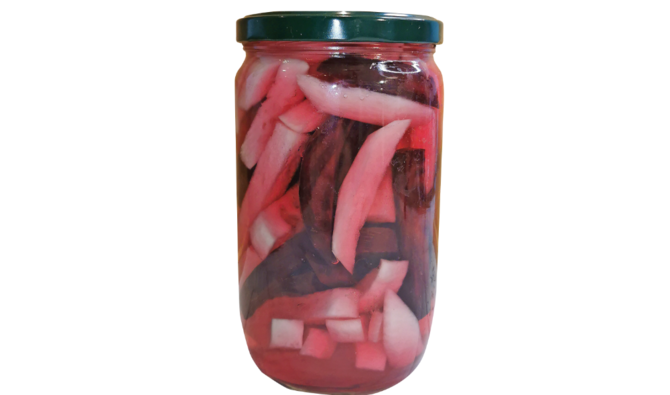
Ramadan recipe: Pickled turnip

Photo/Supplied
Short Url
Updated 26 April 2022
Follow

Ramadan recipe: Pickled turnip

  • The pickling method dates back to around 7,000 B.C. and was used to help prevent food from rotting

Bright pink in color and tangy in taste, pickled turnip is a staple side dish on dining tables in all Mediterranean countries such as Lebanon, Egypt, and Syria.

Although turnips were once considered a food of the poor in European history, the root vegetable is a favorite among Arabs, especially when pickled.

The pickling method dates back to around 7,000 B.C. and was used to help prevent food from rotting.

It developed to become a way of making salty side dishes of various vegetables such as carrots, cauliflower, and cucumber, and sometimes it is made using lemons and peaches, or other fruits.

Pickled turnip, or as Arabs call it torshi, is a simple recipe that can be made at home with humble ingredients.

All that is required is a 450-gram turnip, one small beetroot for flavoring and coloring, two cups of water, two tablespoons of salt, two teaspoons of sugar, and a jar or container.

Start by peeling and cutting the turnip and beetroot into two-centimeter-wide sticks without trimming down the length. Boil the water in a pot, add the salt and sugar, and stir until they dissolve. Put the turnip and beetroot in the jar or container and add the water after letting it cool to room temperature.

Pepper or vinegar can be added to give an extra kick.

Leave it in the fridge for at least a week before serving. Once the pickle bottle has been opened, its contents should be consumed within two months.


Where We Are Going Today: Karak Haala in Jeddah

Photo/Supplied
Updated 24 January 2026
Follow

Where We Are Going Today: Karak Haala in Jeddah

  • Karak Haala offers two popular Indian classics: chapati — the traditional flatbread made from whole wheat flour and cooked on a griddle — and chai karak, a creamy milk tea infused with bold spices and inspired by Indian masala chai

While Jeddah’s rich cultural diversity means that karak tea is widely available in the city, finding a place that prepares it the perfect way is not always easy. When a place does it right, it stands out.

So I was fortunate to come across Karak Haala at a dining square in Al-Rawdah that was bustling with families enjoying quick snacks and casual dinners. The lively square features outdoor seating, making it an appealing spot in winter.

Karak Haala offers two popular Indian classics: chapati — the traditional flatbread made from whole wheat flour and cooked on a griddle — and chai karak, a creamy milk tea infused with bold spices and inspired by Indian masala chai, widely loved across the Gulf.

The tea was rich, creamy, and well-spiced. I ordered a large cup, which was a generous enough helping to share. It paired well with four chapatis, one with fried eggs, one with cheese, and two interestingly filled with chicken masala and butter chicken, both of which were generously stuffed, juicy, and well-seasoned. Other fillings are also available. Each bite of chapati, followed by a sip of karak, made for a satisfying experience.

The outlet serves a complimentary traditional Indian cream bun with every cup of karak, which, while fresh and appetizing, felt, to me, more appropriate as a breakfast item rather than an evening treat.

With reasonable prices — ranging from SR9 to SR12 — Karak Haala is a solid choice for those seeking a light dinner or a quick snack. The menu also includes a variety of hot and cold beverages, sharing boxes, burgers, club sandwiches, and more.