

Ramadan recipe: Pickled turnip

Photo/Supplied
Short Url
Updated 26 April 2022
Follow

Ramadan recipe: Pickled turnip

  • The pickling method dates back to around 7,000 B.C. and was used to help prevent food from rotting

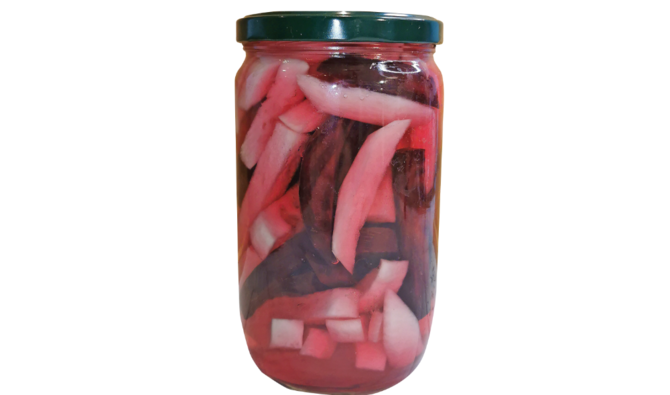
Bright pink in color and tangy in taste, pickled turnip is a staple side dish on dining tables in all Mediterranean countries such as Lebanon, Egypt, and Syria.

Although turnips were once considered a food of the poor in European history, the root vegetable is a favorite among Arabs, especially when pickled.

The pickling method dates back to around 7,000 B.C. and was used to help prevent food from rotting.

It developed to become a way of making salty side dishes of various vegetables such as carrots, cauliflower, and cucumber, and sometimes it is made using lemons and peaches, or other fruits.

Pickled turnip, or as Arabs call it torshi, is a simple recipe that can be made at home with humble ingredients.

All that is required is a 450-gram turnip, one small beetroot for flavoring and coloring, two cups of water, two tablespoons of salt, two teaspoons of sugar, and a jar or container.

Start by peeling and cutting the turnip and beetroot into two-centimeter-wide sticks without trimming down the length. Boil the water in a pot, add the salt and sugar, and stir until they dissolve. Put the turnip and beetroot in the jar or container and add the water after letting it cool to room temperature.

Pepper or vinegar can be added to give an extra kick.

Leave it in the fridge for at least a week before serving. Once the pickle bottle has been opened, its contents should be consumed within two months.


Chef serves up a taste of Spain at Ithra Cultural Days in Saudi Arabia 

Updated 20 January 2026
Follow

Chef serves up a taste of Spain at Ithra Cultural Days in Saudi Arabia 

DHAHRAN: Among the attractions of the Ithra Cultural Days: Spain at the King Abdulaziz Center for World Culture (Ithra), visitors can try a tantalizing selection of Spanish foods — none more renowned than its famous paella. 

Arab News spoke with chef Jose Zafra at the event, which runs until Jan. 31, who flew in from Spain to offer a taste of his homeland to the people of Saudi Arabia. 

A “master rice cook, paella researcher and promoter,” according to his business card, his logo is even designed around the recognizable cooking pan and the phrase “Pasion por la paella,” or “Passion for paella.”

“That's why the pan is round because people get around and eat all together — to share culture and passion and life,” Zafra told Arab News as foodies lined up behind him, eager to try a plateful.

Arab News spoke with chef Jose Zafra at the event, which runs until Jan. 31. (Supplied)

“It’s not just a food. It’s a link, a connection. Paella is the symbol of unity and sharing. And people now are going to try it — authentic Spanish paella in Saudi Arabia.”

The word “paella” comes from the Latin “patella,” meaning pan.

In Spanish, it refers both to the rice dish itself and the pan in which it is cooked.

Paella was introduced to Spain during Moorish rule. It originated in Valencia, on the country’s eastern coast, as a rural peasant dish that was cooked by farm workers over open fires using local ingredients. Over time, the dish’s popularity spread and other versions evolved, for example featuring seafood and meat.

It is different to Saudi Arabia’s kabsa, a communal dish which similarly uses rice and meat. Kabsa is cooked in a deep pot to ensure the rice stays soft and aromatic from the meaty broth, whereas paella uses a wide, shallow pan to fully absorb flavors evenly, often creating a prized crispy layer at the bottom. 

Visitors to Ithra’s Culture Days can enjoy the flavors of Spain made with a sprinkling of local love — true to the origins of the dish.

Find the scoops of Spanish joy near the food truck area and try chicken paella, seafood paella —or both! You will see the signs offering a plate, at SR35 ($9) for chicken and SR40 for seafood, or let your nose lead you there.

Zafra concluded: “The chicken is from here, the seafood is from here — and the passion, well, that is from Spain.”
