More female tech startup entrepreneurs in Saudi Arabia than in Europe: Report

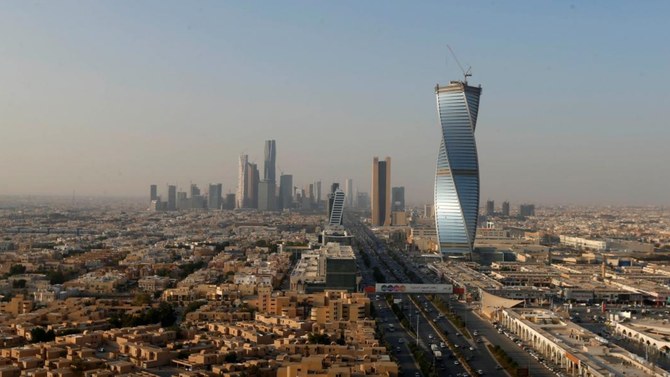
Saudi Arabia issued 139,754 new commercial licenses to women in 2021, compared to 2015, when 65,912 were granted to female-owned businesses. (Reuters/File Photo)
Short Url
Updated 27 April 2022
Follow

More female tech startup entrepreneurs in Saudi Arabia than in Europe: Report

  • The participation rate of women in the sector was at 28 percent in the third quarter of last year
  • The ministry said there was a 112 percent increase in commercial registrations issued for women

LONDON: Saudi Arabia has a higher percentage of women working in the technology startup sector than in Europe, according to new research findings.

The recently published Endeavor Insight report also revealed that Saudi Arabia’s startup rates for women in tech were higher than those for men.

The participation rate of women in the sector was at 28 percent in the third quarter of last year, more than 10 percent above the European average rate, which sat at 17.5 percent in the same period.

Saudi Arabia issued 139,754 new commercial licenses to women in 2021, according to the Kingdom’s Ministry of Communications and Information Technology, a figure that marked one of the largest growth rates globally.

The ministry said the number represented a 112 percent increase in commercial registrations issued for women entrepreneurs compared to 2015, when 65,912 were granted to female-owned businesses.

The Saudi Vision 2030 framework, with its focus on private-sector investment and talent attraction and retention, had fueled the rise, the report said.

“Saudi Arabia has the potential to become a regional hub for tech entrepreneurship in the Middle East if more companies reach scale,” it added, citing progression from small companies to firms with more than 50 employees.

And having more than 50 employees reportedly helped with resilience in times of economic turmoil, the report said.

The study findings were based on interviews with 70 tech entrepreneurs and more than 340 companies and their founders between September and November, with data collected from more than 250 support organizations and investment firms working with the Kingdom’s tech community.

Lateefa Alwalaan, managing director of Endeavor Saudi Arabia, said: “We’ve witnessed firsthand at Endeavor the rapid growth of the tech ecosystem in Saudi and how valuable scaled companies are to the growth of any sector.

“It was important to us to document this growth and impact to better understand the ecosystem and to create a valuable tool to guide policymakers, venture capitalists, and other stakeholders who support founders.”

The Coptic miracle
How Egypt's historic Christian church survived and thrived

Enter


keywords

UAE, Uzbekistan expand economic cooperation with mining sector pact 

Updated 8 sec ago
Follow

UAE, Uzbekistan expand economic cooperation with mining sector pact 

JEDDAH: The UAE has signed an agreement to expand cooperation in Uzbekistan’s mining sector, as the two countries seek to scale investment, modernize infrastructure and deepen economic ties. 

The memorandum of understanding was signed by Mohamed Hassan Al-Suwaidi, UAE minister of investment, and Jamshid Khodjaev, Uzbekistan’s deputy prime minister, according to the Emirates News Agency, also known as WAM.

The agreement comes amid growing bilateral investment flows. UAE investments in Uzbekistan reached $1.3 billion in 2024, including about $700 million in renewable energy, with more than $4 billion in joint projects currently under development, WAM reported. 

Commenting on the MoU, Al-Suwaidi said that his country and Uzbekistan share a longstanding relationship built on mutual trust and strong economic cooperation. 

“Today’s signing reflects the UAE’s commitment to forging strategic international partnerships in sectors of mutual interest that support sustainable development and long-term economic value creation,” he said.

By working closely with Uzbekistan, he added, the UAE aims to unlock high-quality investment opportunities across the minerals value chain for the benefit of both nations.

The agreement focuses on the development and modernization of key supporting infrastructure, including power generation, renewable energy, grid enhancements, water systems, and logistics networks.

It also aims to advance sector digitalization, innovation, and responsible governance to reinforce long-term resilience and sustainability. 

Under the MoU, cooperation will span investment activities across the full mining value chain, from exploration and development through to downstream manufacturing. 

Khodjaev emphasized that the MoU marks an important step in strengthening cooperation between Uzbekistan and the Gulf state in the minerals sector. 

“Through collaboration on investment facilitation, governance, workforce development, and monitoring frameworks, we aim to support responsible mineral development and create sustainable industrial growth opportunities for both economies,” he said. 

According to WAM, the agreement establishes a collaboration framework involving government and regulatory authorities, state-owned investment companies and private sector partners, enabling the structuring of financing mechanisms such as foreign direct investment and public-private partnerships. 

Uzbekistan’s mining sector is a key economic driver, producing commodities such as gold, copper, uranium, coal, oil, and natural gas, according to the International Trade Administration of the US Department of Commerce. 

The sector is undergoing modernization as the government expands upstream-to-downstream capacity, attracts foreign investment, and upgrades infrastructure through state-owned enterprises while tapping international capital markets.