



DUBAI: After taking the landmark step in 2019 to open its doors to international tourism as part of a strategy to diversify its economy, Saudi Arabia is now fast-tracking measures to streamline its air connectivity network, making it faster and cheaper to visit the Kingdom.
A recently signed agreement between the Saudi Tourism Authority (STA) and Emirates, one of the biggest commercial carriers in the world, promises to boost the number of international travelers opting to vacation in the Kingdom, while benefiting both economies.
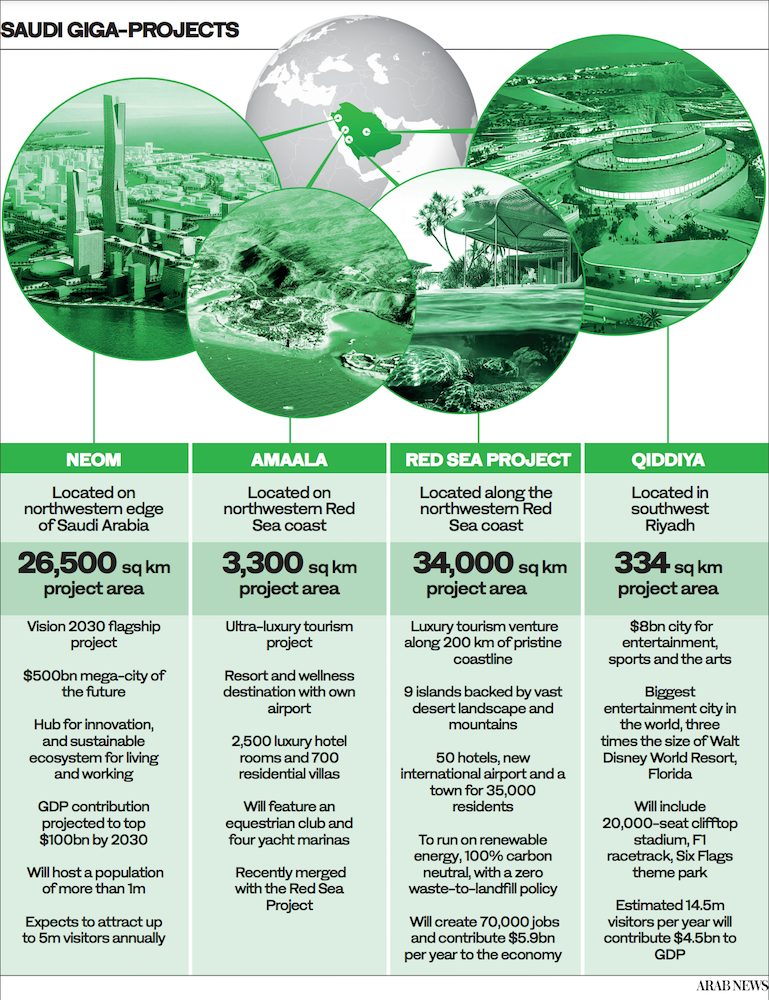
A memorandum of understanding, signed by the two organizations in February, is expected to add further impetus to Saudi tourism infrastructure projects, from NEOM’s futuristic Trojena ski resort to the heritage trails of AlUla and the entertainment city of Qiddiya in Riyadh.
Describing Saudi Arabia as “one of our most important markets in the region,” Adil Al-Ghaith, Emirates’ senior vice president for commercial operations in the Gulf, Middle East and Central Asia, said the deal will help the Kingdom realize its goal of becoming a top global destination.
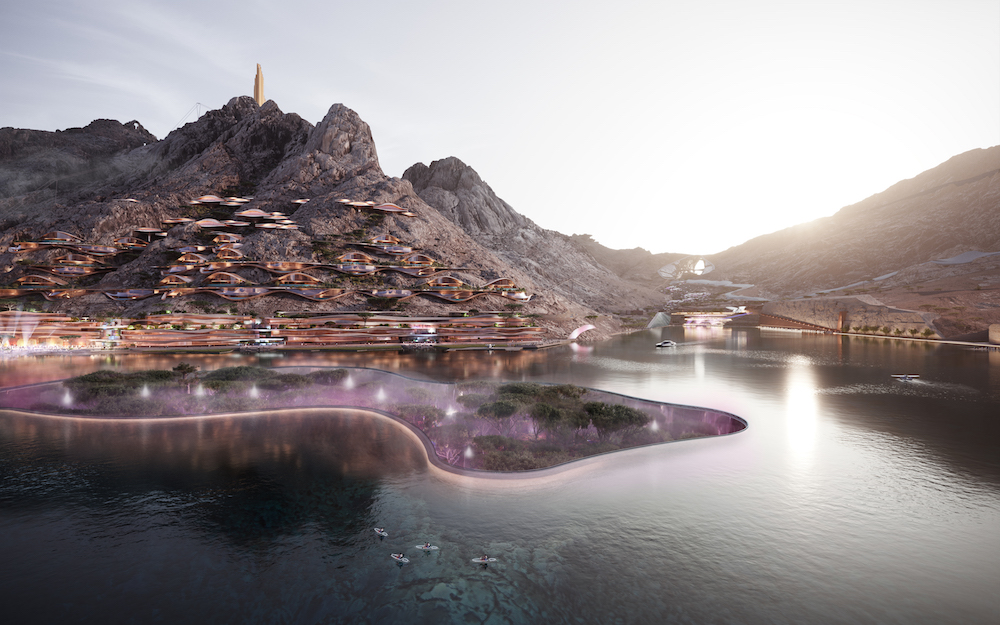
A rendering of the city of NEOM, one of the mega projects currently under construction in Saudi Arabia. (Supplied)
“Saudi Arabia is undergoing a major transformation, which includes a pipeline of unique projects that will help position it as one of the world’s most attractive tourism destinations, and help tell its story to the world,” Al-Ghaith told Arab News.
“We’re already seeing interest among travelers who are eager to experience the Kingdom’s spectacular landscapes, hugely diverse sea and terrains, and rich culture and history.”
As part of the MoU, the STA and Emirates will work jointly to promote the Kingdom’s major attractions, with a view to making Saudi Arabia a key market in its global network of almost 130 routes.
The partners will also share data insights on traveler trends and booking behaviors, which will enable the STA to “finetune their strategies to effectively market the destination in key pockets around the globe,” said Al-Ghaith.
The Dubai-based airline already runs 53 flights per week to its four Saudi gateways, namely Riyadh, Jeddah, Dammam and Madinah.
Using its vast air connectivity network, Emirates will enhance inbound tourism in Saudi Arabia by tapping into new, previously underserved segments of the traveler market.
The primary aim is to boost tourism into Saudi Arabia and attract travelers from across Emirates’ network. (AFP/File Photo)
“The memorandum will enable us to reach over 120 destinations around the world and attract tourists from these destinations to various Saudi destinations,” said Fahd Hamidaddin, CEO and board member of the Saudi Tourism Authority, after the signing of the MoU.
Omar Akbar, a tourism expert and CEO of Zamzam.com, a B2B booking search engine that caters for Umrah pilgrims, believes the STA-Emirates deal will help pave the way for “important partnerships to achieve the goals and aspirations of the Saudi tourism ecosystem, which is in harmony with Vision 2030.”
The Vision 2030 reform agenda was launched by Saudi Crown Prince Mohammed bin Salman in 2017 to diversify the Kingdom’s economy away from oil by bolstering a host of other industries, including tourism.
Historically, most of Saudi Arabia’s revenues in this regard have come from religious tourism. Almost 20 percent of the Kingdom’s GDP from non-oil sources in 2019 — amounting to some $12 billion — came from Hajj and Umrah pilgrims to the holy sites in Makkah and Madinah.
The travel industry, including those agencies specifically serving religious tourists, were badly hit by the movement restrictions imposed by governments in 2020-21 owing to the COVID-19 pandemic. Now, with the easing of restrictions, the market appears to be improving.
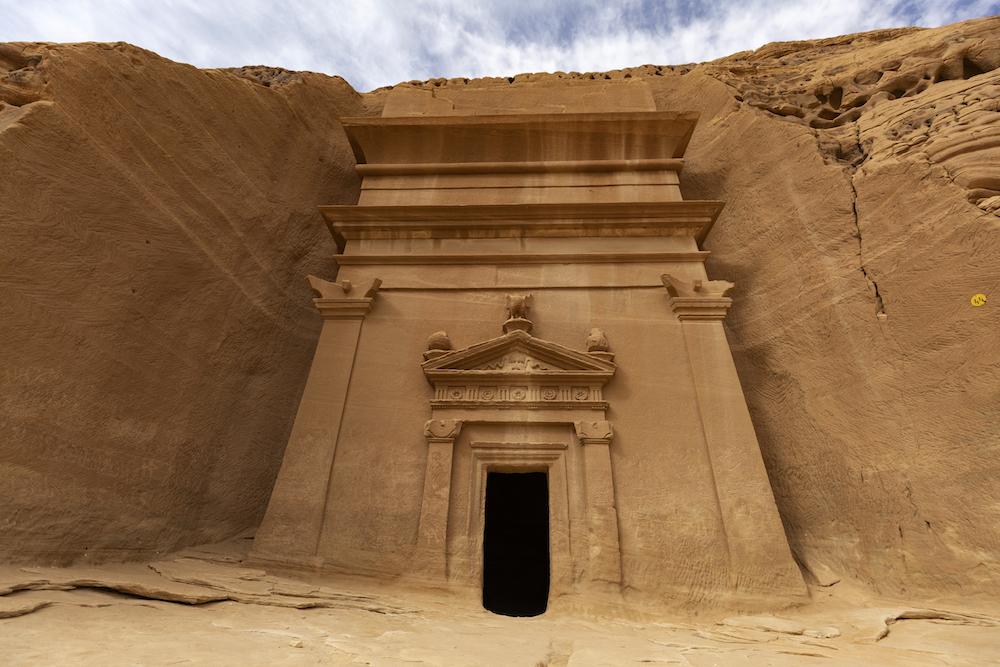
The ancient Nabataean site of Hegra, near AlUla, is a key tourist destination in Saudi Arabia. (AFP)
“I am very much sure this sector will pick the traffic back to normal in no time,” Akbar told Arab News. Indeed, the number of Umrah pilgrims this year has been close to those of pre-pandemic times.
By 2030, the Kingdom wants tourism to contribute around 10 percent to its GDP, to attract 100 million annual visits to its major attractions (45 million domestic travelers and 55 million inbound tourists), and to create 1 million additional jobs.
The first big step toward achieving this goal came in 2019 when the Kingdom launched the Saudi eVisa, which made it much easier for foreign visitors to arrange travel documentation online.
“The eVisa facility has largely contributed to attracting many visitors and this has added value in achieving the growing number of visitors as an objective of Vision 2030,” said Akbar.
FASTFACTS
* The STA-Emirates MoU was signed on Feb. 17, 2022.
* The primary aim is to boost tourism into Saudi Arabia and attract travelers from across Emirates’ network.
* A secondary aim is to cultivate a supportive infrastructure for those journeying to Riyadh, Jeddah, Dammam and Medina.
To raise the number of visitors, the STA has orchestrated a global marketing campaign to promote the Kingdom’s latest luxury travel developments and its little-known heritage gems.
From advertising campaigns and trade shows to organizing trips for the global press, travel agents and social media influencers, the Kingdom is pulling out all the stops to improve visitor numbers.
“There is no other country in the world that is investing so much money now to showcase its attractions,” Daniel Ponzo, managing director of the Jeddah-based Zahid Travel Group, told Arab News.
Moreover, the STA has partnered with the tourism ministries of countries in Southeast Asia, South Asia and Europe, among other regions, to establish a shared agenda in the promotion and preservation of heritage and culture.
Meanwhile, a raft of projects are underway across Saudi Arabia to provide the required accommodation, transport links and attractions “to make the destination one of the most beautiful in the world,” said Ponzo.

A raft of projects are underway across Saudi Arabia to provide the required accommodation, transport links and attractions “to make the destination one of the most beautiful in the world.” (AFP)
Perhaps chief among the Kingdom’s attractions is AlUla, a region in the northwest famous for its beautiful desert landscape as well as its historical, geological and geographical significance.
Upon completion in 2035, the project aims to create 38,000 new jobs, attract 2 million visitors a year, expand the area’s population to 130,000, contributing $32 billion to the Kingdom’s economy. Over $2 billion has already been invested in the project, and $3.2 billion is being spent on priority infrastructure.
There is also the new destination of NEOM, the Kingdom’s first smart city now taking shape on the Red Sea coast, where authorities intend to offer 45,000 rooms by 2030.
“And then there is one of the very extraordinary projects like the Red Sea Development,” said Ponzo. “By 2030, approximately 22 islands will be developed with 48 resorts. And, by 2023, five islands will be developed with 16 resorts with approximately 3,000 rooms.
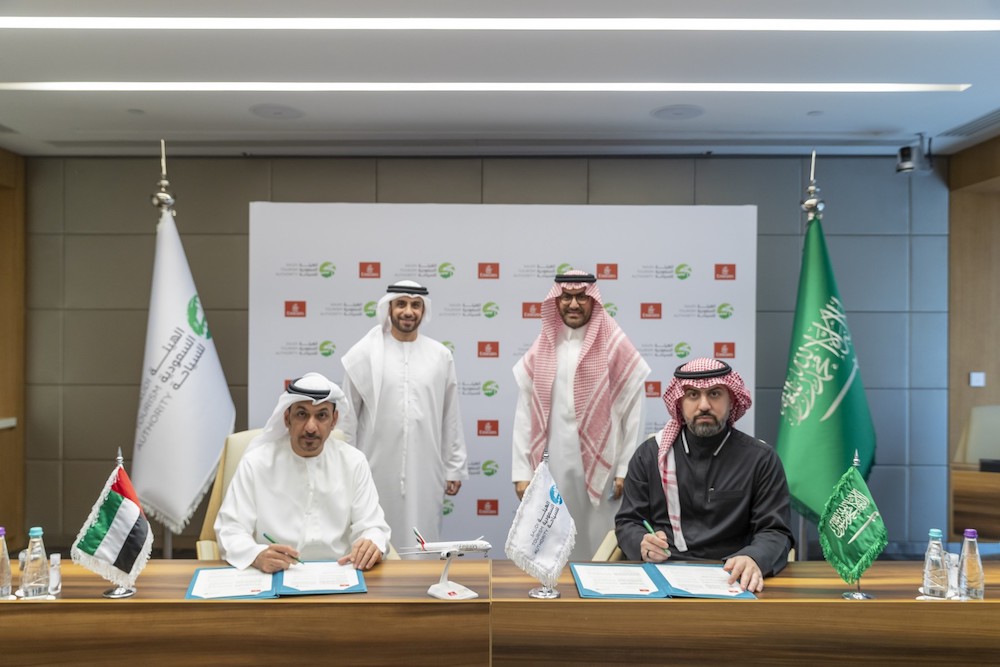
A new MoU signed between Emirates and the Saudi Tourism Authority, above, should see visitor numbers to the Kingdom increase. (AFP)
“You can see huge developments. It is just amazing what is happening in Saudi Arabia, since 2018 and 2019, when the country decided to open its doors to tourism.”
By adding Saudi Arabia to the regional itineraries of travel agencies and expanding transport options, experts say the entire Gulf Cooperation Council area stands to benefit.
“I think it is a great idea, and the region as a whole is heading in the same direction,” said Akbar.
“With the anticipated connectivity between the GCC countries through different means of transportation, this shall foster and enable tourists to explore Middle Eastern culture in a short span of time.”
Incidentally, as part of its economic reforms, the Saudi government last year announced plans to become a global transportation and logistics hub by 2030, targeting passenger traffic of 330 million a year.
To this end, a new airline will be set up, to be based in Riyadh, while flag carrier Saudia will be based out of Jeddah under a transportation strategy that calls for the establishment of two hubs.
Saudi Arabia’s main aim is to increase the number of arrivals to the Kingdom, Mohammed Alkhuraisi, head of strategy at the General Authority of Civil Aviation, told Reuters recently. “We are not after the transit market.”
The general consensus is that Saudi Arabia’s opening up to the world has given the entire region a chance to reshape its international image and reap rich economic rewards.
“We can already see there are travelers interested in combining and visiting two or three countries in the region. The Dubai+ combination is very much requested,” said Ponzo.
“With the World Cup in Qatar in 2022, some of the travelers who will go to Qatar will combine Qatar and Saudi Arabia as a travel combination.”
Looking at the long-term picture, he said: “With Saudi Arabia now on the map of new destinations in the region to visit, probably on the bucket list of maybe millions of travelers, it will be a fantastic boost to the region.”

keywords


