ISLAMABAD: Pakistan on Friday expressed “grave concern” over a slew of incidents in various parts of the occupied Palestinian territories, its foreign office said, including a raid by Israeli forces on Al-Aqsa Mosque that injured over 150 Palestinians and resulted in arrest of 300 others.
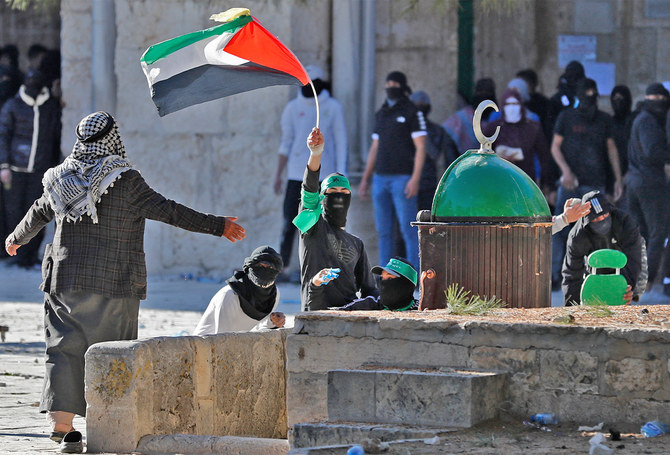
Israeli security forces entered the Al-Aqsa mosque compound in Jerusalem before dawn as thousands of Palestinians were gathered for prayers during the holy month of Ramadan. The raid set off clashes that medics said wounded at least 152 Palestinians.
The clashes come at a particularly sensitive time, when Ramadan this year coincides with Passover, a major weeklong Jewish holiday beginning Friday at sundown, and Christian holy week, which culminates on Easter Sunday. The holidays are expected to bring tens of thousands of faithful into Jerusalem’s Old City, home to major sites sacred to all three religions.
Videos circulating online showed police firing tear gas and stun grenades on the sprawling esplanade surrounding the mosque and Palestinians hurling rocks. Others showed worshippers barricading themselves inside the mosque itself amid what appeared to be clouds of tear gas.
“Reports of Israeli forces’ raid on Al-Aqsa Mosque, today, indicate 152 injured and more than 300 Palestinians detained,” the Pakistani foreign office said in a statement.
“This highly condemnable assault on worshippers, especially during the holy month of Ramadan, is an egregious violation of all humanitarian norms and human rights laws.”
In recent weeks, Israeli forces have killed dozens and injured countless Palestinians in the occupied East Jerusalem and other areas.
“This escalation of violence by Israeli forces in the Palestinian territories is deplorable. We pray for the earliest recovery of those injured,” the statement said.
Reaffirming its consistent and unstinted support for the Palestinian cause, Islamabad called upon the international community to take urgent steps to protect innocent Palestinian lives, and uphold international law and principles of the United Nations (UN) Charter.
“We support the Palestinian people for the realization of their right to self-determination and other fundamental rights as well as a two-state solution, in accordance with relevant UN and OIC resolutions, with the pre-1967 borders and Al Quds Al Sharif as the capital of a viable, independent and contiguous Palestinian State,” the statement added.


![]()

Pakistan voices ‘grave concern’ over Israeli raid on Al-Aqsa mosque
Short Url
https://arab.news/cap89
Pakistan voices ‘grave concern’ over Israeli raid on Al-Aqsa mosque
- The raid set off clashes that injured over 150 Palestinians, resulted in arrest of 300 others
- Islamabad calls the raid an ‘egregious violation’ of humanitarian norms and human rights laws
Latest updates


© 2026 SAUDI RESEARCH & PUBLISHING COMPANY, All Rights Reserved And subject to Terms of Use Agreement.