

Lebanon risks missing IMF preconditions for EFF owing to weak governance: S&P   

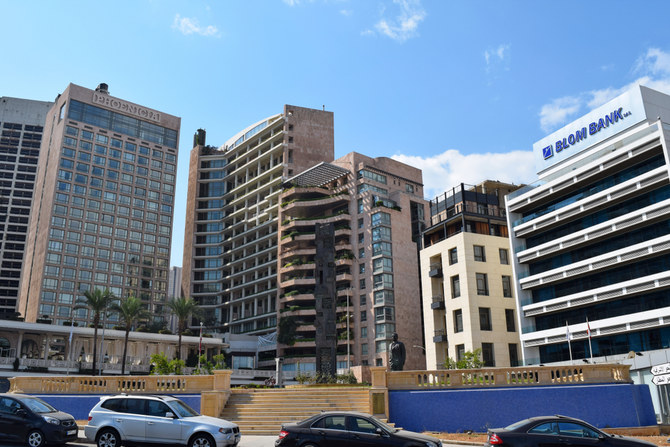
The banking sector restructuring plan is difficult to implement, according to S&P. (Shutterstock)
Short Url
Updated 14 April 2022
Follow

Lebanon risks missing IMF preconditions for EFF owing to weak governance: S&P   

RIYADH: The agreement between Lebanon and the International Monetary Fund on preconditions for a four-year Extended Fund Facility could fuel reform momentum, yet will not have an immediate impact on Lebanon’s sovereign creditworthiness, S&P Global Ratings said on April 14.

This comes as the US rating agency believes that the persisting political dysfunction and weak governance in Lebanon will be challenging to fulfill preconditions in order to gain the approval of the IMF’s board.

“We see a high likelihood that the preconditions for IMF board approval will not be met before the next general elections, to be held in May, given the short time before then. 

“We see a risk that progress on reforms by the end of 2022 will be insufficient for Lebanon to achieve the IMF board’s approval,” S&P said in a statement.

Lebanon has to implement a set of reforms to rebuild its economy and improve governance, to get the IMF approval of the EFF, which comes with around $3 billion in funding, under the staff-level agreement reached with the IMF on April 7.

Those reforms include cabinet approval of a banking sector restructuring plan, parliamentary approval of bank resolution legislation, and initiation of external evaluation of the 14 largest banks.

The banking sector restructuring plan is difficult to implement, according to S&P. An earlier plan suggested the writedown of government debt and discounting of banks’ deposits with the central bank, to protect small depositors and limit the fiscal costs, was not implemented due to political wrangling.

Lebanon’s banking sector and Banque Du Liban restructuring will be tied to the government’s debt restructuring strategy, as BDL owns 40 percent of government debts, and commercial banks about 25 percent.

Required reforms also include parliamentary approval of a revised bank secrecy law based on international standards. 

Lebanon is also expected to get parliamentary approval of the 2022 budget and cabinet approval of a medium-term fiscal and debt restructuring strategy. 

Other reforms include the completion of an audit of BDL’s foreign asset position and its unification of the multiple exchange rates in the economy.

The long-term constraints on Lebanon’s institutional setting coming from a fragmented political landscape will make it difficult to push through reforms, according to S&P.

Still, the rating agency sees the Lebanese authorities’ clear articulation and acknowledgment of the steps they need to take as a positive sign. 

Engaging in an IMF program will create a policy anchor for the authorities and could unlock further bilateral and multilateral support crucial for stabilizing macroeconomic conditions in Lebanon and rebuilding the economy, S&P added.


Closing Bell: Saudi equities continue 4-day upward trend 

Updated 14 January 2026
Follow

Closing Bell: Saudi equities continue 4-day upward trend 

RIYADH: Saudi equities closed higher on Wednesday, with the Tadawul All Share Index rising 51.52 points, or 0.47 percent, to finish at 10,945.15. 

Trading activity was robust, with 373.9 million shares exchanged and total turnover reaching SR6.81 billion. 

The MT30 Index also ended the session in positive territory, advancing 11.93 points, or 0.82 percent, to 1,472.82, while the Nomu Parallel Market Index declined 116.82 points, or 0.49 percent, to 23,551.47, reflecting continued volatility in the parallel market.

The main market saw 90 gainers against 171 decliners, indicating selective buying. 

On the upside, Al Kathiri Holding Co. led gainers, closing at SR2.18, up SR0.12, or 5.83 percent. Wafrah for Industry and Development Co. advanced to SR23, gaining SR0.99, or 4.5 percent, while Al Ramz Real Estate Co. rose 4.35 percent to close at SR60.

SABIC Agri-Nutrients Co. added 4.21 percent to SR118.70, and Al Jouf Agricultural Development Co. climbed 4.12 percent to SR45. 

Meanwhile, losses were led by Saudi Industrial Export Co., which fell 9.73 percent to SR2.69. United Cooperative Assurance Co. declined 5.08 percent to SR3.74, while Thimar Development Holding Co. dropped 4.54 percent to SR35.30.  

Abdullah Saad Mohammed Abo Moati for Bookstores Co. retreated 4.15 percent to SR48.50, and Gulf Union Alahlia Cooperative Insurance Co. slipped 3.96 percent to SR10.44. 

On the announcement front, Saudi National Bank announced its intention to issue US dollar-denominated Additional Tier 1 capital notes under its existing international capital programe, with the final size and terms to be determined subject to market conditions and regulatory approvals.  

The planned issuance aims to strengthen Tier 1 capital and support the bank’s broader financial and strategic objectives.  

The stock closed at SR42.70, gaining SR0.70, or 1.67 percent, reflecting positive investor reaction to the capital management move. 

Separately, Almasane Alkobra Mining Co. said its board approved the establishment of a wholly owned simplified joint stock company to provide drilling, exploration and related support services, with a share capital of SR100 million and headquarters in Najran, subject to regulatory approvals.  

The new subsidiary aligns with the company’s strategy to enhance operational efficiency and expand its role in the Kingdom’s mining sector.

Shares of Almasane Alkobra Mining closed at SR98.70, up SR0.30, or 0.3 percent, by the end of the session.