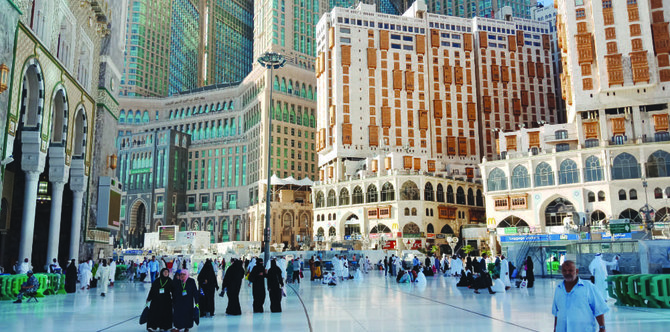

MAKKAH: It’s no surprise that the people of Makkah are skilled in speaking many languages due to their close and constant interaction with people from all over the world, who come to perform Hajj and Umrah.
Dr. Hassan Bukhari, the dean of the Institute of Arabic Language for non-Native Speakers, said: “Makkah has unique characteristics that make it a unique model of coexistence and for the convergence of civilizations from all over the world.”
Bukhari told Arab News that Makkah had become a cultural incubator as pilgrims from all over the world come to worship at the Grand Mosque all year long, bringing and sharing their cultural, social, and economic knowledge with the city’s people.
HIGHLIGHTS
● Since people from all over the world come to Makkah and Madinah for Hajj and Umrah, Saudi Arabia has not only trained its people in many languages to facilitate the pilgrims but also put up signs in various languages in the two Holy Cities. The translators usually interpret fatwas, provide guidance, answer queries, speeches from the day of Arafah during Hajj, snippets from biography of Prophet Muhammad and Holy Qur’an.
● The Kingdom’s Vision 2030 aims to receive 30 million visitors by 2030. Hence, Qazzaz believes that the guests of Allah should be given the best experience through digital transformation. He said that the current generation should enroll themselves in specialized institutes to learn more languages.
The dean believes that pilgrims are emotionally attached to the Kingdom and show great enthusiasm to learn Arabic — not only to converse but also to understand the language. The people of Makkah, in return, make great efforts to learn the language of their guests.
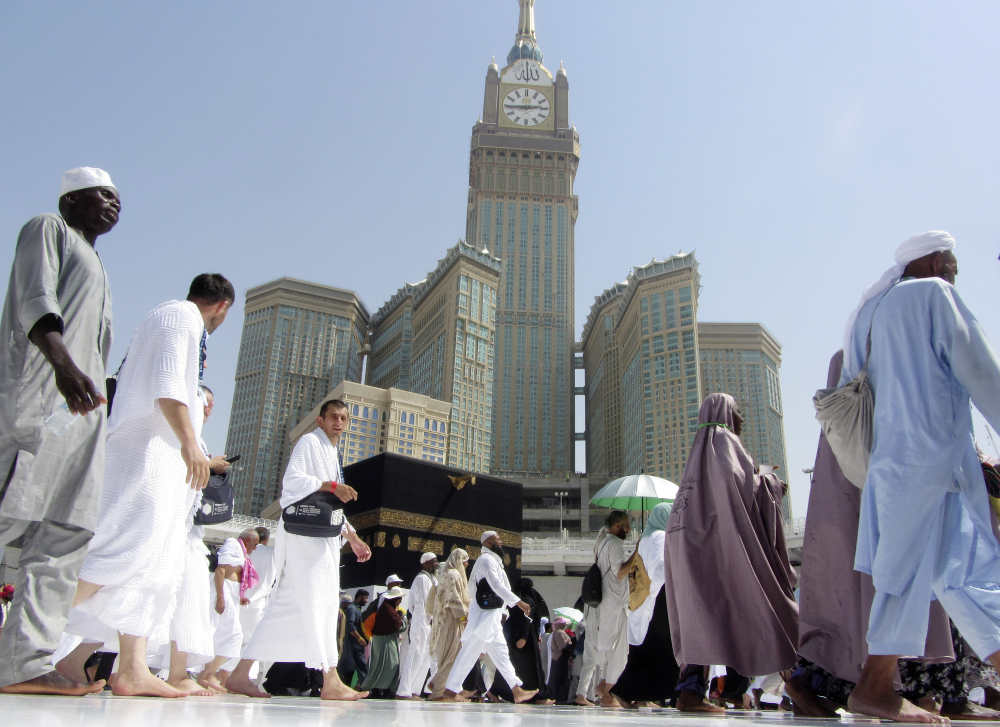
The tallest clock tower in the world with the world's largest clock face, atop the Abraj Al-Bait Towers, overshadows Muslim pilgrims as they circumambulate around the Kaaba in the Muslim holy city of Makkah, Saudi Arabia. (AP file photo)
Often foreigners live in Makkah for economic purposes, where they sometimes intermarry and contribute to developing and enriching the cultural and social fabric of the Arab society.
Dr. Othman bin Bakr Qazzaz, head of the research and media affairs department at the Institute of Research on Hajj and Umrah, said that the people of Makkah are used to the presence of pilgrims and visitors during the Umrah season, which lasts throughout the year.
He said that the intensive presence of the guests of Allah — who come in millions to Makkah and Madinah — leads to extensive interaction, communication and cultural interaction with the people of Makkah, especially the service providers.
Makkah has unique characteristics that make it a unique model of coexistence and for the convergence of civilizations from all over the world.
Dr. Hassan Bukhari, Dean of the Institute of Arabic Language for non-Native Speakers
He added: “The society of Makkah achieved this cultural diversity by opening their minds and hearts to receive and accept these new cultures, which has pushed the society toward prosperity.”
Qazzaz said that the gateway for this influence is through the language with which the people of Makkah communicate and interact with the pilgrims and visitors. They mostly pick up the languages through economic means, such as through the abundance of shops around the Grand Mosque, conveyance, or by providing services to pilgrims at the Grand Mosque. Hence, a person from Makkah usually knows many languages, or even various Arabic dialects.
Since people from all over the world come to Makkah and Madinah for Hajj and Umrah, Saudi Arabia has not only trained its people in many languages to facilitate the pilgrims but also put up signs in various languages in the two Holy Cities. The translators usually interpret fatwas, provide guidance, answer queries, speeches from the day of Arafah during Hajj, snippets from biography of Prophet Muhammad and Holy Qur’an.
He added: “This cultural exchange between the people of Makkah and the guests of Allah contributed in keeping the positive impact and image of the people of Makkah in the minds of the guests of Allah, as the people of Makkah accepted them and received them well as they are merciful, hospitable and compassionate toward the guests of Allah. In addition, they offered commodities and services to them in an atmosphere of serenity and noble spiritual sentiments.”
The Kingdom’s Vision 2030 aims to receive 30 million visitors by 2030. Hence, Qazzaz believes that the guests of Allah should be given the best experience through digital transformation. He said that the current generation should enroll themselves in specialized institutes to learn more languages.
To achieve the objectives of the Quality of Life program, and the objectives of the Services of the Guests of Allah program, all services should be of the highest quality, including language, which is the main medium of communication with the pilgrims and visitors. It would offer them comfort and joy and facilitate them in performing their rituals in a serene atmosphere, he said.