



PERUGIA: The International Journalism Festival returned to Italy after a two-year hiatus with a broad selection of Arab- and Middle East-related sessions that dominated the agenda.
This year’s edition is of particular significance to media and journalism practitioners in the Arab world, as the festival featured the biggest selection of sessions pertaining to the region to date.
“When you come from almost a cataclysmic sort of context, like Syria, or very repressive contexts like Egypt, there is always this notion that we’re not just journalists, we’re not just professionals, but that this is our calling,” said Karam Nachar, editor and co-founder of Al-Jumhuriya.
From context-specific discussions of media practices, such as in Syria and Egypt, to more general panels presenting an overview of the current media climate in the region, the festival was a chance for journalists to share experiences and discuss pressing issues facing the news industry.
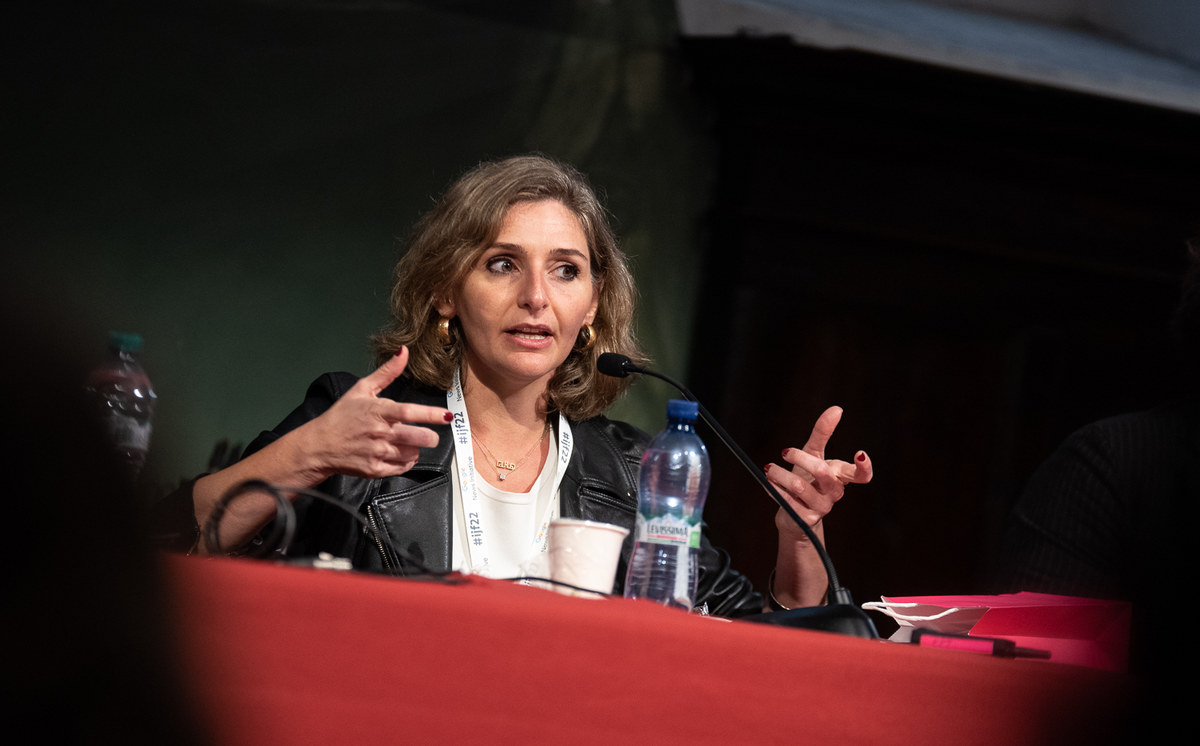
Director of the The Counter Academy for Arab Journalism, Hala Droubi. (Francesco Cuoccio)
“Conferences like this give us the chance to talk about Arab media, one that did not exist 10 years ago,” said Michael Jensen, MENA regional director at International Media Support.
“It also gives us the chance to present new ideas and discuss tangible results for shared problems experience(d) across the region.”
The conference ran for five days with over 700 speakers, holding panels, discussions and presentations across Perugia’s charming historic town center, theatres, auditoriums and libraries, living up to its reputation as a festival.
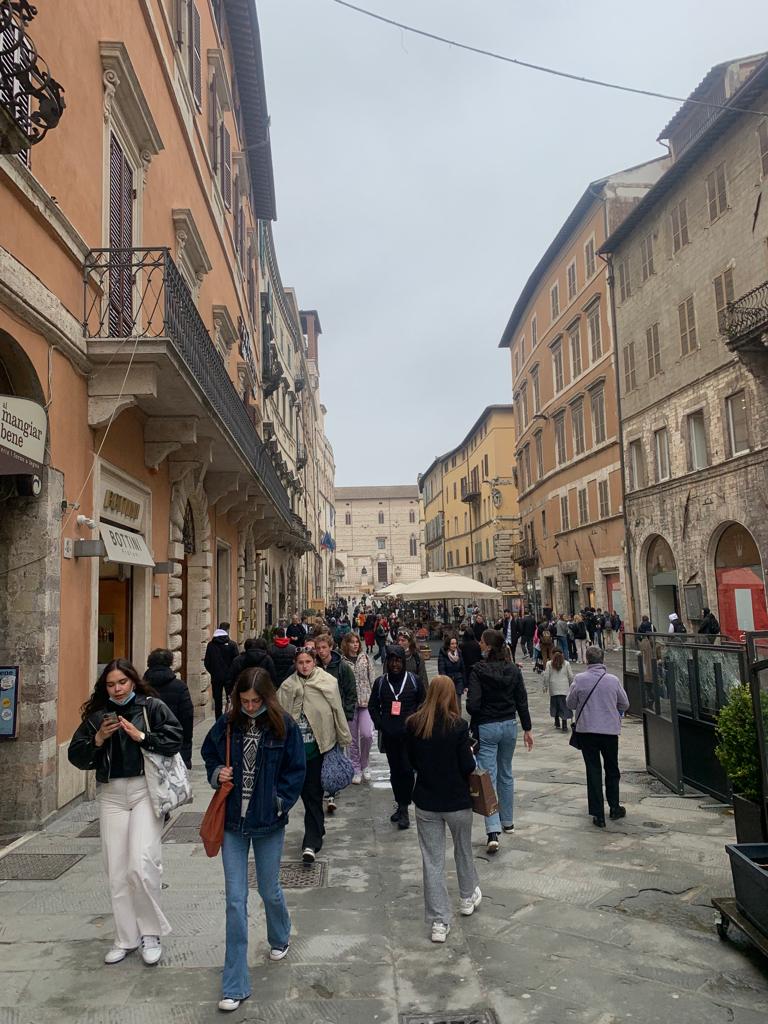
The streets of Perugia filled with people from all over the world coming to attend the festival. (Supplied)
The whole town transforms to accommodate one of the biggest journalism events in Europe as residents take advantage of the heavy influx. One pastry shop situated in the main town square even displayed a placard of the festival made out of chocolate.
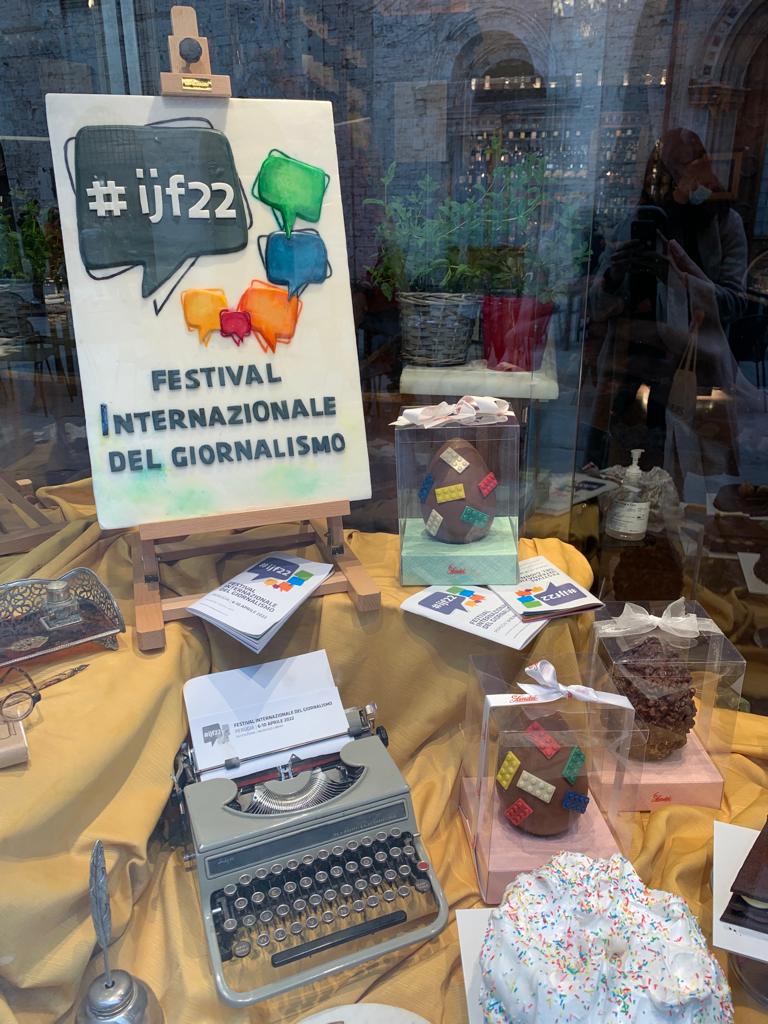
Founded in 2006, the festival is held every year in Perugia, the capital city of Umbria in central Italy, bringing together journalists, students, media outlets and NGOs to discuss current media practices and developments in the world.
The emergence of independent media and enhancing media freedoms were common themes across these sessions.
In a panel titled “The development and future of Syria’s emerging media,” experts discussed the rise of independent media in post-2011 Syria.
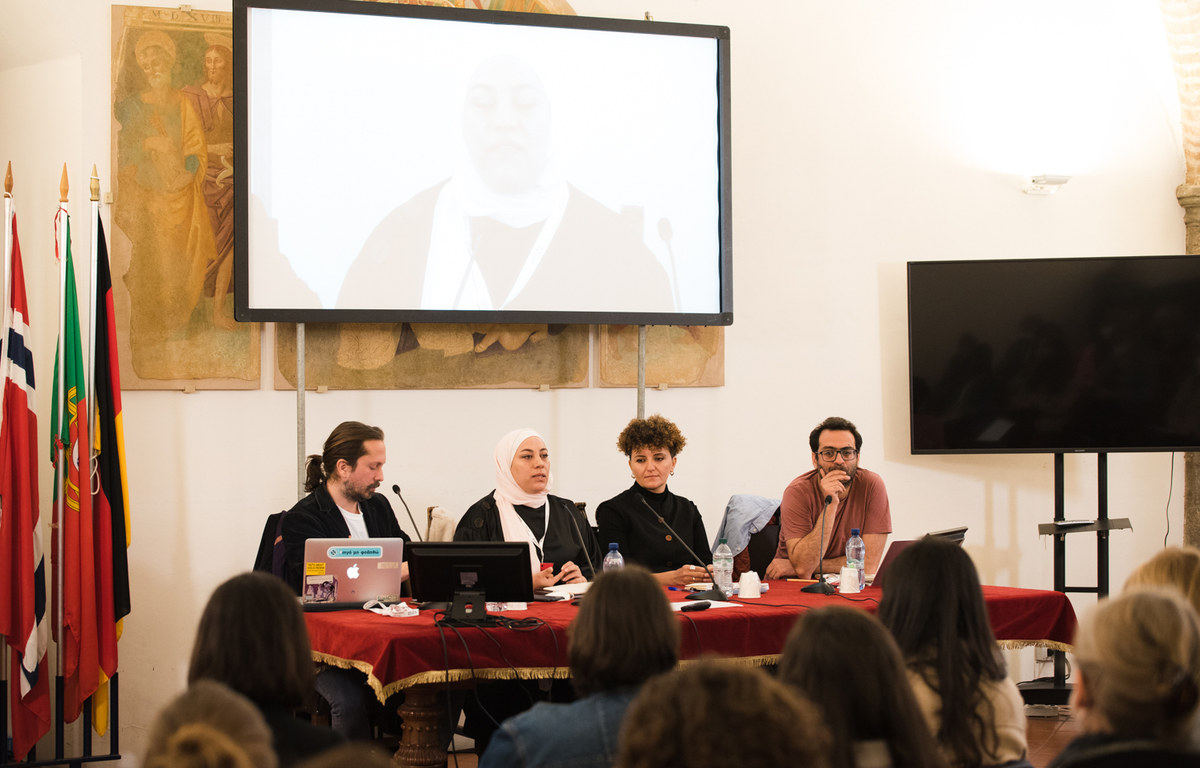
Panel discussion on the future of media and journalism in Syria. (Francesco Ascanio Pepe)
“We were a group of activists who wanted to know what was happening in neighboring cities, only one of us was a journalist who actually studied journalism in university,” explained Kholoud Helmi, the co-founder of Enab Baladi, an independent Syrian media outlet that became prominent following the Syrian uprising.
“We did not know anything about the rules of journalism, how to be objective and balanced but we were enthusiastic. We want to tell the people about our stories. We wanted to inform the locals and internationals what is going on in the Syrian cities.”
Explaining why independent journalism is of utmost importance in conflict areas such as Syria, the panel painted a portrait of the extremely constrained pre-2011 media landscape in the country, described in its pre-war era as a “country of silence.”
The panelists stressed on the need to support citizen journalism, citing that many of those who founded, or currently work in, Syria’s independent media sphere started off as activists and citizens with little to no experience in journalism.
In another panel titled “Breaking ground: fresh media practices from the Arab region,” editors highlighted the emergence of various types of new media practices in the last decade that are fighting the traditional notion of journalism.
“Cultural journalism, for example, emerged strongly over the last few years in the region,” highlighted Karam Nachar. “This type of journalism, focusing on highlighting Arab culture to foreign audiences from an Arab perspective is particularly important because it challenges the traditional style of breaking news and focuses more on storytelling.”
Many sessions were also tailored to inform foreign reporters and international media outlets about the needs of local media. In a session titled “The future of Afghanistan coverage,” panelists gave an emotional account of what it was like for Afghan journalists operating under the de-facto Taliban rule.
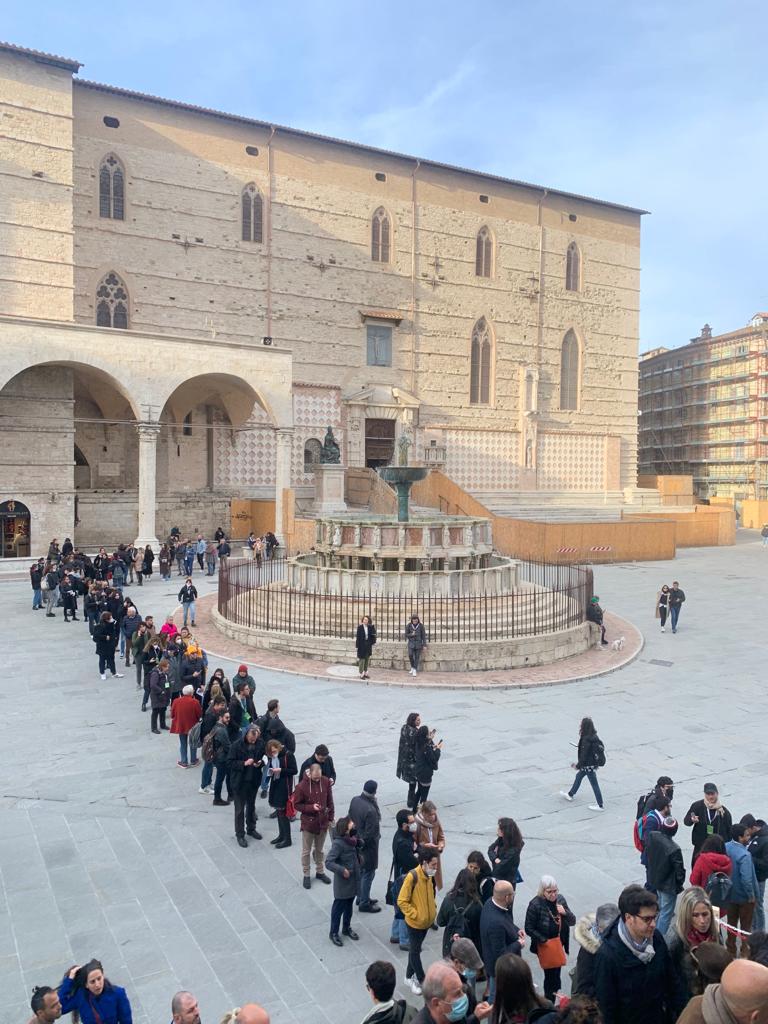
Attendees queuing to enter one of the many sessions held in the town square. (Supplied)
“On April 30, 2018 there was a double suicide blast in Kabul, targeted at journalists in the country. Twenty-five people died, nine of which were journalists, including three of my colleagues,” recounted Malali Bashir, an Afghan award-winning journalist and senior editor with Radio Free Europe and Radio Liberty’s Afghan Service, known locally as Radio Azadi.
“I want to mention this to reiterate the commitment of Afghan journalists to their work, and how they have contributed to a free media, freedom of speech and the right to know correct and unbiased information in Afghanistan.”
More than 300 media outlets have shut down in Afghanistan since August 15 when the Taliban took power. Hundreds of journalists fled Afghanistan and those who remain have either stopped working, adapted to the increasingly unstable context, or face dangerous security risks when conducting their work.
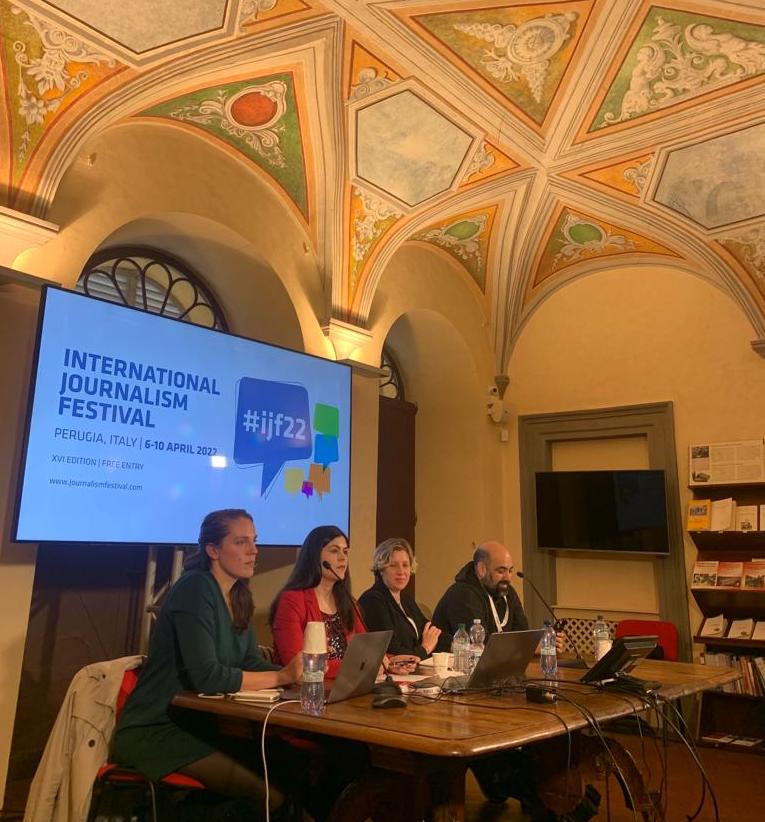
Session on the future of media coverage in Afghanistan under the Taliban rule, held in the historic library. (Supplied.)
The panelists also spoke about how to report on Afghanistan from a local lens and stressed on the necessity to teach local and foreign journalists how to cooperate, given that they both rely heavily on one other.
“We must support citizen journalism, and train local journalists to tell their own stories,” recommended Vanessa Gezari, the national security editor at The Intercept.
“As foreign journalists, we should help Afghans tell their stories about their own countries, look for stories to tell and then get Afghans involved in telling them and utilize social media for storytelling.”
A common concern shared across these region-specific sessions of the festival was how to keep the stories of certain contexts like Syria or Afghanistan relevant, while many conflicts and crises arise across the world.


