


Saudi Arabia’s Ithra praised for its ‘real foresight’ in hosting summit exploring digital well-being

1 / 5
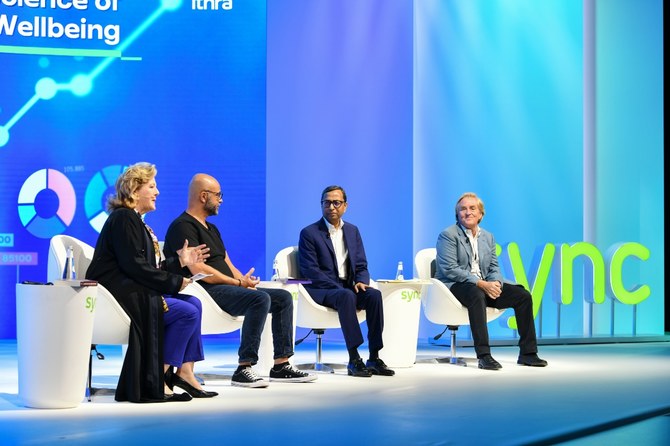
The two-day summit is being hosted by Ithra with multiple, engaging panels looking into human wellbeing in a very evolving digital world. (Supplied)
2 / 5
The two-day summit is being hosted by Ithra with multiple, engaging panels looking into human wellbeing in a very evolving digital world. (Supplied)
3 / 5
The two-day summit is being hosted by Ithra with multiple, engaging panels looking into human wellbeing in a very evolving digital world. (Supplied)
4 / 5
The two-day summit is being hosted by Ithra with multiple, engaging panels looking into human wellbeing in a very evolving digital world. (Supplied)
5 / 5
The two-day summit is being hosted by Ithra with multiple, engaging panels looking into human wellbeing in a very evolving digital world. (Supplied)
Short Url
Updated 30 March 2022
Follow

Saudi Arabia’s Ithra praised for its ‘real foresight’ in hosting summit exploring digital well-being

  • Day one offered food for thought for parents about their children’s use of technology
  • Many children grow up as ‘digital natives,’ with many millennial parents struggling to strike a balance

DHAHRAN: The opening day of the inaugural Sync Digital Wellbeing Summit raised some important questions for parents to ponder about their children’s relationship with technology.

The two-day event is being hosted by the The King Abdulaziz Center for World Culture, also known as Ithra. Abdullah Al-Rashid, the organization’s director, began his opening remarks by telling how he had shielded his eldest child from using digital devices for the first four years of the boy’s life.

When the pandemic began in early 2020, however, he was forced to introduce his son to a screen for the first time, as he and his wife had other demands on their time. As his son’s screen use rose from zero hours a day to nearly six hours, he said the boy went from being a very verbal, happy child to one who began to experience sleeping difficulties.

Two years later, Al-Rashid said, both he and his family continue to try to find the sweet spot for screen use.

Approximately 51 percent of the Saudi population is under the age of 25. Many children now grow up as “digital natives” and many millennial parents find themselves struggling to strike a balance between allowing their children screen time and protecting them from the perils of the online world.

“I think the focus on digital well-being is a really smart idea; it shows real foresight on the part of Ithra,” James Pearson Steyer told Arab News. He is a professor at Stanford University and the CEO of Common Sense Media, an organization that offers education and advocacy to families with the aim of promoting the safe use of technology and media by children.

“Real credit to Ithra for putting this together and building this extraordinary complex. Who would have thought that Saudi Arabia would be a host to such an event?”

Steyer took part in during a panel discussion titled The Science of Digital Well-Being, alongside two guests from the UAE: Mo Gawdat, a former chief business officer at Google, and Sunil John, president of PR agency ASDA’A BCW.

They debated the question of whether the responsibility for spending more or less time online lies with users or the developers of the platforms they are using. Gawdat said that it is “wishful thinking” to assume that the platforms will make any changes that address the issue, given that their business model is to keep users using.

Another session, titled The Psychology of Technology, explored what psychologists and behavioral studies can tell us about digital well-being, and how these insights can be used to design better technology.

Other panels on day one of the summit included Achieving Digital Balance — Addiction and Responsible Media Design, during which experts discussed digital addiction to smartphones, apps and video games and what we might expect from governments in terms of a response to this, and Digital Well-Being for All — An Imperative, Not Just an Idea, which explored the crucial aspects of efforts to place digital well-being on the global agenda.


Apple, Google offer app store changes under new UK rules

Updated 10 February 2026
Follow

Apple, Google offer app store changes under new UK rules

LONDON: Apple and Google have pledged changes to ensure fairness in their app stores, the UK competition watchdog said Tuesday, describing it as “first steps” under its tougher regulation of technology giants.
The Competition and Markets Authority placed the two companies under “strategic market status” last year, giving it powers to impose stricter rules on their mobile platforms.
Apple and Google have submitted packages of commitments to improve fairness and transparency in their app stores, which the CMA is now consulting market participants on.
The proposals cover data collection, how apps are reviewed and ranked and improved access to their mobile operating systems.
They aim to prevent Apple and Google from giving priority to their own apps and to ensure businesses receive fairer terms for delivering apps to customers, including better access to tools to compete with services like the Apple digital wallet.
“These are important first steps while we continue to work on a broad range of additional measures to improve Apple and Google’s app store services in the UK,” said CMA chief executive Sarah Cardell.
The commitments mark the first changes proposed by US tech giants in response to the UK’s digital markets regulation, which came into force last year.
The UK framework is similar to a tech competition law from the European Union, the Digital Markets Act, which carries the potential for hefty financial penalties.
“The commitments announced today allow Apple to continue advancing important privacy and security innovations for users and great opportunities for developers,” an Apple spokesperson said.
The CMA in October found that Apple and Google held an “effective duopoly,” with around 90 to 100 percent of UK mobile services running on their platforms.
A Google spokesperson said existing practices in its Play online store are “fair, objective and transparent.”
“We welcome the opportunity to resolve the CMA’s concerns collaboratively,” they added.
The changes are set to take effect in April, subject to the outcome of a market consultation.