

Russian inflation accelerates to its highest since 1999; Chile inflation hits almost 30-year high — Macro Snapshot

Short Url
Updated 10 April 2022
Follow

Russian inflation accelerates to its highest since 1999; Chile inflation hits almost 30-year high — Macro Snapshot

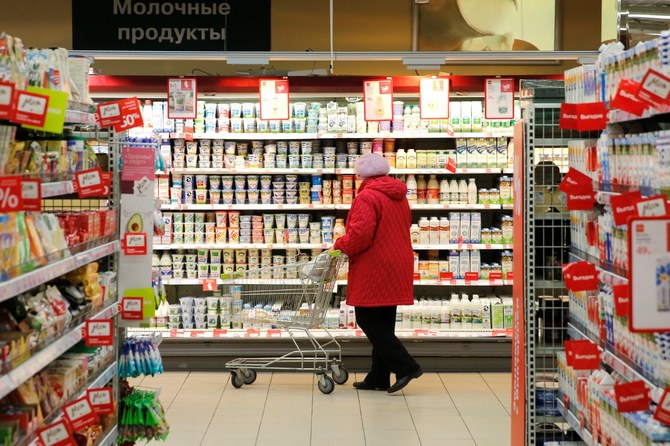
RIYADH: Consumer prices in Russia jumped 7.61 percent in March, their biggest month-on-month increase since January 1999, data showed on Friday, as the economy took a hit from sanctions and a record fall in the rouble.

Inflation in Russia has accelerated sharply in the past few weeks as the ruble slipped to an all-time low last month after Russia began what it calls “a special military operation” in Ukraine on Feb. 24.

The fall in the ruble, which has recovered sharply this week to 2022 highs, boosted demand for a wide range of goods from food staples to cars on expectations that prices will rise even more.

Germany’s growth to fall 

Germany’s economic growth could fall to 1.4 percent-1.5 percent this year, from 2.7 percent in 2021, with an average of around 590,000 people on reduced-hours lay-off schemes over the course of the year, Labor Minister Hubertus Heil said in an interview with Bild am Sonntag.

“We will still be growing,” Heil said. “But this all subject to the proviso that the war does not spread further and that energy supply remains in place,” he added.

The government would provide further aid and support for lay-offs where possible to safeguard jobs if the situation worsened, Heil said.

Germany plans to offer more than €100 billion ($108.8 billion) worth of aid to companies hit by fallout from the war in Ukraine, according to a document seen by Reuters on Friday.

Argentina’s inflation estimate 

Argentina’s 2022 inflation is expected to reach 59.2 percent, analysts consulted by the country’s central bank said on Friday, largely due to the impact that the war in Ukraine is having on prices.

The projection is 4.2 percentage points higher than the previous poll published one month ago.

The survey, which consulted 41 participants between March 29 and 31, also estimated March’s inflation at 5.5 percent and a growth of 3.2 percent for the year.

The economists surveyed expect the average nominal exchange rate in Argentina to be 154 pesos per dollar by December and expect it to reach 222 pesos per dollar by the end of 2023.

Chile inflation surges 

Chile’s consumer prices rocketed 1.9 percent in March, the highest monthly rise in almost thirty years, underscoring the challenge for authorities as they battle spiraling inflation exacerbated by rising global commodities costs.

The country’s official statistics agency said on Friday that the rise had been driven by food prices, non-alcoholic beverages and education.

The monthly figure was far higher than the 1.05 percent rise expected in a Reuters poll of economists and is the highest monthly inflation rate since 1993. The rolling 12-month rate rose further to around 9.4 percent, the highest since 2008.


Saudi POS transactions see 20% surge to hit $4bn: SAMA

Updated 05 December 2025
Follow

Saudi POS transactions see 20% surge to hit $4bn: SAMA

RIYADH: Saudi Arabia’s total point-of-sale transactions surged by 20.4 percent in the week ending Nov. 29, to reach SR15.1 billion ($4 billion).

According to the latest data from the Saudi Central Bank, the number of POS transactions represented a 9.1 percent week-on-week increase to 240.25 million compared to 220.15 million the week before.

Most categories saw positive change across the period, with spending on laundry services registering the biggest uptick at 36 percent to SR65.1 million. Recreation followed, with a 35.3 percent increase to SR255.99 million. 

Expenditure on apparel and clothing saw an increase of 34.6 percent, followed by a 27.8 percent increase in spending on telecommunication. Jewelry outlays rose 5.6 percent to SR354.45 million.

Data revealed decreases across only three sectors, led by education, which saw the largest dip at 40.4 percent to reach SR62.26 million. 

Spending on airlines in Saudi Arabia fell by 25.2 percent, coinciding with major global flight disruptions. This followed an urgent Airbus recall of 6,000 A320-family aircraft after solar radiation was linked to potential flight-control data corruption. Saudi carriers moved swiftly to implement the mandatory fixes.

Flyadeal completed all updates and rebooked affected passengers, while flynas updated 20 aircraft with no schedule impact. Their rapid response contained the disruption, allowing operations to return to normal quickly.

Expenditure on food and beverages saw a 28.4 percent increase to SR2.31 billion, claiming the largest share of the POS. Spending on restaurants and cafes followed with an uptick of 22.3 percent to SR1.90 billion.

The Kingdom’s key urban centers mirrored the national decline. Riyadh, which accounted for the largest share of total POS spending, saw a 14.1 percent surge to SR5.08 billion, up from SR4.46 billion the previous week. The number of transactions in the capital reached 75.2 million, up 4.4 percent week-on-week.

In Jeddah, transaction values increased by 18.1 percent to SR2.03 billion, while Dammam reported a 14 percent surge to SR708.08 million.

POS data, tracked weekly by SAMA, provides an indicator of consumer spending trends and the ongoing growth of digital payments in Saudi Arabia. 

The data also highlights the expanding reach of POS infrastructure, extending beyond major retail hubs to smaller cities and service sectors, supporting broader digital inclusion initiatives. 

The growth of digital payment technologies aligns with the Kingdom’s Vision 2030 objectives, promoting electronic transactions and contributing to the nation’s broader digital economy.