

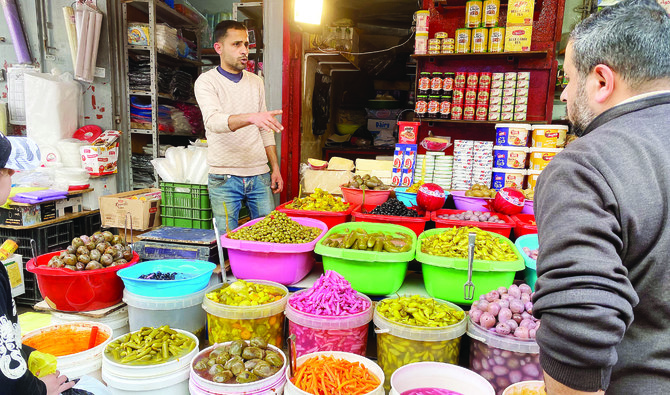

GAZA CITY: At crossroads in the markets, scores of vendors have put up stalls offering bright, colorful pickles, popularly known as turshi, in Palestine.
Turshi is known to have its origins in the Fatimid era.
It is an essential and widely desired side dish in iftar during Ramadan in Palestine.
“Since I was young, I have seen my father buying pickles during Ramadan in particular, and my mother asked me to buy some of those pickles to put on the iftar table when I’m returning home,” said 23-year-old Mahmoud Ghoneim, who bought half a kilo of pickled cucumbers, peppers and eggplant from a vendor.
Ghoneim loves pickled cucumbers the most, which his mother used to prepare every year at home, but “the season for pickled cucumbers came late, and my mother could not prepare them in advance before Ramadan.”
Normally, some housewives prepare pickles at home throughout the year with seasonal vegetables; some only prepare and store them for Ramadan.
Nisreen Lubbad, 50, said that she does not buy pickles from stores, but makes them at home all year round. “My family and I prefer products that can be prepared at home because I can control how they are prepared . . . the level of their salinity, unlike what is available in the market,” she said.
The preparation of pickles is not limited to homes, but its trade flourishes during the month of Ramadan for business owners in this field.
FASTFACTS
Saeed Al-Sakka, pickle factory owner, prepares about 32 types of pickles in his factory, with demand for cucumbers, peppers, eggplants, olives, carrots, and turnip pickles and makdous increasing during Ramadan.
Some housewives prepare pickles at home throughout the year with seasonal vegetables; some only prepare and store.
Saeed Al-Sakka, the owner of one of the pickle factories, hires more workers before the start of Ramadan to meet the demand for pickles.
“The season of Ramadan is one of the best seasons in which pickles are increasingly sold in the Gaza Strip. It passes through several stages: The vegetables are picked from farms, they are then cleaned, pickled, cleaning, processed, and then packed according to different weights,” he said.
Al-Sakka prepares about 32 types of pickles in his factory, with demand for cucumbers, peppers, eggplants, olives, carrots, and turnip pickles and makdous increasing during Ramadan.
Abu Ahmed Al-Rubaie, one of the shop owners in Sheikh Radwan market north of Gaza City, said that pickles were indispensable in every home, and both the rich and poor buy them. He reasons that the “fasting person drinks a lot of water and liquids, which in turn deprives him of eating food, and pickles works as to food for its distinctive taste.”
Iman Abu Qamar, 44, who was standing in front of Al-Rubaie’s shop, prefers pickles of olives and eggplant over other varieties, and those that come with little shelf life and low salinity. A staple on her iftar table, Abu Qamar’s family consumes them as appetizers.
“In Ramadan, different types are prepared and sold, more than other months, including cauliflower, lemon with red pepper, regular small pepper, and eggplant,” she said.
The Gaza Strip is famous for the cultivation of vegetables, which are a main source of pickles. Vendors usually buy and stock up on seasonal vegetables due to the lower prices at that time.


