

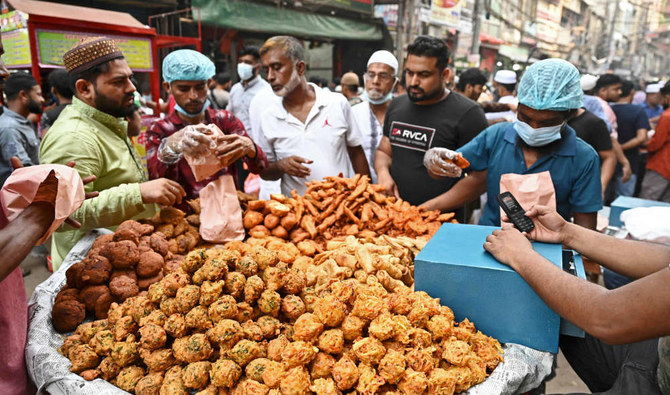

DHAKA: Mosques and market streets teem with evening crowds tempted by the scent of syrupy sweets and hefty rice plates, as more than half a billion Muslims across southern Asia break the day's Ramadan fast.
The Islamic holy month began over the weekend and during that time believers abstain from eating, drinking, smoking, and sexual relations between sunrise and sunset.
The fast is conceived as a spiritual struggle against the seduction of earthly pleasures -- but for the nightly "iftar" meal, festive meals traditionally bring families together and there is intense social activity.
The centuries-old Chawkbazar market in Bangladesh is a traditional centre for evening meet-ups during Ramadan, with hundreds of makeshift food stalls selling traditional grilled meats and delicacies.
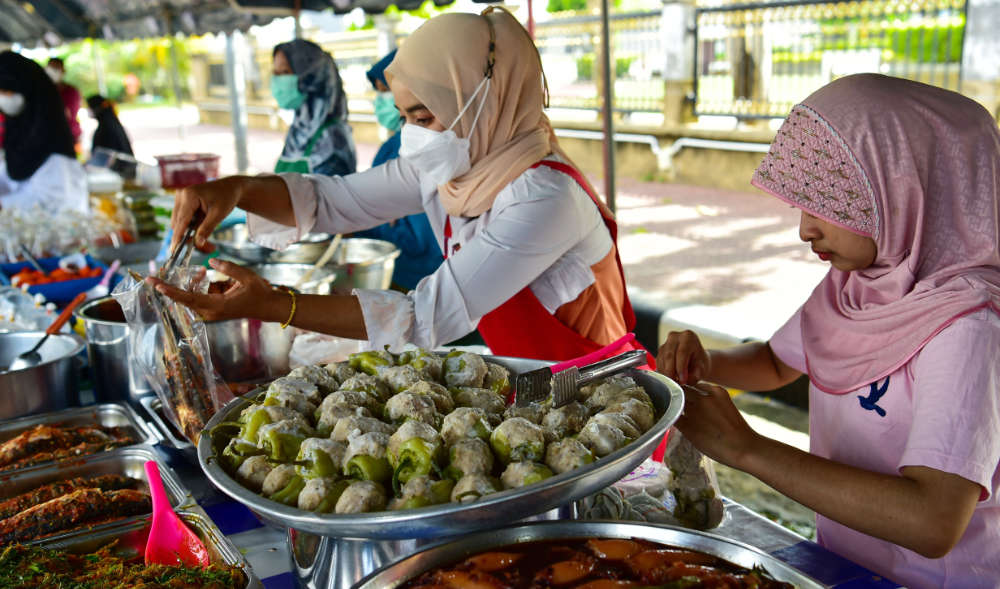
Vendors package food at a bazaar during the Islamic holy month of Ramadan in the southern Thai province of Narathiwat on April 4, 2022. (AFP)
Huge crowds returned to the neighbourhood on Sunday for the first time since the coronavirus pandemic put a pin in large public gatherings.
"I am so happy to see people here," said Ramzan Ali, who has sold barbequed quail at the market for around four decades. "The last two years were painful."
Traditional dishes of pakoras and lentil soup were on offer alongside more esoteric fare, like kebabs made from the meat of bull genitalia and the ever-popular fried goat brain served to accompany roast meats and vegetables.
"It felt so good to come here again," said businessman Mohammad Ashrafuddin.
"Without Chawkabazar's iftar items, I feel like my Ramadan isn't complete."
Pakistan's Muslims are also basking in the opportunity to again break fast in company and out from under a Covid crowd, with the government lifting restrictions on public gatherings weeks earlier.
Mosques have been lit up with lanterns and nearby markets are bustling as crowds stop for fried sweet pastries and stock up on meals to distribute to the poor.
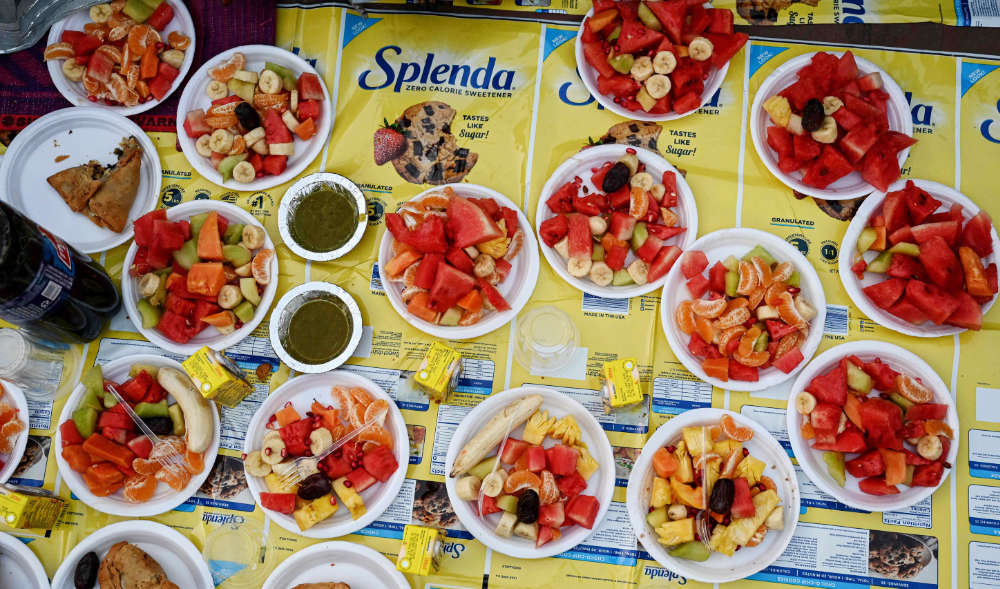
In this picture taken on April 3, 2022, food plates are placed for Muslim devotees to break their fast at the Jama Masjid mosque on the first day of the holy fasting month of Ramadan in the old quarters of Delhi. (AFP)
In India, crowds flock to stalls which line a street in the shadow of New Delhi's resplendent Juma Masjid, one of the country's largest houses of worship, snacking on wrinkled dates and seasonal sweet buns baked with infusions of coconut or cherries.
More subdued evening gatherings are underway in Afghanistan, where people are still reckoning with an acute humanitarian crisis in the wake of last year's US withdrawal and the Taliban's return to power.
The most popular fast-breaking local dish is Kabuli pulao -- rice sprinkled with saffron and mixed with dry fruits, especially black raisins.
Special spicy pickles and jalebis -- a calorific sphere of deep-fried batter soaked in sugary syrup -- are also relished by families during their evening meals after breaking the dawn-to-dusk fast.
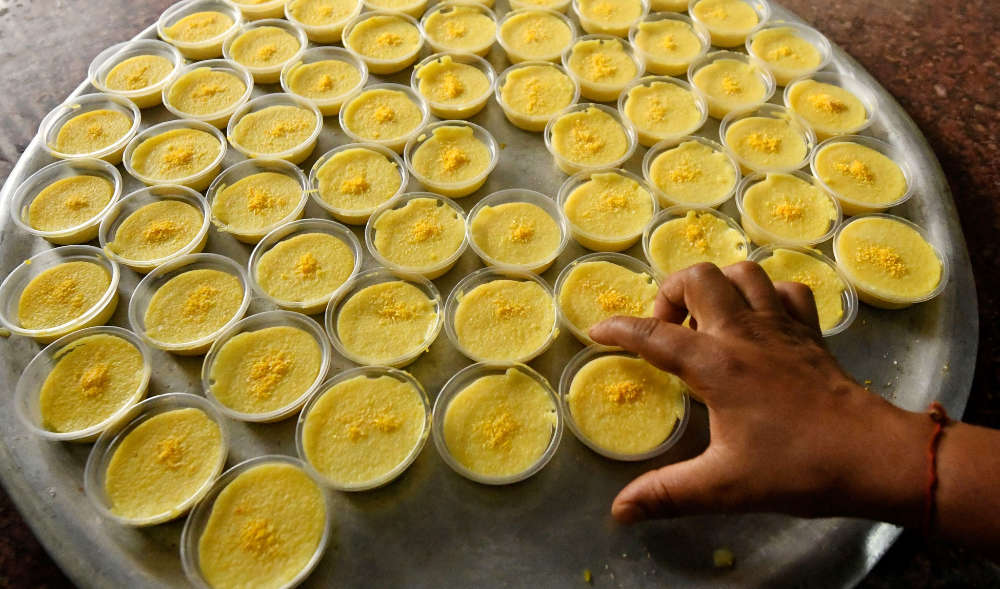
A man prepares Iftar food for Muslim devotees on the holy fasting month of Ramadan in Kathmandu April 4, 2022. (AFP)
But many have been forced to keep their purchases to a bare minimum this year on account of the country's food shortage.
"For the first time I'm seeing that food prices have risen so much in Ramadan," Kabul resident Shahbuddin told AFP on the weekend.
"People were expecting that in an Islamic country prices would drop during Ramadan, but that has not happened."
Islam is the second-largest religion in South Asia after Hinduism, and the region is home to around a third of the faith's adherents.
Ramadan is sacred to Muslims because tradition says the Holy Qura'an was revealed to the Prophet Mohammed (peace be upon him) during that month.
The global observance draws to a close with the Eid al-Fitr festival, a celebration marked with prayers and feasts.


