



KARACHI, SINDH: With their faces attached to long camera lenses, a new generation of avian watchers is growing in southern Pakistan, where recent years have brought a return of migratory bird sightings.
Come winter, with bracing winds in Siberia and Central Asia, flocks of birds arrive in Pakistan’s Sindh province to survive between November and March in a warmer climate.
Their numbers have declined since the 1991-92 season, when Sindh Wildlife Department (SWD) recorded about 1.76 million migratory birds in the region’s wetlands, but tightened conservation rules and increased awareness are slowly bearing fruit.
“As per official record, 661,537 migratory water birds visited Sindh’s wetlands in the migratory season 2021-22,” Sindh Wildlife Department (SWD) conservator Javed Mahar, told Arab News.
That is over 49,000 more than in 2020-21.
The gradual increase in the sightings of feathered visitors to the province coincides with the emergence of a new kind bird watchers: avian photographers. Most of them are hobbyists of different ages, professions, and backgrounds — all united by their love of watching birds in transit.
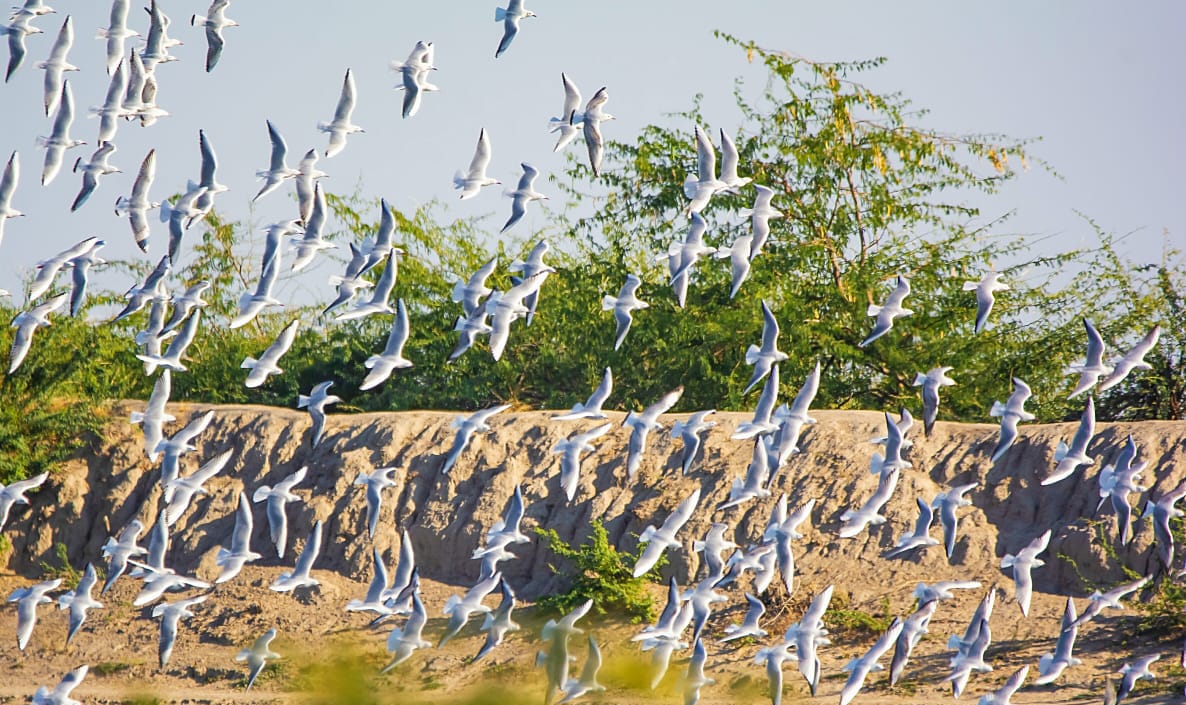
This photo released by the Sindh Wildlife Department on March 8, 2022 shows migratory birds surveyed by wildlife officials in Sindh province, Pakistan. (Photo courtesy: Sindh Wildlife Department)
“There are around three dozen individual bird professional photographers who have emerged during the last five years or so involved in bird photography at different wetlands of the province. One-third of them are in direct liaison with SWD,” Mahar said.
The photographers, who have been actively using social media to share their work, also manage to nurture a fascination and love of wildlife.
“There are about 55,000 members of four main wildlife and birding groups from Pakistan on Facebook — namely Birds of Pakistan, Birds of Sindh, Wildlife of Pakistan, and Wildlife With Dream Merchants,” Saeed Jamal Tariq, a co-admin of the Wildlife With Dream Merchants group from Karachi told Arab News.
A chartered accountant by profession, Tariq has been involved in documenting the birds of Sindh for the past 13 years.
But not everyone who follows the social media birders’ groups is a photographer.
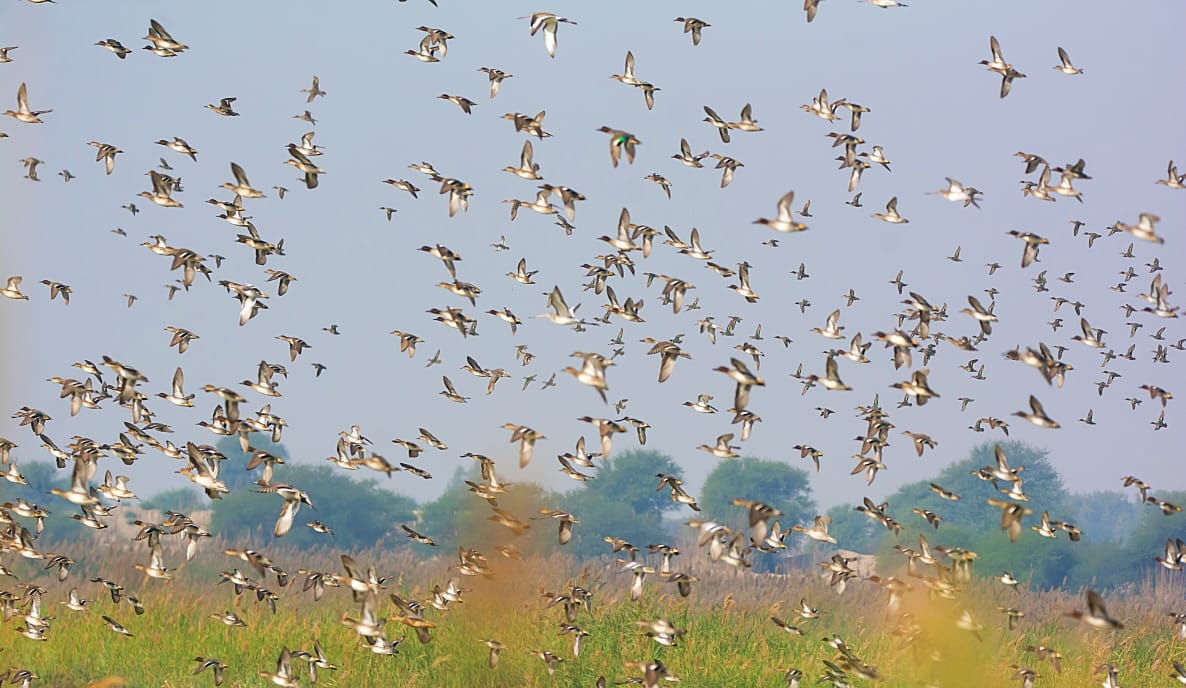
This photo released by the Sindh Wildlife Department on March 8, 2022 shows migratory birds surveyed by wildlife officials in Sindh province, Pakistan. (Photo courtesy: Sindh Wildlife Department)
“Not all of them may own the camera equipment required for such photography,” he said. “They are there for the love of nature.”
Some of them are there also to learn.
Mir Muhammad Hussain Talpur from Khairpur started to pursue bird photography five years ago.
“I had no proper training for photography,” he said. “I only learnt through YouTube and through experienced friends.”
Their ranks are growing, although the hobby is not cheap.
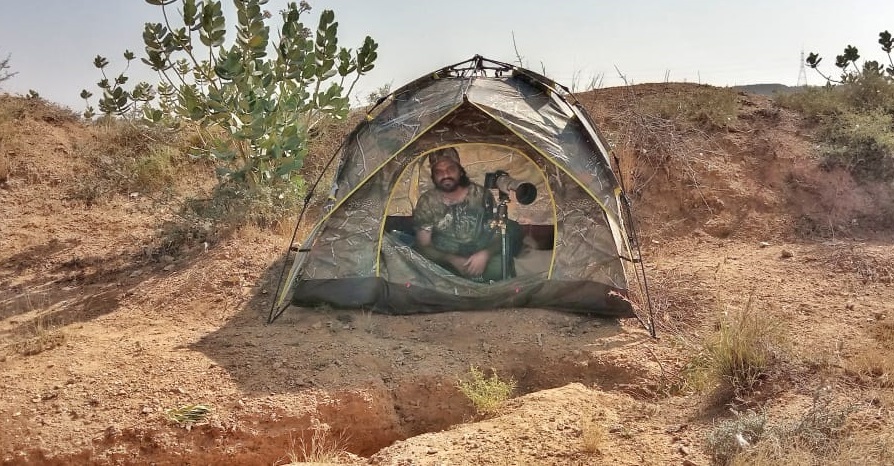
Photographer Yasir Pechuho sits in a tent while preparing for bird sighting in Kohistan, Pakistan on Dec. 9, 2021. (Photo courtesy: Yasir Pechuho)
“The prices of lenses range from 600,000 rupees ($3,300) to 3.5 million rupees,” Yasir Pechuho, a bird photographer from Larkana, told Arab News.
“Bird photography is all about distant shooting. For better photos you need better cameras and long-focus lenses.”
Along increasing interest, activism is also on the rise.
Heba Moeen, a Karachi-based wildlife photographer, has been raising awareness about destruction of the natural habitats of wetland birds.
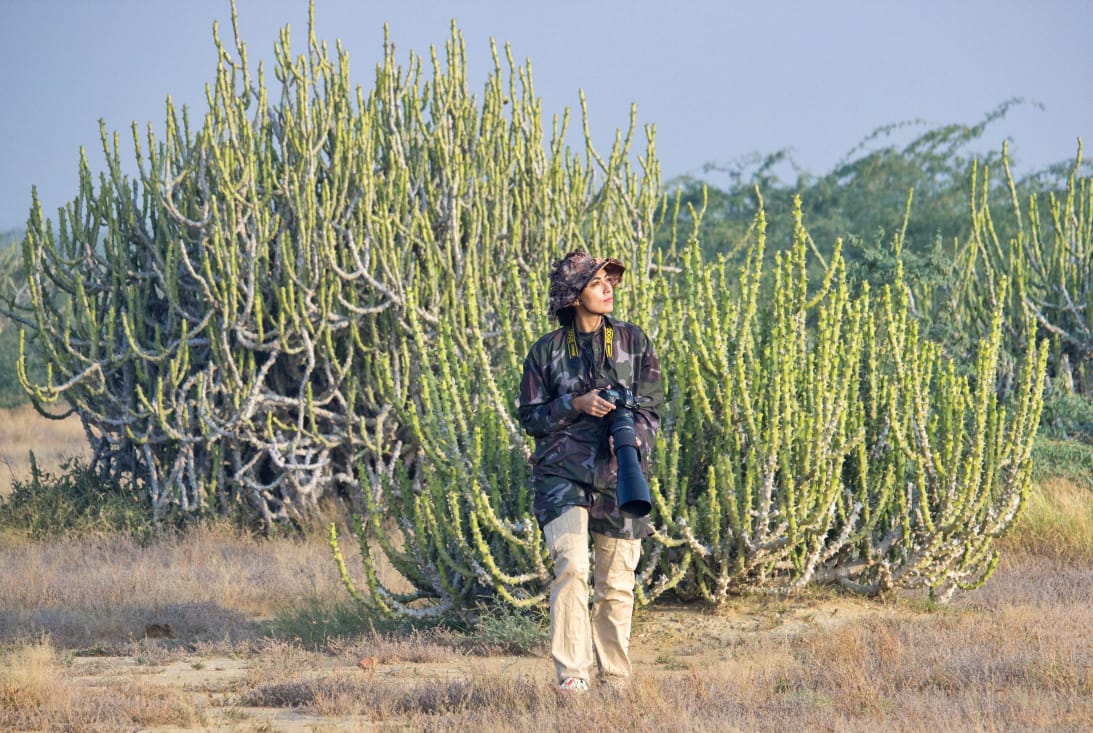
Photographer Heba Moeen prepares for bird sighting in Sindh province, Pakistan. (Photo courtesy: Farhan Siddiqui)
“I have personal interest in the common kingfisher and Indian roller birds, which are in abundance in Badin’s Haleji Lake and other wetlands,” she said. “However, I am afraid that the number of visiting birds can reduce because of increasing water contamination, as we keep throwing chemicals directly in water bodies. This must stop.”
While conservation laws in the province have been strengthened by the Sindh Wildlife Protection, Preservation, Conservation and Management Act passed in 2020, replacing old lax legislation, the SWD’s Mahar admits that more needs to be done, especially to educate the public.
“We need a major conservation drive among the masses,” he said. “For this wildlife photographers can play a vital role.”


