

IMF deal breakthrough is within reach for crisis-hit Lebanon

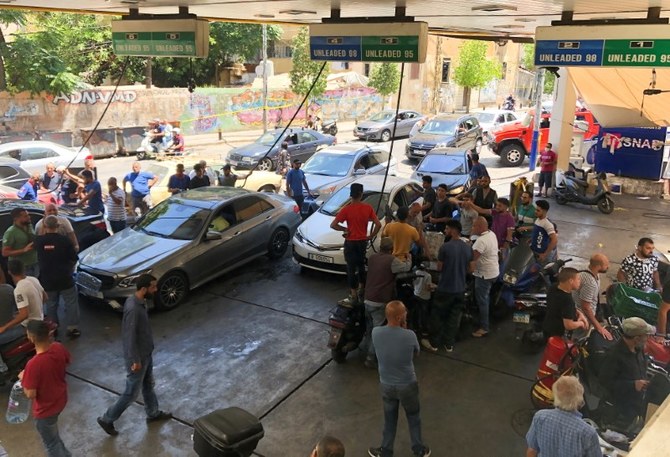
The country’s economy is facing hyperinflation with a currency devaluation after the government defaulted on international debts of more than $30 billion.
Short Url
Updated 30 March 2022
Follow

IMF deal breakthrough is within reach for crisis-hit Lebanon

RIYADH: Lebanon may be closer than ever to breaking a two-year stalemate in talks with the IMF, a senior official said. 

The move could help draw a line under one of the world’s worst financial crises in more than a century, Bloomberg reported. 

The country’s economy is facing hyperinflation with a currency devaluation after the government defaulted on international debts of more than $30 billion.

As major legislation makes its way through the parliament, Lebanese authorities are turning more optimistic they can reach a staff-level agreement with the Washington-based lender before elections in May, Deputy Prime Minister Saade Chami said in an interview. 

An IMF delegation arrived in Beirut this week on a mission that the authorities hope will conclude with the signing of the so-called “Memorandum of Economic and Financial Policies.”

This is a list of actions the country needs to take to clear the way for the disbursement of up to $5 billion in aid.

It may also release $11 billion in other financial commitments made to Lebanon in the past few years, according to Bloomberg. 


Saudi POS spending jumps 28% in final week of Jan: SAMA

Updated 06 February 2026
Follow

Saudi POS spending jumps 28% in final week of Jan: SAMA

RIYADH: Saudi Arabia’s point-of-sale spending climbed sharply in the final week of January, rising nearly 28 percent from the previous week as consumer outlays increased across almost all sectors. 

POS transactions reached SR16 billion ($4.27 billion) in the week ending Jan. 31, up 27.8 percent week on week, according to the Saudi Central Bank. Transaction volumes rose 16.5 percent to 248.8 million, reflecting stronger retail and service activity. 

Spending on jewelry saw the biggest uptick at 55.5 percent to SR613.69 million, followed by laundry services which saw a 44.4 percent increase to SR62.83 million. 

Expenditure on personal care rose 29.1 percent, while outlays on books and stationery increased 5.1 percent. Hotel spending climbed 7.4 percent to SR377.1 million. 

Further gains were recorded across other categories. Spending in pharmacies and medical supplies rose 33.4 percent to SR259.19 million, while medical services increased 13.7 percent to SR515.44 million. 

Food and beverage spending surged 38.6 percent to SR2.6 billion, accounting for the largest share of total POS value. Restaurants and cafes followed with a 20.4 percent increase to SR1.81 billion. Apparel and clothing spending rose 35.4 percent to SR1.33 billion, representing the third-largest share during the week. 

The Kingdom’s key urban centers mirrored the national surge. Riyadh, which accounted for the largest share of total POS spending, saw a 22 percent rise to SR5.44 billion from SR4.46 billion the previous week. The number of transactions in the capital reached 78.6 million, up 13.8 percent week on week. 

In Jeddah, transaction values increased 23.7 percent to SR2.16 billion, while Dammam reported a 22.2 percent rise to SR783.06 million. 

POS data, tracked weekly by SAMA, provides an indicator of consumer spending trends and the ongoing growth of digital payments in Saudi Arabia.  

The data also highlights the expanding reach of POS infrastructure, extending beyond major retail hubs to smaller cities and service sectors, supporting broader digital inclusion initiatives.  

The growth of digital payment technologies aligns with Saudi Arabia’s Vision 2030 objectives, promoting electronic transactions and contributing to the Kingdom’s broader digital economy.