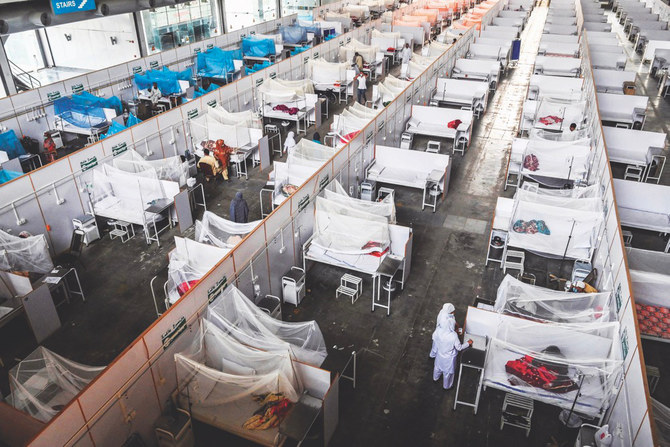

JEDDAH: While the world has been preoccupied with fighting the COVID-19 pandemic for the past two years, other life-threatening viruses and diseases have continued to spread.
One of them is dengue, a mosquito-borne virus that causes an illness that in its most extreme form can be fatal. According to experts, urgent action is needed to bring it under control.
Dengue is mostly found in tropical and subtropical regions, and millions of cases of infection are reported worldwide each year. It is most common in Southeast Asia, the Western Pacific, Latin America and Africa but it has been spreading to other regions, cropping up in localized outbreaks in Europe and southern parts of the US.
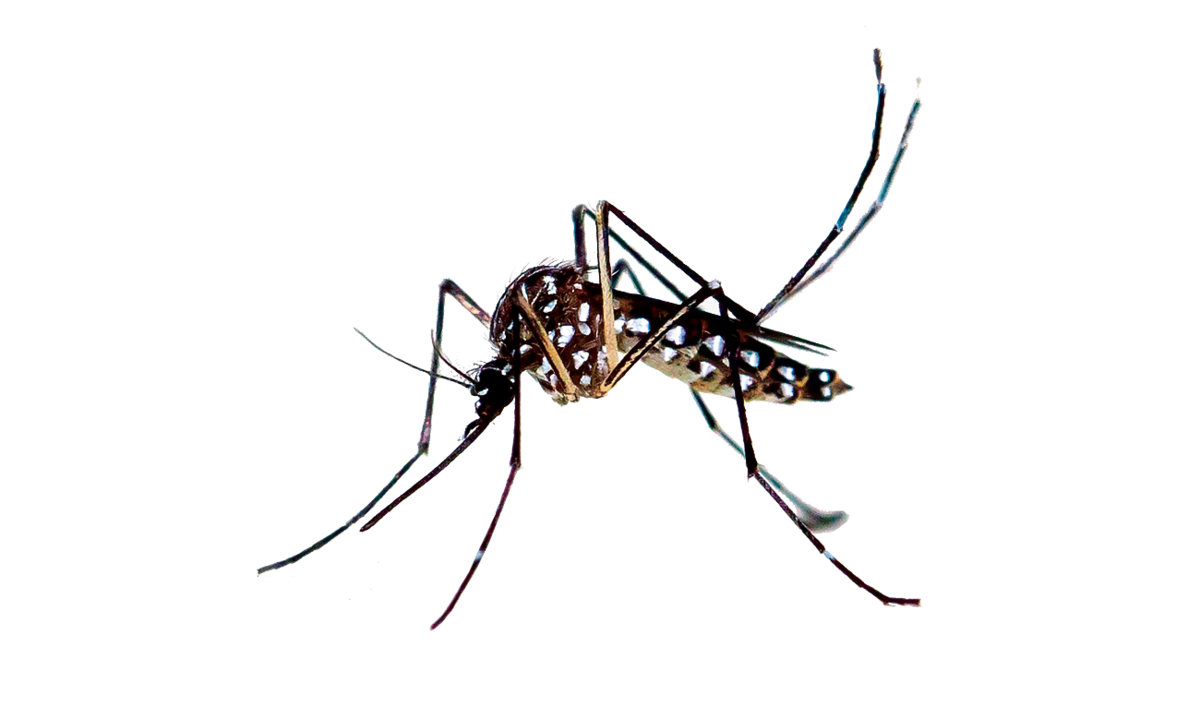
Transmitted to humans by a number of species of female mosquitoes, dengue has an incubation period of between four and 10 days. Once infected, the patient becomes the primary carrier and can transmit the disease for an average of five days. A mosquito can infect several people during its peak feeding hours of early morning and before dusk.
The result can be severe flu-like symptoms, including a high fever, severe headache, muscle and joint pain, nausea and vomiting, that can last for seven days.
Most cases are mild but those who recover from dengue and are reinfected can suffer much more severe symptoms, including internal bleeding and organ damage. Women who contract the virus during pregnancy run the risk of passing it on to their babies.
Dengue has been present in Saudi Arabia for more than two decades and is endemic during the rainy season, between April and September. It is particularly prevalent in the western region, most notably in Jeddah and Makkah.
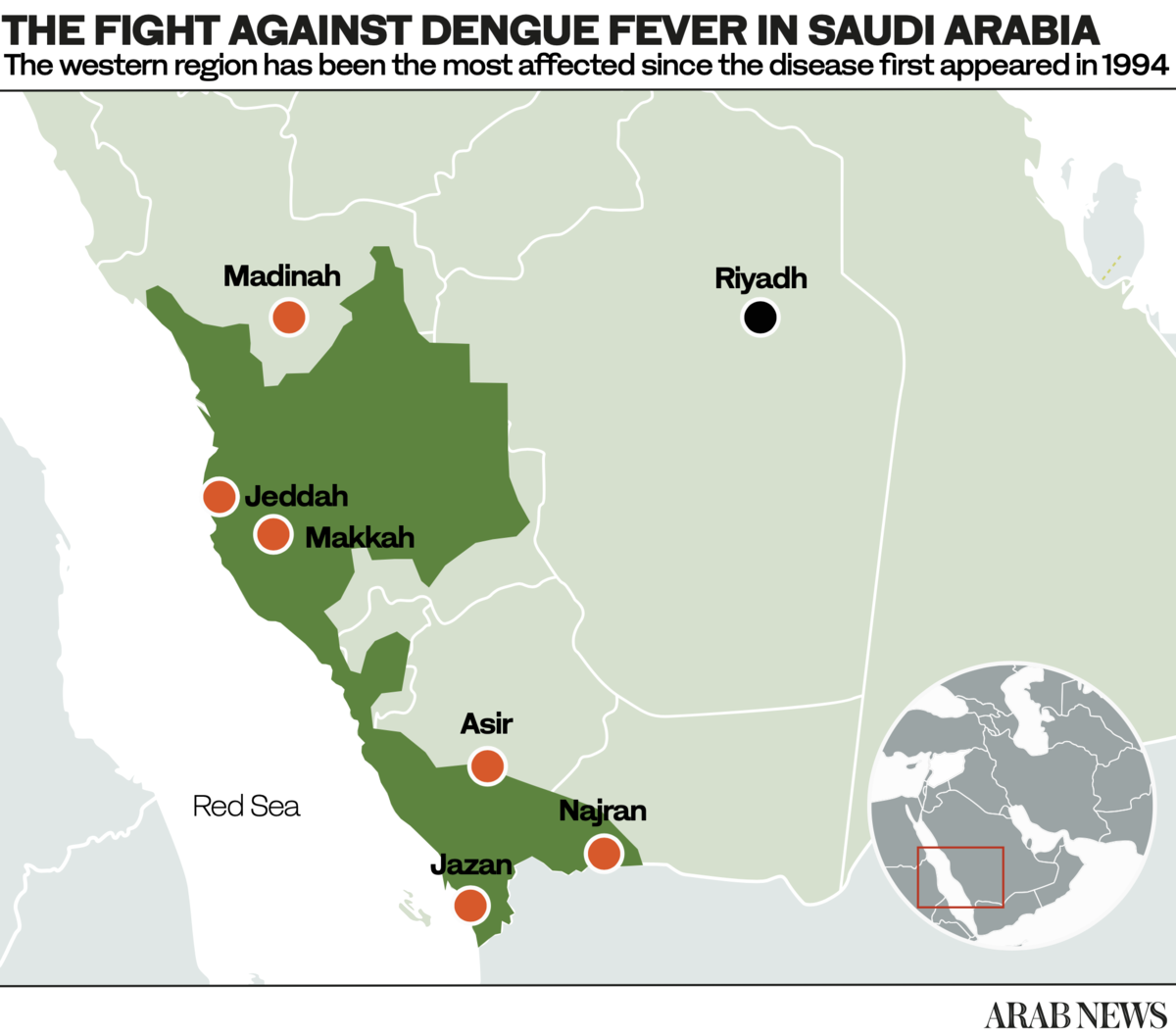
The emergence of dengue in the Kingdom can be traced back to 1993-94 when an isolated case was first detected in Jeddah. Years of surveillance, epidemiological tracking, prevention and control measures have helped lower the proliferation of the mosquitoes that spread the virus but it nevertheless remains a significant challenge for health authorities.
Even before the COVID-19 pandemic, several countries, mainly in tropical and subtropical zones, were reeling from the effects of mosquito-borne diseases such as malaria, dengue, yellow fever, West Nile virus and Zika.
Measures designed to curb the spread of such diseases had been making progress globally. But within months of the coronavirus outbreak, medical personnel were redeployed to help slow the spread of COVID-19. This resulted in a resurgence of other diseases in areas where they had been under control.
Dengue accounts for nearly 70 percent of the disease burden in Asia, its spread fueled in part by rapid urbanization in recent years. With the recent resumption of international commercial flights as pandemic travel restrictions were lifted, the disease is once again traveling around the globe.
Saudi Arabia is one of the world’s biggest hubs for religious tourism, and authorities in the country consider efforts to bring dengue under control to be of paramount importance.
In 2019, the Kingdom was among the countries that recorded some of the highest rates of the disease. In 2018 alone, 6,345 dengue cases were confirmed, mostly in Jeddah.
Despite the challenges posed by the COVID-19 pandemic, studies show there was a steep reduction in dengue cases in Saudi Arabia over the past two years, attributed to a collaborative effort by government agencies involved in vector surveillance and control. In public health, vectors are the living organisms that transmit diseases between humans or from animals to humans.

More research is needed to overcome the annual dengue epidemic in Saudi Arabi, said Abdullah Algaissi. (Supplied)
“Though dengue is still endemic in some cities and countries around the world, in Makkah, for example, dengue is reported at low levels as a result of several measures that have been taken to decrease its mode of transmission,” Dr. Osamah Barasheed, deputy chief public health officer at Makkah Health Cluster, told Arab News.
“Health education in homes and public areas by the Ministry of Health to increase awareness about dengue played an important role in preventing its spread.”
Municipal authorities in Makkah have also been working to reduce numbers of mosquitoes through sanitation campaigns and the disinfection of sites where they commonly breed.
Studies indicate the spread of dengue in Saudi Arabia has been fueled by several factors, including poor sanitation in some urban districts and the arrival of migrant workers and religious pilgrims from dengue-prone areas of the Middle East, North Africa and Asia.
“Dengue is still under control,” said Barasheed. “Health-education departments in vector-borne and zoonotic diseases (infectious diseases transmitted from animals to humans) administrations at (the Ministry of Health) play a major role in fighting and reducing the spread of dengue cases by their awareness activities in the community.”
SYMPTOMS OF DENGUE
• High fever of 104 F
• Headaches
• Muscle, bone or joint pain
• Nausea
• Vomiting
• Pain behind the eyes
• Swollen glands
• Rash
Dr. Abdullah Algaissi, a virologist and assistant professor at Jazan University, told Arab News that dengue research in the Kingdom currently focuses on three key areas: understanding of the immune response to dengue infection; the severity of the disease; and control measures and the development of safe and effective vaccines and antivirals.
Saudi universities are prioritizing the issue and considerable efforts are being made to develop a vaccine.
“There are several vaccine candidates currently under development,” said Algaissi. “Dengvaxia is one vaccine that has been approved in some countries but only for certain groups. DENVax is developed by a Japanese pharmaceutical company, Takeda.
“Both vaccines are intended to protect against all four serotypes (distinct variations within a species of bacteria or virus) but there are still some issues.”
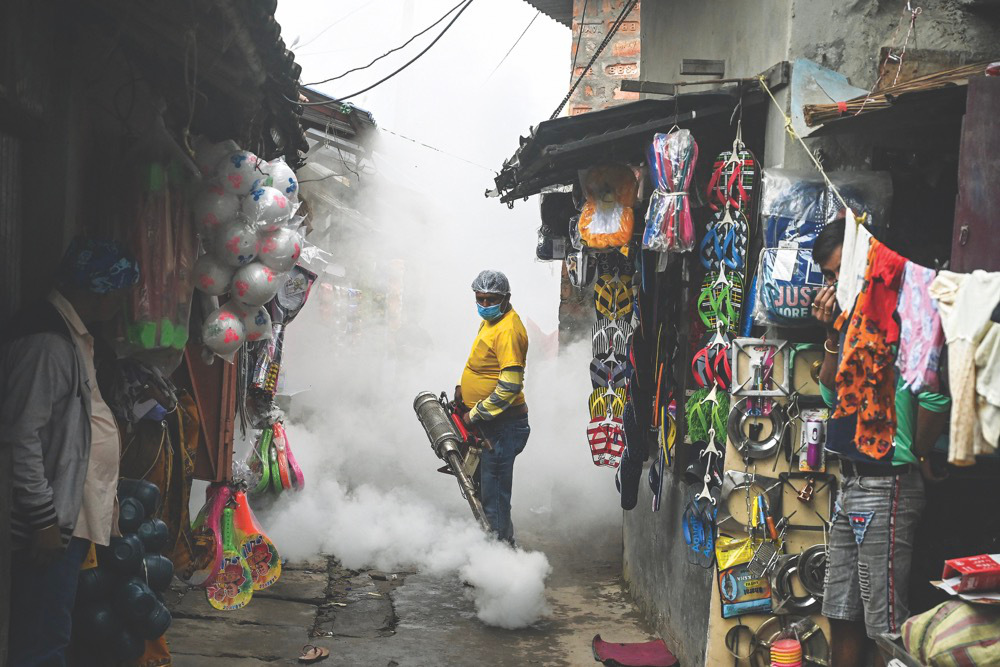
Surveillance and prevention are key to curbing the spread of the potentially fatal illness. (AFP)
Research has found that DENVax mainly provides protection against one form of dengue and is less effective against the other three.
Dengvaxia, meanwhile, benefits patients who have previously been infected with the virus. However, a problem with it is that it can cause more severe symptoms in those who have not previously been infected, throwing its efficacy into doubt.
This is related to a phenomenon known as antibody-dependent enhancement of infection, which means that the antibody generated in response to a first infection by one dengue serotype can lead to more severe disease after a subsequent infection with another serotype.
“Dengvaxia is not recommended for individuals who have not been infected with dengue in the past,” said Algaissi. “Some countries have stopped using it because of this, while others approved it only for use in people who were infected and who live in areas where this infection is endemic.”
The US Food and Drug Administration in 2020 approved the use of the vaccine for children between the ages of 9 and 16 who live in areas where the disease is endemic and who have had a previous dengue infection that was confirmed by lab tests.
In addition to vaccine development, another area of dengue research is genetic modification. Luke Alphey from the Department of Zoology at the University of Oxford in the UK has developed a technique that hinders the ability of mosquitoes to reproduce. Mosquitoes are produced in the lab that carry a lethal gene. Once released into the wild, they mate with wild species and transfer the deadly gene, which prevents the larva maturing to adulthood.
Clearly, continuing research into the virus and the development of better vaccines hold the key to controlling and, eventually, eliminating dengue from Saudi Arabia.
“Most of the research currently focuses on surveillance and control of the mosquitoes and the virus and the clinical characteristics of the dengue patients,” said Algaissi. “But I hope to see more research on developing effective vaccines and antivirals.”