

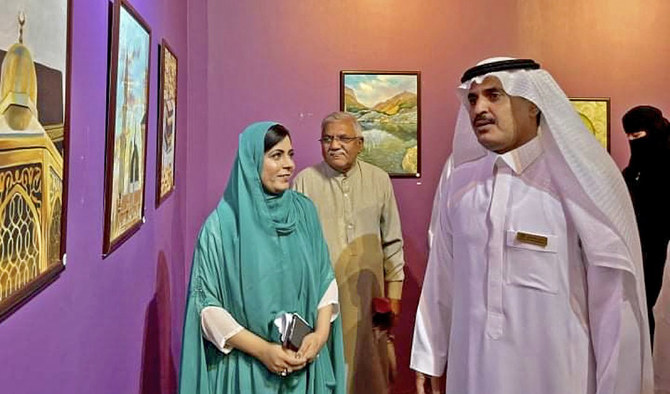
Pakistani woman becomes first international artist to hold solo show in Madinah

Pakistani painter, Rabia Zakir (left), explains her work to visitors during her solo exhibition in Madinah, Saudi Arabia, on March 8, 2022. (Photo courtesy: Rabia Zakir)
Short Url
Updated 11 March 2022
Follow

Pakistani woman becomes first international artist to hold solo show in Madinah

  • Rabia Zakir presented with award by Saudi Arabian Society for Culture and Arts for “strengthening Pak-Saudi ties”
  • Zakir is known for her portraits of Arab leaders, including Saudi crown prince and members of royal families of UAE and Bahrain

ISLAMABAD: Pakistani painter Rabia Zakir, who on women’s day this week became the first international artist to hold a solo show in Madinah, praised Saudi Crown Prince Mohammed bin Salman’s “Vision 2030” for promoting arts and culture in the kingdom.

Zakir is well known in Islamabad's diplomatic circles for her portraits of Arab leaders, including the Saudi crown prince and members of the royal families of the United Arab Emirates and Bahrain. Her portraits and landscapes hang in 50 embassies in Pakistan, most prominently of Arab countries such as Saudi Arabia, the UAE, Kuwait, Bahrain, and Oman.

In an interview to Arab News via phone from Madinah, Zahir said she had seen a “clear change” in the arts and culture scene in Saudi Arabia “due to special interest of crown Prince Muhammad bin Salman under his vision 2030.”

Her solo show in the kingdom, which she described as a “journey of faith,” was a sign of the changing times.

“I am feeling very proud to become the first female artist from outside Saudi Arabia to present her work in the holy city of Madinah,” Zahir said. “I don’t have words to explain my happiness.”
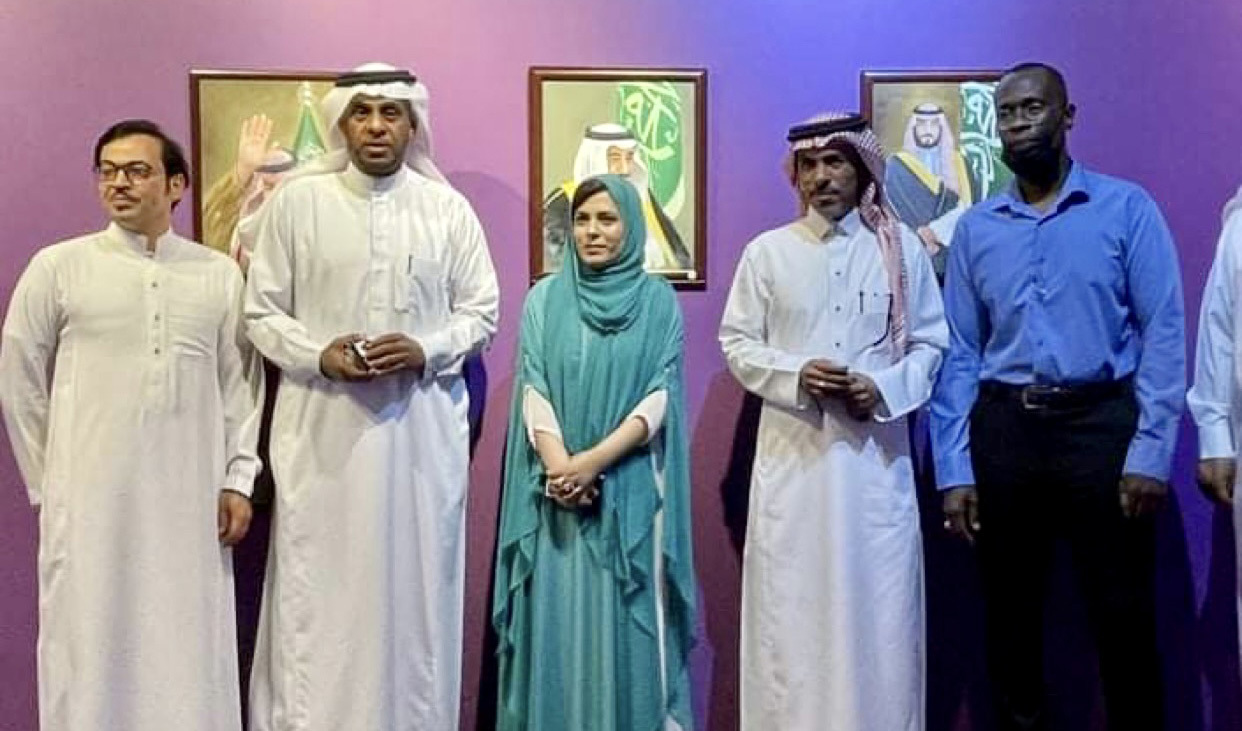


Pakistani painter, Rabia Zakir (center), can be seen with Saudi artists during her solo exhibition in Madinah, Saudi Arabia, on March 8, 2022. (Courtesy: Rabia Zakir)

Giving details of the pieces displayed, Zahir said they included portraits of Saudi leaders and paintings depicting Islamic holy places.

“It has landscape paintings of Haram, Masjid Nabvi, different places in Makkah and Madinah that Muslims visit during their pilgrimage of Hajj and Umrah,” Zakir added.

The artist said she had been approached by the Saudi Arabian Society for Culture and Arts around six months ago after officials noticed her work on social media.

“They offered to present my work to the Saudi public by organizing a solo exhibition,” she said, adding that the government of Pakistan was not involved in the exhibition, which was a wholly Saudi initiative.


Displayed, the work of Pakistani painter Rabia Zakir who became the first international artist to hold a solo exhibition in Madinah, Saudi Arabia, on March 8, 2022. (Courtesy: Rabia Zakir)

Zakir has also been presented with an award by the Saudi Arabian Society for Culture and Arts for “strengthening Pak-Saudi ties” and will be holding a training workshop for young Saudi artists.

Fatma Ragab, the organizer of the exhibition from the Saudi Arabia Society for Culture, said the body welcomed intellectuals and creators from all over the world.
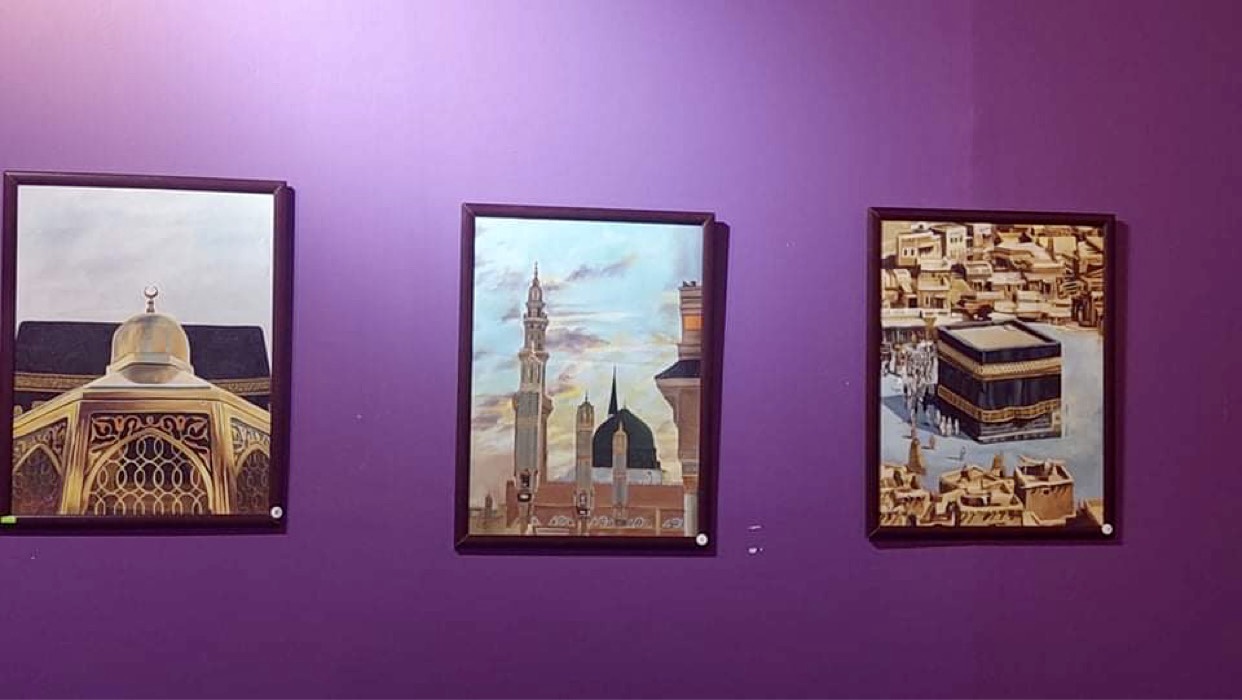


Displayed, the work of Pakistani painter Rabia Zakir who became the first international artist to hold a solo exhibition in Madinah, Saudi Arabia, on March 8, 2022. (Courtesy: Rabia Zakir)

“Zakir’s exhibition, which includes 27 artistic paintings, was a great success and achieved remarkable attendance and admiration from notable personalities, artists, and intellectuals,” she told Arab News in an emailed statement. “It is a one-of-a-kind opportunity for Saudi nationals to get acquainted closely with the fine art movement in Pakistan and their rich artistic experiences.”


Islamabad says surge in aircraft orders after India standoff could end IMF reliance

Updated 06 January 2026
Follow

Islamabad says surge in aircraft orders after India standoff could end IMF reliance

  • Pakistani jets came into the limelight after Islamabad claimed to have shot down six Indian aircraft during a standoff in May last year
  • Many countries have since stepped up engagement with Pakistan, while others have proposed learning from PAF’s multi-domain capabilities

ISLAMABAD: Defense Minister Khawaja Asif on Tuesday said Pakistan has witnessed a surge in aircraft orders after a four-day military standoff with India last year and, if materialized, they could end the country’s reliance on the International Monetary Fund (IMF).

The statement came hours after a high-level Bangladeshi defense delegation met Pakistan’s Air Chief Marshal Zaheer Ahmed Baber Sidhu to discuss a potential sale of JF-17 Thunder aircraft, a multi-role fighter jointly developed by China and Pakistan that has become the backbone of the Pakistan Air Force (PAF) over the past decade.

Fighter jets used by Pakistan came into the limelight after Islamabad claimed to have shot down six Indian aircraft, including French-made Rafale jets, during the military conflict with India in May last year. India acknowledged losses in the aerial combat but did not specify a number.

Many countries have since stepped up defense engagement with Pakistan, while delegations from multiple other nations have proposed learning from Pakistan Air Force’s multi-domain air warfare capabilities that successfully advanced Chinese military technology performs against Western hardware.

“Right now, the number of orders we are receiving after reaching this point is significant because our aircraft have been tested,” Defense Minister Asif told a Pakistan’s Geo News channel.

“We are receiving those orders, and it is possible that after six months we may not even need the IMF.”

Pakistan markets the Chinese co-developed JF-17 as a lower-cost multi-role fighter and has positioned itself as a supplier able to offer aircraft, training and maintenance outside Western supply chains.

“I am saying this to you with full confidence,” Asif continued. “If, after six months, all these orders materialize, we will not need the IMF.”

Pakistan has repeatedly turned to the IMF for financial assistance to stabilize its economy. These loans come with strict conditions including fiscal reforms, subsidy cuts and measures to increase revenue that Pakistan must implement to secure disbursements.

In Sept. 2024, the IMF approved a $7 billion bailout for Pakistan under its Extended Fund Facility (EFF) program and a separate $1.4 billion loan under its climate resilience fund in May 2025, aimed at strengthening the country’s economic and climate resilience.

Pakistan has long been striving to expand defense exports by leveraging its decades of counter-insurgency experience and a domestic industry that produces aircraft, armored vehicles, munitions and other equipment.

The South Asian country reached a deal worth over $4 billion to sell military equipment to the Libyan National Army, Reuters report last month, citing Pakistani officials. The deal, one of Pakistan’s largest-ever weapons sales, included the sale of 16 JF-17 fighter jets and 12 Super Mushak trainer aircraft for basic pilot training.