

Coca-Cola, McDonald’s face boycott threats over Russia stance

1 / 2
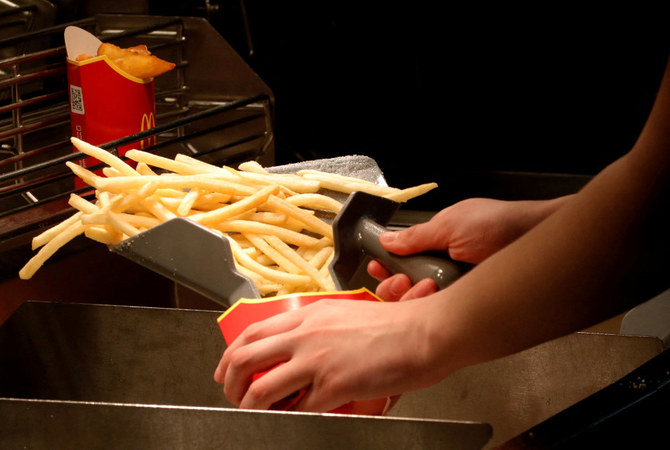
An employee cooks French fries at a McDonald's restaurant in Moscow, Russia April 24, 2018. (REUTERS)
2 / 2
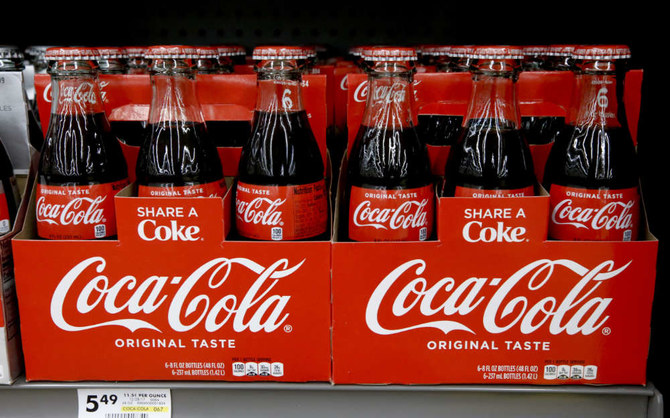
Bottles of Coca Cola sit on a shelf in a market in Pittsburgh. (AP file photo)
Short Url
Updated 09 March 2022
Follow

Coca-Cola, McDonald’s face boycott threats over Russia stance

  • ‘Economic interests outweigh reputational ones,’ says communications expert

DUBAI: Multinational companies maintaining operations in Russia are facing criticism from some Western customers, who are using social media platforms to call for boycotts.

Major companies, including tech giants Apple, Google and Netflix, as well as advertising group WPP, have backed out of Russia in the wake of the Ukraine invasion.

McDonald’s, which receives 9 percent of its revenue and 3 percent of its operating profits from Russia, previously said it would remain open in the country.

But the company announced today that it would temporarily close all its Russian stores, adding that it would continue paying employees.

Coca-Cola, Pepsi and Uniqlo, among others, have said they will remain in the Russian market, and are facing pressure from online activists, with the hashtags #BoycottCocaCola and #BoycottPepsi trending on social media.


“This is a time when (you’ve) got to pick your side, and it doesn’t strike me as this being very difficult to pick,” Tim Fort, a professor of business ethics at Indiana University, told AFP.

“Russians (will) be able to survive without the Big Mac, but (ask) why is McDonald’s closed? What’s going on? It’s a more powerful signal in that sense,” he added.

Clothing retailer Uniqlo has also chosen to keep its stores in Russia open, while others, including Levi Strauss & Co., H&M and Zara, opted to close down in the country.

“Clothing is a necessity of life. The people of Russia have the same right to live as we do,” Tadashi Yanai, CEO of Uniqlo parent company Fast Retailing, told Reuters.

Coca-Cola, which is continuing operations in Russia, said in a statement: “This week, with (bottling partner) Coca-Cola HBC, we have committed €1 million ($1.09 million) to support the brave efforts of the Red Cross movement operating in Ukraine. We are also contributing to Red Cross organizations in the neighboring nations of Romania, Hungary, Slovakia and Poland, donating beverages and a further €550,000 to support refugees in these countries.

“While these are our actions today, we will continue to monitor the situation closely,” the company added.

Mark Hass, a communications specialist at Arizona State University, told AFP that the economic interest of companies that have chosen to stay in Russia “outweighs the reputational one.

He added: “If social media starts identifying you as a company that’s willing to do business with an autocratic aggressor, which is slaughtering thousands of people in Ukraine, you’re in big trouble,” he added.

Yale professor Jeffrey Sonnenfeld and his research team at the Yale Chief Executive Leadership Institute have compiled a list of the businesses that have chosen to stay open in Russia and those that have shut up shop. Since the start of the invasion, 280 companies have announced their withdrawal from the Russian market.

In an article for Fortune magazine, Sonnenfeld said: “Military conflicts between India and Pakistan in 1999, or Israel and Lebanon in 2014, were not prevented by Big Macs. Sadly, the presence of 108 McDonald’s in Ukraine and 847 McDonald’s in Russia has done little to prevent war.

“Despite the cost of abandoning major investments and the loss of business, there is a strong reputational incentive to withdraw,” he added, citing a Morning Consult survey that found more than 75 percent of Americans believe corporations should cut business ties with Russia after the invasion of Ukraine.


Prince Harry’s war against UK press reaches showdown with Daily Mail case

Updated 57 min 53 sec ago
Follow

Prince Harry’s war against UK press reaches showdown with Daily Mail case

  • Prince Harry to give evidence in London court for second time
  • Media accused of phone hacking and other privacy intrusions

LONDON:Prince Harry’s war against the British press heads into a final showdown next week with the start of his
privacy ​lawsuit against the publisher of the powerful Daily Mail newspaper over alleged unlawful action he says contributed to his departure for the US
The 41-year-old Harry, a boy when his mother Princess Diana died in a 1997 car crash with paparazzi in pursuit, has long resented the often aggressive tactics of British media and pledged to bring them to account.
Harry, who is King Charles’ younger son, and six other claimants including singer Elton John are suing Associated Newspapers over years of alleged unlawful behavior, ranging from bugging phone lines to obtaining personal health records.
Associated has rejected any wrongdoing, calling the accusations “preposterous smears” and part of a conspiracy.
Over the course of nine weeks, Harry, John and the other claimants – John’s husband David Furnish, actors Liz Hurley and Sadie ‌Frost, campaigner Doreen ‌Lawrence, and former British lawmaker Simon Hughes – will give evidence to the High Court ‌in London ⁠and be ​grilled by ‌Associated’s lawyers.
The prince is due to appear next Thursday. It will be his second such court appearance in the witness box in three years, having become the first British royal to give evidence in 130 years in 2023 in another lawsuit.
Current and former senior Associated staff, including a number of editors of national newspapers, will likewise be quizzed by the claimants’ legal team. The stakes for both sides are high, with not just the reputation of media and claimants on the line, but because legal costs are set to run into tens of millions of pounds. Critics say Harry, the Duke of Sussex, is bitter over unfavorable coverage, from partying in his youth to quarrelling with his family and leaving ⁠the UK in later years.
But supporters say it is a noble cause against sometimes immoral media.
“He seems to be motivated by a lot more than money,” said Damian Tambini, ‌an expert in media and communications regulation and policy at the London School ‍of Economics.
“He’s actually trying to, along with many of the ‍other complainants, affect change in the newspapers.”
Harry and his American wife Meghan have cited media harassment as one of the main ‍factors that led them to stepping down from royal duties and moving to California in 2020. Elton John, 77, also has history in the courts with the British press, successfully suing newspapers including the Daily Mail for libel. He received 1 million pounds ($1.34 million) from the Sun in a 1988 settlement over a false allegation about sex sessions with male prostitutes.
Having successfully sued Mirror Group Newspapers, and also won damages, an apology ​and some admission of wrongdoing from Rupert Murdoch’s News Group Newspapers (NGN), the case against Associated could be Harry’s most significant. The 130-year-old Daily Mail, renowned for championing traditional, conservative values, for decades has been one of, if not ⁠the most powerful media force within Britain and unlike the Mirror and NGN has not been embroiled in the phone-hacking scandal.
It says it gives voice to millions in “Middle England,” holding the rich, powerful and famous to account.
In 1997, it famously ran a front page denouncing five men accused of the racist killing of Black teenager Stephen Lawrence as murderers and challenging anyone to sue if that was wrong.
The case was a defining moment in race relations in Britain.
Despite that, one of those now suing the Mail is Doreen Lawrence, the mother of murdered Stephen, who says journalists tapped her phones, monitored her bank accounts and phone bills, and paid police for confidential information.
The Associated case will mark one of the final airings in court of accusations of phone-hacking which have dogged the British press for more than 20 years.
The practice of unlawfully accessing voicemails fully burst onto the public agenda in 2011, leading to the closure of Murdoch’s News of the World tabloid, the jailing of its former editor who had later worked as a communications chief for ex-Prime Minister David Cameron, and ‌a public inquiry.
Murdoch’s NGN and the Mirror Group have since both paid out hundreds of millions of pounds to victims of the unlawful activity.
If the claimants lose, Tambini said, “this could be the moment when phone hacking, finally, as a set of issues, went away.”